

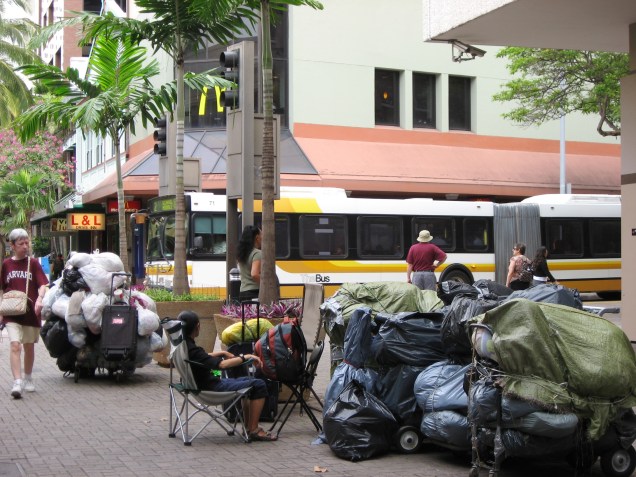
We are all confronted by the escalating rate of homelessness in our community. The number of people living on sidewalks has grown to the point that they become homeless communities in our midst. Our canals are lined with tents and shelters of the dispossessed. Federal officials declare they have never seen such a state repeatedly use the word “crisis” to describe it. How has our dear Hawai‘i descended to this point where homelessness, once never seen in our culture, becomes the new normal? How do we take steps to bring healing to this open sore in Paradise? How do we deal with our frustrations and angers?
There are obviously no simple one step answers. What has been going through my mind is to view homelessness as an amazing opportunity for our community to reaffirm our core culture and character.
We need to embrace the homeless, particularly the homeless families and children, as a gift to practice our aloha and mālama in ways that strengthen our communal commitment to what is pono!
I have seen glimpses of this approach through the efforts of many churches to feed and shelter the needy. I have been encouraged by the positive responses of our community in the recruitment, training, and placement of those seeking jobs and a path of sustainability. I am challenged by organizations that stand ready to help build houses for families and rehab units in low income housing facilities if given the chance. Without being Pollyanna about it, I believe the “crisis” of homelessness can bring a community awakening to the heart of aloha that is in our DNA.
Unfortunately, at least 31 cities nationwide have passed laws that restrict or prohibit food-sharing in public places, meaning those who continue to feed the homeless without following various restrictions such as obtaining permits (often for a fee), could be fined or go to jail. Fortunately for us, Hawai‘i has not yet passed such a law. Those who passed these laws believe the myth that feeding the homeless enables them to remain homeless (as opposed to the real reasons, such as lack of affordable housing, lack of job opportunity, mental health or physical disability).
 We need our policy makers to help fuel a rethinking of homelessness, but it should not wait for them to do it for all of us. We can organize early education programs for homeless young children, we can provide places where homeless adults can get training and preparation for employment, we can coordinate health services beyond its present state, and we can give hope to the hopeless and meaning and focus to our frustrations with the present situation. The thought that homelessness is an opportunity is something that needs to be planted and cultivated in our minds and actions. It would be a return to our core community values.
Are we ready to risk it?



 At Low Tide