

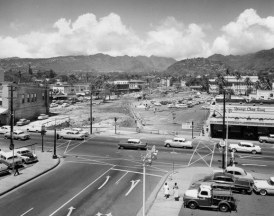
A few years ago my children asked me to write about my life growing up in Honolulu. Over time I’ve penned a dozen or more short descriptions of what it was like to be a young Hawaiian in a relatively small town. From writing these pieces I have come to the conclusion that all of us should consider chronicling the events and individuals who have played important roles in the molding of our characters. Some might find it painful, but on the whole it can be a process that can affirm who we are and what we believe in. In the piece below you will meet one of the important influences in my life and read about how island boys actually learn things on the beach! Blessings.
I’ve paused for a bit to reflect on some of the important people who impacted me during my youth. I’ve touched on my mother’s older brother William (Uncle Bill), and his influence. Uncle Bill was the more gregarious, people-oriented, action prone of the two Chock brothers. My second maternal uncle, Alfred, also played a strong role in my growing up. Uncle Alfred was six or seven years younger than my mother and Uncle Bill and was the youngest of the surviving Chock children. A sister named Alice died as an infant and Uncle Bill left the family early to see the world, so Hattie (my mother) with the help of Rosina, the youngest girl in the family, was the sister in charge. Unlike Uncle Bill, Uncle Al remained in Hawai‘i. He went to Honolulu to attend McKinley High School, ended up working for the U.S. Postal Service and rose through the ranks to become Postmaster of the Bethel and then Waikiki stations, ultimately becoming Superintendent of Carriers in Honolulu. Uncle Al had strong opinions, but was not an open book as personalities went. At first glance, he was much more dour and serious than Uncle Bill and it was his duty, when Dad was gone, to discipline the rabble of children at 904 Lunalilo St. You didn’t fool with Uncle Al.

It is very unfortunate that as I grew older, I also grew more aware of the huge tensions between Uncle Alfred and his wife, Aunty Beatrice. Aunty Bea was a smart, very active woman from Hawai‘i Island. Her father, Old Man Araki, was the “Taro Baron” of Waipio Valley. He was a hard working entrepreneur who had farmed taro, built the Waipio Lodge, trudged from sugar camp to sugar camp showing Japanese movies, and later in life got the Peace Corps to hire his place in Waipio as the training site for the Pacific. My cousin Michael and I used to visit him at his house at the bottom of the road down into the valley and still in his nineties he would work the two of us into the ground! In any case, Aunty Bea came from strong stock and was a very capable and good looking lady. She came to Honolulu as a teenager to become a nurse and it wasn’t until just before she died that I learned she was Mrs. Massey’s nurse during the infamous Massey incident.
When I returned to Honolulu after spending fifth grade in Spring City, Pennsylvania, I saw how Uncle Alfred and Aunty Bea’s disenchantment with each other hung over the house they shared, which was across the fence from the small cottage we lived in. They literally would be in the same room but refused to speak to one another, essentially living completely separate lives. I watched them and my older cousins without really understanding much more than that there were major issues my aunt and uncle had decided not to address. Looking back on the five of them living in their small two bedroom, one bath cottage near ‘Iolani school, it is amazing that they stayed together for such a long time under those conditions. By then, Aunty Bea was working at Howard’s Jewelry Store on Fort St. and ultimately divorced Uncle Al and married C.Ching, one of the owners of the Howard’s Jewelry establishment. Uncle rarely smiled during those years and it wasn’t until he was remarried to Mable Liu Thompson that he came fully back to life.
In his solitary life, Uncle was immersed in his Lions Club activities, his work at the Post Office, his Federal Government Workers Union, and regular weekends playing trumps on the beach in front of what was the Queens Surf showroom across from Kapiolani Park. It was during these excursions to the beach with Uncle Al in the years after we had returned from the mainland, that I got to know and appreciate him and he got to share with me his perspectives on life. Uncle Alfred had been quite an athlete when he was growing up. He had played all the sports, but he was particularly noted for his handball achievements at the YMCA. He had the sturdy physique of the Hawaiian-Chinese mix and the hours spent on the beach playing cards left him a deep rich brown color. With his long dark hair swept back he was a handsome sight.

It seemed like almost every Saturday afternoon Uncle Al and I would make our way down to Public Baths, a large city bathhouse on the beach Ewa side of the Aquarium and the Natatorium. “Publics,” as it was known, was a popular local gathering place. It had large locker rooms for men and women, an active food concession, a large open and covered concrete area on the beach side, and a very loud jukebox. It was there that I first heard Bill Haley and the Comets during the early days of Rock and Roll’s birth. From Publics, after we had locked our clothes and valuables away, Uncle and I had to walk Ewa and navigate a narrow concrete ledge around an abandoned pool on the ocean and make our way down concrete steps onto the beach fronting the Queen’s Surf showroom. Each Saturday under the landmark Kiawe tree on the beach, gathered an interesting collection of local males intent on playing cards until the sun went down. Uncle Al was one of the major members of this group that included bus drivers, lawyers, doctors, unemployed Hawaiian laborers and other representatives of the general spectrum of characters that inhabited the local Waikiki scene. One of my favorites was an older “niho‘ole” (toothless) Hawaiian man named Tommy who was the resident fishing expert in the group. From time to time Tommy would throw me a pair of wooden goggles and motion me to be his bag man. He would straighten a wire hanger and off we’d go to the reef. In wonder I would watch him find and spear he‘e (octopus) from what I thought was barren rock. Tommy was a true he‘e master and we consistently returned with enough for most of the group to take home in the evening.
Since I wasn’t invited to join the card games, my hours on Queen’s Surf Beach was filled with endless explorations of the rocks and reef surrounding the beach. It was primarily coral all around the beach with narrow channels out to deeper water and it never ceased to fascinate my young curiosity. It would seem that we had just arrived when Uncle would yell and gesture from the beach that it was time to get a shower, change, and begin the long walk home. We would pack up and work our way back to Publics, shower, and change into our street clothes. One thing I remember to this day about the lockers
was the strong smell of Three Flowers Brilliantine, the heavily scented hair grooming gel 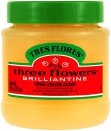 that all the adult men used to work into their scalps before running their combs through to get just the right wave into place in their hair. It was quite a ritual and there must have been pounds and pounds of the stuff put on each day at Publics! I imagine much of the stuff ended up smeared on pillowcases throughout Honolulu.

In later life, Uncle Alfred found happiness in his marriage to Aunty Mabel and opened up considerably from the person he was during our days on the beach. Despite his often gloomy persona during those days, he always showed up to take me to the beach. He always provided clear insights when asked a question, and he always urged me to think outside of the box when I questioned him on what path I might take. Both Uncle Alfred and Uncle Bill had different brands of deep and warm aloha for their nephew and I was privileged to have them both as rich points of reference as I began my years of struggling to adulthood. I was truly blessed by their presence.
 At Low Tide