

Despite the power of the culture of shame that started in the late 1800s, it is interesting to note that during the 1930s through the 1960s, Hawaiians were very present in several professional groups. Many Hawaiian teachers in public schools, like my mother, formed the backbone of K-12 public education. The courts and the public bureaucracy also had a very visible Hawaiian presence. Even the legislature and city council had strong Hawaiian individuals at the levers of power. How could that be? On a certain level, I think it was the classic “Stockholm syndrome” in which the hostages develop a psychological/ social/ economic alliance relationship with their captors as a strategy for survival. Our kūpuna wanted their Hawaiian children to prosper in the new and very different western Hawai‘i and they did! A bit dramatic, but the picture of the prisoners becoming the guards jumps to mind. Hawaiians had succeeded in becoming something the culture of shame demanded!
On another level, there was a growing awareness during these years that the host culture was in serious decline. The language was less and less evident in daily life, even in Hawaiian families, and cultural practices were more and more oriented towards creating a platform for the tourist industry in the state. It seemed that the more successful a Hawaiian became in the western culture, the less Hawaiian he/she became in his/her identity with the host culture. Hawaiian perspectives were not welcomed enthusiastically in the schools, corporations, and social gatherings of Hawai‘i. One could be Hawaiian by ethnicity, but not Hawaiian by traditional values and practices. The system worked hard to maintain the distinction.
Part of my memories of my youth in the 1940s and 50s are the headlines of the daily newspapers in Honolulu. One consistent theme that a young person saw was that crime, in general, was committed by “LPMs,” or “Large Polynesian Males.” It formed some of the white noise of life in the islands that reinforced the culture of shame and the need to distance oneself from the host culture. Some would say that you had to view it all in the context of the community at that time and not assign it importance, but for a young Hawaiian growing up and struggling to find his or her identity, it was subtle but powerful input. The socio-economic lines in the community during that time were also strong and enforced. Though Caucasians and Hawaiians could surf, paddle, play sports, and have a convivial time together, interracial dating created a completely different tone. The power of the culture of shame created an understood barrier between relationships beyond certain levels between haoles and Hawaiians. If one didn’t get the hint, the “barrier” often became loudly vocal and sometimes openly physical in nature. There were rules with the culture of shame, and not mixing beyond a certain level was one of them.

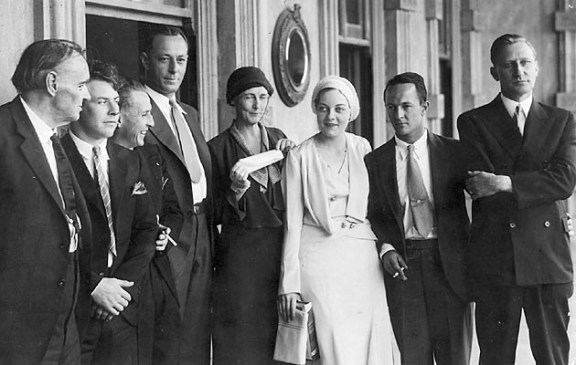
Throughout the period before World War II, the partnership of the traditional agriculturally-based corporations (founded for the most part by missionary descendants and referred to as the “Big Five”) and the political military hierarchy of the U.S. Navy and Army, functioned to keep the divisions of the culture of shame in place. Perhaps the most dramatic example of this diligent enforcement of shame was the Thalia Massie case in 1932. It served to bring racism in the mainland’s south as a lens to view the status of Hawaiians during this period. Hawaiian Joseph Kahahawai was wrongly accused of the rape of Navy wife Mrs. Thalia Massie, was acquitted, and then murdered by moneyed white upper class east coast relatives of Mrs. Massie. The four individuals who committed the crime (including Mrs. Massie’s mother) were convicted and sentenced to ten years of hard labor, which was magically commuted to a sentence of one hour with Territorial Governor Lawrence M. Judd (a descendent of missionary grandparents). The culture of shame protected its own.


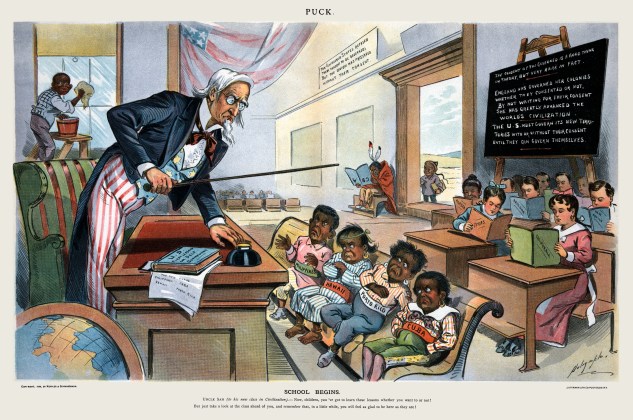
What one also doesn’t hear about during this period, is the practice the Navy and Army used to intimidate the local population. When fights between locals and service personnel/sailors were deemed too frequent, soldiers from Schofield Barracks were called out to march through the streets as a reminder of who was in charge and the reality of the force protecting the privileged. The Territorial political system dominated by the Republican party and the commercial and military interests of Hawai‘i were clear in their commitment to keeping locals, particularly Hawaiians, in their place. With the U.S. Armed Forces (and particularly the Navy) holding complete sway over everything that took place in Hawai‘i, this period has been characterized as the time that Hawai‘i was “golf course of the U.S. Navy.” If that were true, Hawaiians could only hope to be favored caddies.
World War II brought significant changes to the islands and a significant influx of talented people with very western ideas. Local Japanese veterans of the 100th Battalion and the 442nd Regimental Combat Team returned and used the GI Bill to pay for college and law school, and soon began to consolidate their control of the Territory’s administration and the Democratic party emerged as a political power in the local scene. Plantation workers, through difficult strikes and constant organizing, became the voice for the thousands of Japanese and Filipino workers in the plantation camps. Caucasians who settled in the state after the war didn’t bring with them the decades old negative view of the Hawaiian community, and so they married Hawaiians and for the most part were flexible in their view of the culture (like my Dad who married my hapa pake Mom). The winds of change were swirling.

The impact of all of this was a significant relaxing of the traditional barriers to Hawaiians and an easing of social practices that allowed the beginnings of the Hawaiian “Renaissance” in the late 40s, 50s, and its blossoming forth in the 1960s. Traditional hula, both ancient and modern, began to flourish and be taught throughout the state. This interest sparked a renewed interest in the Hawaiian language and in traditional cultural practices that were natural pieces of the revival of dance. Hawaiians today owe the flourishing of the culture to the many kumu hula who patiently taught generations to love the dance and the culture and seek to understand the language that had been taken away from them for decades. Anthropologist and linguists like Mary Kawena Pukui and Samuel Elbert collected the words and the “mo‘olelo” (stories) that began the rediscovery of the Hawaiian language and the preservation of the cultural underpinnings of our people. It was the beginning of the return of the host culture to the host people and the beginning of a process of recognizing and addressing the culture of shame.

Increased activism in Hawai‘i raised the plight of the Hawaiian to a higher level than ever before. The 1960s, 70s, 80s, and 90s saw the emergence of Hawaiian leaders in a wide spectrum of cultural and political areas, who all worked to erode the harshest elements of the culture of shame and begin a process of healing and recovery of self-worth for the community. Some of these leaders include:
Rev. Abraham Akaka: a strong Hawaiian voice for “pono” in our community. He served as one of the important “Kahu” (guardian) for Hawaiians during this turbulent period.
Myron “Pinky” Thompson: a leader in politics and funding for Hawaiian social issues, founder of Alu Like and a driving force of Hokule‘a and the recovery of Hawaiian celestial navigation
George Helm: the spiritual presence for the Kaho‘olawe ‘Ohana particularly after his disappearance at sea
Harry Kūnihi Mitchell: Co-founder of Protect Kaho’olawe ‘Ohana
Edith Kanaka’ole: a leader in the Hula renaissance
‘Iokepa Maka’ai: Co-founder of Pūnana Leo o Honolulu
Sunday Mānoa: a leader in the Hawaiian music renaissance
Gladys Brandt: a leader in the resurgence of Hawaiians at UH Mānoa
Msgr. Charles A. Kekumano: founder of Kūlana ‘Oiwi in Kalama’ula, Moloka’i (a one-stop-shop for organizations serving Hawaiians), trustee of the Queen Liliuokalani Trust, and active in many community organizations such as the Association of Hawaiian Civic Clubs, University of Hawai‘i Board of Regents, the Honolulu Police Commission, Hawai‘i Commission on Children and Youth.
Voices of leaders like these and many more became conscience keepers for the Hawaiian revival and began the process of understanding what was involved in the resurrection of Ka Lāhui (nation).
Slowly, Hawaiian children found paths to success in the new and more flexible society of Hawai‘i during the last decades of the 20th century. Many went away to college on the mainland and some returned with ideas that tested the traditional lines of the culture of shame. Many, however, decided to stay away from the islands and seek their future in other cultures they found they could navigate and be successful in. They never returned to engage in a transformation of the host community.
In the 70s and 80s a wide range of issues relating to the Hawaiian reality were addressed. The naval bombardment of Kaho‘olawe became a symbolic image of the exploitation of the host culture. The injustices of the land tenure theft of Hawaiian family lands received attention after decades of denial and judicial opposition. The political power of Senators Daniel K. Inouye and Senator Daniel K. Akaka worked to provide significant federal resources for social issues in Hawaiian communities. And the land condemnation process of Bishop Estate lands led to significant resources flowing into the Estate and the educational programs of the Kamehameha Schools. It seemed that things were finally moving to dismantle the culture of shame and replace it with a culture of success for the Hawaiian people. Unfortunately, the declaration of victory was premature.
In the midst of all the changes and all the “progress” in our community, the needle was not moving positively for the bulk of the host culture and the socio-economic challenges of the Hawaiian communities of the state persisted and then deepened with the challenge of drugs, unemployment, and the subsequent social dysfunctions of the Hawaiian families in crisis. All of it reinforced the culture of shame assumptions that Hawaiians were lazy, they were not that bright, they couldn’t be trusted, and they were a drag on society as a whole. Little did we realize how hard change would be.
To be continued…
 At Low Tide