Life Engagement Without Electronics continued…

The other day I was reflecting on how difficult it is today to sit down and “talk story” with people over any period of time. Our electronic connection has made substantive face to face communication difficult, at best, and it stands in stark contrast to my memories of how people interacted sixty or seventy years ago. When in a group of adults, children were expected to be quiet and attentive, not texting their pals or listening to various forms of electronic entertainment. There was a sense of the “present” when people got together. In family gatherings there was a subtle process of indirectly teaching the young about life, their heritage, and how to grapple with the tough issues that awaited them. For example, simple concepts were often repeated by Mama when she spoke of how to treat other people. A rule of life that was important for her and was repeated time and time again for our benefit was, “It doesn’t cost a penny to be nice to people.” This concept combined with the numerous times I saw her act this principle of life out, remains a powerful guide for my life. It was communication and teaching at its very best and is a guide we should remember with our children and friends.

I am not comfortable with the gigabytes of data that we exchange each day with people in the next room or ten thousand miles away that we often think of as meaningful communication and “getting to know” others. Modern technology should enhance, not replace, the traditional method of “contact sport” interaction and communication. This costs time and focused effort; both commodities we tend to be reluctant to use in  place of electronic clicks. As we survey thoparent-child2se relationships that we hold dear, we should be especially sure that our investment in those relationships not be measured in computer time or numbers of text messages. Take the time to interact with those we cherish. Learn the great discipline of listening and pondering. Celebrate and cultivate creative silence with friends and families and break it only with the desire to draw closer in your relationship, be more effective in your nurturing or teaching, or deepen your understanding of the other person.

Life is a contact sport. We need to be engaged with each other while following the rules of God’s unconditional grace if we are to play it successfully! People form the sinews of our lives and we need to keep our relationships with them real and healthy. Don’t be tempted to replace this principle with electronic substitutes! I guess I am desperate for all of us to seek balance in this fast paced and often confusing life we lead. Melding modern technology with the nuts and bolts of real personal engagement and empathy is perhaps my ideal. We can embrace technological innovation and the importance of data if we also embrace the challenge of using it with wisdom and being sensitive to needing to know the paths others are taking in their life journeys. How about working on our own “screen abstinence” program?   Commit to a significant period of time where screens are taboo and engagement with “the good, the bad, the ugly, and the amazing” of other people takes priority. I know we will find ourselves blessed in the midst of the challenge of living in demanding times. Me ke aloha.
parent-child


Though almost fifty years have passed, my Sunday afternoons in Guatemala with Captain Albert Warren have stayed with me and impacted my life substantially. Captain Warren was a retired United Fruit ship captain that lived in Guatemala City in retirement with his wife. Most of his life had been spent working on United Fruit ships carrying bananas from Central America to the east coast of the U.S. and returning with goods and ice for sale in the tropics. Captain Warren was a slow speaking, serious thinking, and earnest soul enjoying retirement when Judy and I met him and his wife at the Union Church in Guatemala City. The Warrens were kind and concerned and took us and our daughters under their wings with warm affection. When I accepted Christ into my life, Captain Warren was very supportive. He shared with me his story of struggling with the gospel in his life as a sailor and how when he had made a commitment to follow Jesus, his life as a ship’s captain allowed him many hours to dedicate to the study of the Bible. It was this gift that he asked to share with me and when I agreed, we began an amazing year of studying God’s Word on the floor of our living room (as you know, I’m more comfortable stretched out!). Hours of reading and discussions forged for me a strong and lasting affection for this man and for the scriptures he shared with me along with his life and struggles. It was bonding through real sharing and honest transparency that made my relationship with Captain Warren an unforgettable experience, one that would give me a love for God’s Word and a desire to use His Word as an anchor point for relationships with others.

Although we both moved away from Guatemala, we managed to keep connected through cards and letters. They had promised to pray for us daily and we know that they had done so, for when their daughter informed us of their passing, we had had a feeling that something had been amiss. An important pillar of prayer support for the Dill family was gone. What was not gone, however, was the legacy of scripture and personal engagement that Captain Warren had taught me. They remain with me today and I would strongly suggest you revive these types of engaged interactions in your lives if they are missing or weakened!
Culture and History as Instruments of Transformational Change

A few days ago I was re-reading some reflections I had put to print about our ‘ohana and how life was sixty-five years ago (to the best of my faltering memory). In doing so, I was struck by the natural tendency to view family and cultural history like a scientist peering through a microscope at bacteria. It can be most interesting, but unless we commit to building bridges and crosswalks to our past and our culture, it remains academic and detached from the struggles of our contemporary lives. For example, how do the many stories of my Tūtū Wahine’s healing of neighbors and strangers connect to my relationship with friends and the not-so-friendly in my life? Many hours were spent during my childhood listening to the kūpuna (elders) speaking of Tūtū Julia’s aloha and concern for those in need and how she was amazingly gifted with the talents of a kahuna la‘au lapa‘au (traditional healer). What instruments of positive change are embedded in those stories that have application to my life and the lives of my family members? If I continue to keep the stories as tales of the past, I have missed treasures that can enrich and transform me today.


HS Pahala Graduation 3

Just reflecting on my Tūtū Wahine’s ever-ready response to help those in need can provide some powerful principles I need to strengthen in my life. One, the principle that teaches us that we’re all connected, we’re all sharing common space and resources, and as such need to be concerned about the welfare of those around us.  As island people, the connections between us are even more powerful and our concern for the welfare and success of others should be important factors in our behavior.  I remember that in the micro-cultures of neighborhoods I grew up in, there existed a substantive commitment of the population to the welfare and needs of those on the block.  Old clothes were handed down, dinners were shared, and children enjoyed the impact of having many adults looking out for their welfare.  I have often thought that President Obama’s island upbringing helped mold his tendency to seek common ground between people and his preference for accommodation and the middle ground in political disputes.  Simple crosswalk: We’re all connected and we all need to recognize the needs and concerns of those around us.

Another lesson imbedded in Tūtū’s openness to the needs of others is a realization that our talents, be they amazing or just merely ordinary, are gifts to be shared with others.  Though most of us don’t have the unique ability to diagnose and treat the physical and spiritual ailments of others that my grandmother had, we all have the ability to say a word of encouragement or provide shoulders to cry on for those around us.  Simple crosswalk: Use the talents we have to help others engage in the struggles of life.

Signatures

Finally, as I reflected on my Tūtū’s aloha for others, my eyes moved to a copy of a document I have hanging on a wall in our living room.  It is a copy of a page of signatures of women from Lāhainā, from a petition signed by over twenty-one thousand Hawaiian men and women in September of 1897 (this is out of a total population of Native Hawaiians of 40,000).  Hui Aloha ‘Āina (one for men and another for women) and Hui Kālai‘āina were formed to protest and oppose the annexation of Hawai‘i by the United States as was being proposed by then President William McKinley and Hawai‘i’s Sanford Dole.  On the left column of this powerful document were the signatures of my great grandmother, Namo‘olau, my great aunt Agnes, and my grandmother, Julia Maile Ayers.  I was fortunate enough to obtain from the U.S. Archives six “original” copies of this page from the petition and gifted each of my children with a framed copy.  What’s the crosswalk?  Simply the principle that as Tūtū courageously decided to stand up for her beliefs, we also have the responsibility to do the same in the lives Ke Akua has blessed us with.

When you probe a bit more, you have the opportunity to see the wisdom and foresight of our kūpuna.  Reference the article below by Noenoe Silva on the 1897 petition movement.  We need to keep the crosswalks to our ancestors open and used frequently. 

“On September 6, 1897, the Hui Aloha ʻĀina gathered at Palace Square, where President James Kaulia gave a rousing speech, saying that agreeing to annexation was like agreeing to be buried alive.  He predicted that annexation would open the door for many foreigners to come here, and to take jobs and resources away from the Native people. He asked, ‘Then where will we live?’ The crowd answered, ‘In the mountains,’ which figuratively means, ‘we shall be homeless.’”

Take a moment to reflect upon your past and your kūpuna.  I am certain you will be blessed with gems of insight for your walk in our contemporary (and often confusing) world. Me ke aloha.

Link to article by Noenoe Silva on the 1897 petition movement.

Living in an Age of Electronic Disconnection

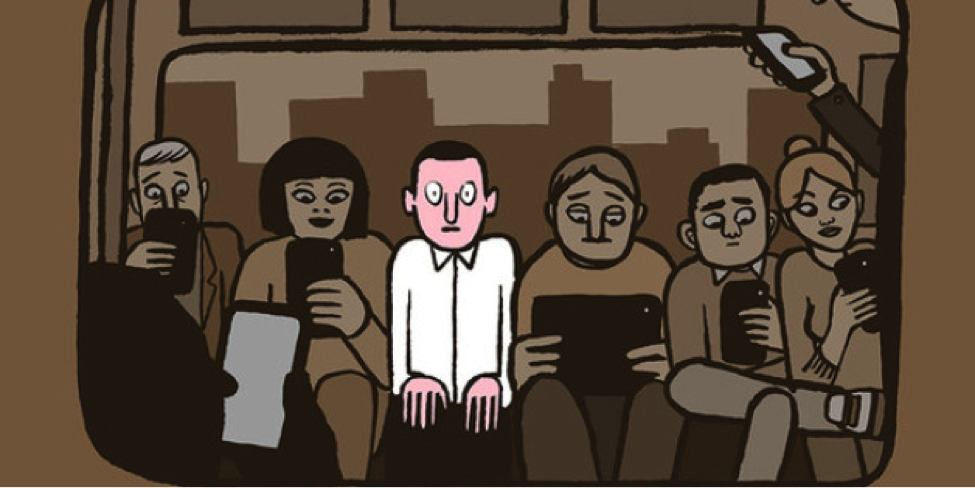
Photo credit: Jean Jullien, Huffington Post

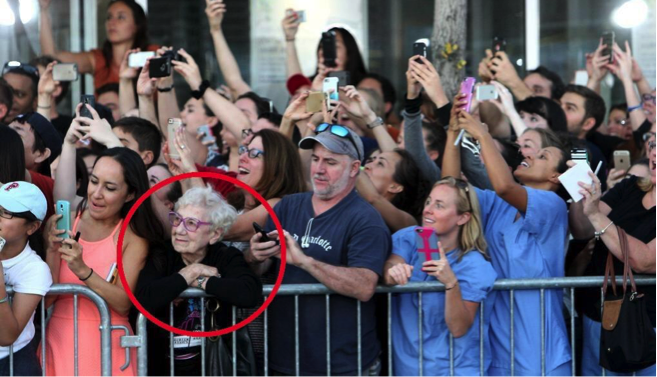
We’ve all experienced the feeling. In the midst of a group of people we find most of them with heads bent and fingers flying, “communicating” or reviewing information on their personal phone or tablet. The net of information or relationships they pursue discount the people around them and instead connects them with people and concepts that are safe, electronic, and can be controlled by the viewer. The electronic entities don’t need deodorant, can be quickly dismissed if they challenge the user’s perspectives, and simply can be used for entertainment and bolstering self-assurance with little or no effort. We have created the ultimate Tower of Babel where the contact nature of life becomes digital signals and pixels. We are lost in a sea of information with no compass and no significant connection to each other. “Communication” becomes data dumps with increasingly absent thought or wisdom behind it. Relationships become strokes on the keyboard and emotions cute abbreviations.

Photo credit: Wayne Dahlberg

Take a moment and think about how this impacts our personal relationships and our public policy formulation and governance. Without understanding the impact of electronic disconnection, our decisions tend to be influenced by the largest number of data points or “views” and become subtly detached from traditional values, perspectives, and concepts such as servant leadership, the pursuit of what is “pono” (right or righteous), and the general welfare of the community. Policy decisions descend into sorting out polling numbers, not true visionary leadership. We become increasingly disconnected from reality as the information we are fed narrows our focal plane and suffocates our understanding.

This is not a happy picture, but is also not new; cultures have struggled with disconnection throughout history. Our traditional Hawaiian culture in particular was focused on the negative impact of disconnection within the community. Island people need to be particularly engaged and aware of their relationships both with their human counterparts and also with the natural resources they steward. Island people understand that life is a “contact” sport with risks and negative outcomes that demand their attention. The structure of our Hawaiian language reflects this concern for clear communication and attention to details as it relates to relationships.

Photo credit: Kauaʻi Historical Society

A particularly pejorative description of a person in the Hawaiian culture was the phrase, “He kanaka pī!”…he is a stingy person! As I thought about this condemnation, I was more and more drawn to the insight that the culture was not necessarily solely condemning a person’s selfish behavior, but rather was judging the fact that this person was disconnected from the core values and culture that worked to sustain their community. The person’s focus on self and his/her possessions presented a real threat to the survival of the communal whole.

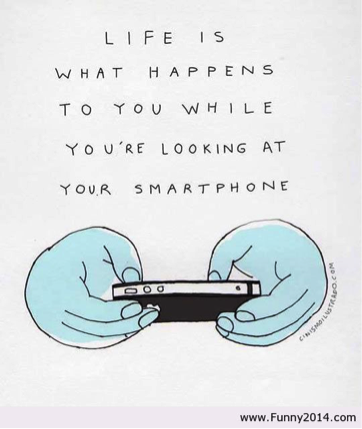
Life Happens

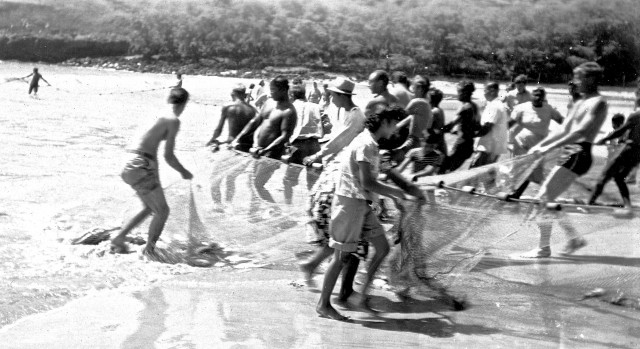
With the impact of electronic disconnection in today’s world, we can see the same negative impacts to our community’s long-term health and to the survival and strengthening of our cultural core as Hawaiian people. Hawaiian culture is about engagement and real time relationships in the midst of life’s struggles. When we bond with each other in facing the challenges of life, we reaffirm the values and perspectives that have been modeled to us by our kūpuna and our extended ‘ohana. It serves to validate these values and relationships so that we can become stewards of them and pass them on through engaged relationships with our children and colleagues. The hours I spent watching my father and uncles fishing and relating to people left me with life lessons that I hope I have passed on and that I hope will enrich our community’s life. I probably could have learned all the data through Wikipedia, but I would have missed life and the richness of relationships in the process.

Be Present

Take some time apart with children, friends, and/or relatives. Turn off the electronic disconnectors. Bask in real (and often uncomfortable) interactions with those around you, those you have made commitments to and have aloha for, even those people who put your teeth on edge. Fight electronic disconnection with passion!! Trust me, it will be a blessing… HTH. SCNR. BFF. Jan.

Ponder The Pewa In Our Midst

DSC_0159
Children and families learning about the ancient Heʻeia Fish Pond.

For a number of years, I have been appreciating the amazing talent and technology of the traditional Hawaiian culture. One example is the loko i‘a, the Hawaiian fishpond, which I was involved in the rebuilding and restoration of for several years. The loko i‘a was unique to the Hawaiian Islands and represents a very sophisticated environmental management technology that allowed Hawaiians to use various forces of nature to create a system that bred and stocked marine animals. At the same time, it provided a catalyst for abundance on the adjacent reefs. The advanced engineering that went into the placement and the construction of the walls and gates continue to be a testimony to the tremendous insight and talent of traditional Hawaiian marine engineers and hydrologists. When one adds the beneficial environmental impact of these structures, we begin to appreciate the depth of knowledge our ancestors had about the physical world they inhabited. They had the ability to understand and use natural phenomena such as the wind, tides, currents, fresh water and salt water, mixing them in ways that wouldmaximize benefits for the population and for the environment. In the loko i‘a, the community maintained a unique “icebox” to collect food reserves and breed and grow marine animals, and as a result, people and the reefs prospered by the presence of these fishponds.

There are numerous other examples of traditional technology and the sophistication it displayed regarding the management of human activities, the long term sustainability of important natural resources (such as the marine reefs, fresh water, land use, waste management), and other critical factors that allowed the culture to prosper and sustain itself. I have been fascinated as of late with the lowly wooden calabash, called ‘umeke in the Hawaiian language. I must make adisclaimer and say that I am not a woodworker. The “C” I got for my shoebox in Papa Wright Bowman’s crafts class in seventh grade cut short my promising career! But over the years I have been astounded by the work of those who make our traditional calabashes and have read some of the history and lore surrounding this sophisticated craft.

Pewa Bowl
Photo credit: honolulu0919

The making of wooden and gourd calabashes was an art that was passed down in secret from master to student and was jealously guarded by the craftsmen and their families. The production of a calabash would often take a considerable amount of time and effort and the product would become a prized possession of its owners.   Types of wood and shapes of the container would be specific and often ‘umeke of various types would be used by families over many generations.

What, you might ask, does this have to do with today’s world of Tupperware and Ziploc containers? Please bear with me. In the making of ‘umeke, there often would appear cracks and imperfections that could potentially make the bowl useless. Because of the cost of production and the importance of these calabashes in the day to day culture of our kūpuna, the wood working masters developed a way to repair cracked ‘umeke and restore them to their original state… even making the cracked bowl stronger. They did this by using an innovative fishtail joint, the pewa, to seal the crack and save this important part of day to day life in traditional culture. The ‘umeke was restored to its function and its important role, and the family was able to continue to use this important implement for its benefit.

As I thought of this small, yet important example of the traditional technology of the Hawaiian culture, I was stirred by the picture of many people in our communities who quietly and often without recognition work as human “pewa” to heal and restore broken pieces of our families, neighborhoods, and communities. They bring people together, they restore dignity and usefulness to those we have abandoned, and they do it without need for publicity and promotion, just like the pewa that healed the traditional ‘umeke. How blessed we are to have these individuals who join together the cracked seams of our lives and allow us to grow and prosper as individuals and communities.

DSC_0511
Sweets Wright and Bob Agres were the recipients of the 2016 Pewa Awards on May 05, 2016.

I hope you will take a moment and think through the “pewa” who work to bless us and encourage us in the midst of the challenges we all face. Take a moment to recognize their work and celebrate with others the gift they all give to us and our ‘ohana. May our most fervent prayer be that we would be a “pewa” in the lives of those around us. Blessings and aloha!

Welcome to the Age of the Dismissal of the Host Culture

During the past several years and particularly during the last several weeks as the legislative season moves towards its closing, it has become more and more apparent that public and private policy makers have increasingly ignored the Hawaiian culture and concerns when reaching their decisions impacting present and future components of our community.   The mandated historical preservation processes, traditional water resource management, and cultural protocol relating to land use have generally been ignored by many agencies and departments of the federal, state/counties, and a cultural sensitivity to the impact of decisions on historical and contemporary Hawaiian places and practices has been clearly absent. Two or three specific issues might illustrate this principle.

ALT2

According to credible sources, the U.S. Navy has indicated that they will turn over five hundred acres of their Kalaeloa lands to a commercial private sector developer for the building of private residences. No mention of community input, no mention of the historical or cultural importance of this land to the Hawaiian people, no recognition and provision for the critical water resources beneath this land, no consultation with the Department of Hawaiian Home Lands, and a seeming lack of interest in the opinions of Hawaiians and non-Hawaiian community members have characterized this egregious and insensitive decision. I know that “to the victor belong the spoils” is the catch phrase in the exercise of military and political power, but in the past it has been a bit more subtle. It seems the velvet glove has come off.

It is interesting that most tourists come to Hawai‘i in great part because of the presence and power of the Hawaiian culture.

Just recently we also learned of the dismissal of the Hawaiian Cultural Director of the Hawai‘i Tourism Authority, after ten years of being a voice for the host culture in the organization that represents and promotes the largest industry in the state after military spending. It is interesting that most tourists come to Hawai‘i in great part because of the presence and power of the Hawaiian culture. It seems that authentic Hawaiian culture, traditions, and values are being abandoned by industry promoters in favor of slick generic beach promotion and Disney plastic tikis and cartoon caricatures. Pohō.

Another point of irritation in this vein is the fact that the Hawaiian culture is the only major ethnic group lacking a cultural center to celebrate its rich history and presence in our community. The Filipinos, the Okinawans, the Japanese, the Chinese, the Koreans, and others have their stand-alone centers. In a curious proposal, the HTA is offering to put a Hawaiian Cultural Center on the roof of the Convention Center. I suspect this is done to pay for the repair of major issues they have had with the roof and in hopes of financially saving that debt-ridden facility. Shame on them. How about OHA stepping forward and putting a real testimony to the Hawaiian culture, music and dance on their Kaka‘ako property? In a pono world, Hawaiian culture should be a priority for Hawaiian cultural organizations.

ALT1
Photo Credit: dhhl.hawaii.gov

There are many more examples of this blatant disregard by our policy makers for issues of importance to the Hawaiian community, but I will close with another example of this widening disregard. The current legislature and state administration have been lukewarm, at best, in working to provide the Department of Hawaiian Home Lands (DHHL) with the resources needed to process applications for housing and land leases. This is despite the ruling of the Hawai‘i Supreme court that highlights this failure of the state to uphold its commitment to fund these administrative activities, a major part of the constitutional agreements included in Hawai‘i’s admission as a state in 1959 (see Nelson case). For eight decades, the continuing failure to fund the process of leasing by the department has, in part, led to the decades-long waitlist for DHHL leases. Today there are over twenty-thousand on the waitlist, and DHHL has struggled to get the resources to manage an efficient processing program. Many Hawaiians die while on the waitlist and thousands are kept from having a piece of their ‘aina. Let’s see what emerges. I tend to believe that this administration and legislature will again affirm its lack of serious interest in fulfilling the state’s obligations to the Hawaiian community, which would allow more Hawaiians home ownership.

How can we claim to be the land of aloha when aloha is absent from the heart of those who are shaping the present and future of our community??

I trust that the Hawaiian leadership and friends of the Hawaiian culture will begin to stand up in the face of this dismissal of the Hawaiian people by the political and economic power brokers in our community. This dismissal is mean spirited, exploitive, and lacks the amazing values and perspectives that our kūpuna call us to model. How can we claim to be the land of aloha when aloha is absent from the heart of those who are shaping the present and future of our community?? It is important that Hawaiians resist the “culture of shame” that drives a consistent dismissal of our culture and our place in our homeland. To put a positive face on a negative reality, perhaps it is time for our Hawaiian leaders to model clearly the power and healing nature of servant leadership. The contrast to the present behavior of our political leaders may lead to a true return to our cultural values in our public policy debate. Perhaps the time of ahonui (patience) is pau and kū pono (stand for righteousness) should be the lens we use to view those who govern us.

Democracy: If You’re Not Practicing It, You Don’t Have It

Legislature
Opening day in the Hawaiʻi legislature, photo courtesy House GOP

As we begin a presidential election year and also a session of the State legislature, it may be a good time to reflect on our privileges and responsibilities as citizens of the various communities we inhabit. Whether Republican or Democrat, pro- or anti- Hawaiian Sovereignty, for or against the rail/unions/Jones Act, etc., it might be worthwhile to take a deep breath and re-visit the roles we have in policy making in our communities. It seems that a whole lot frustration and a great sense of separation from our political process often leads us to political paranoia and, ultimately, political paralysis.

We become intentional spectators in what is NOT a spectator sport: democratic governance.

Statehood
William F. Quinn and Kealoha being sworn in as Hawaii’s first elected Governor and Lieutenant Governor.

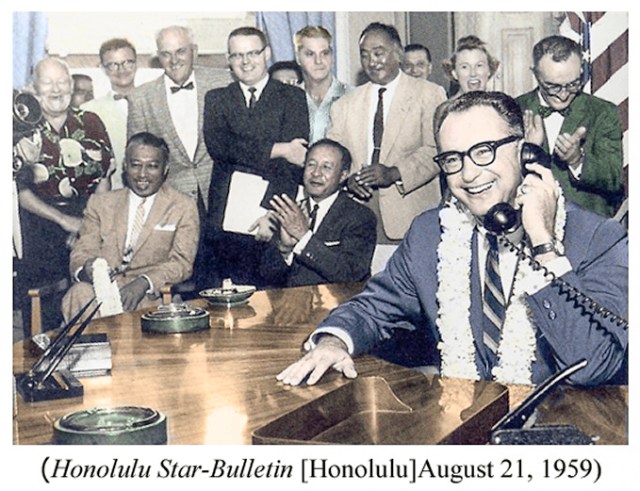
After becoming a state in 1959, Hawai‘i had one of the highest percentages of registered voters participating in elections with more than 90% voter turnout. Since then, voter turnout has declined and for years, Hawai‘i has had the lowest percentage of population registered to vote and one of the lowest voter turnout rates in the nation (only 38.6% of people in Hawaii voted in the last election). We’re winning the wrong races. As is the growing reality in many communities nationwide, political apathy seems to be a strong element in our Hawaiian politics. We can look at this phenomenon from a number of different perspectives, but I’d like to take a look at the Hawaiian community and what is or is not happening when it comes to civic participation.

Though there was a definite high point of Hawaiian participation in politics during several of the early decades of the past century (primarily in the Republican Party), there has been very little resurgence of this activity in the past fifty years. This is juxtaposed to the emergence of various immigrant groups who, over the years, have become the dominant political players in charting the political, social, and economic future of Hawai‘i. The Caucasian presence has always been powerful since the coming of the missionaries, but the alliance of new arrivals from the mainland along with the Japanese political flowering after World War II through the Democratic Party has remained the dominant political reality of the state. We currently live in a one party system where there is significant inertia protecting the political status quo. This makes it difficult for new groups to form and to push through changes that might destabilize the system.

Sovereignty
Groups protesting against sale of ceded lands in 2008, photo courtesy of David Ma

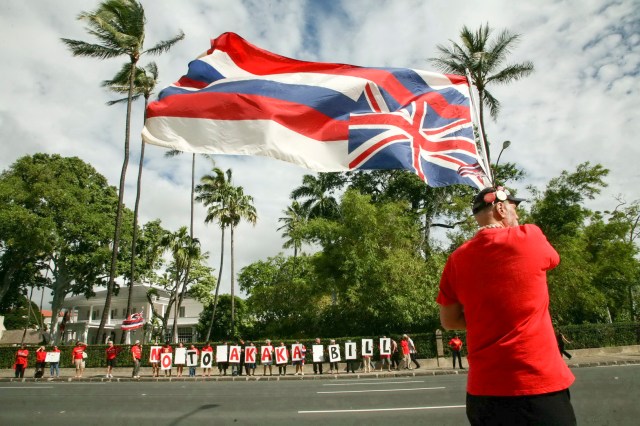
Case in point of the above is the Hawaiian Sovereignty movement. Since the 1960’s there has been a growing self-awareness in the Hawaiian community regarding the culture, history, language and rights of the host culture. For many years the history of the overthrow and the record of the Hawaiian Kings were the domain of apologist writers like Sereno Bishop and Lorrin Thurston, missionary descendants that had little good to say about the Hawaiians.   Bishop and his friends were concerned about justifying the overthrow of the Hawaiian monarchy and solidified what I call the “Culture of Shame” that led to the near destruction of the Hawaiian language, the denigrating of Hawaiian cultural and management practices, the suffocation of the art of hula and traditional dance, and the creation of a myth that Hawaiians were incapable of governing themselves. The result was what I believe to be the creation of a shame culture that led several generations of Hawaiians to turn their backs on who they were. The tragedy in this whole process was the fact that we began to embrace this image of Hawaiians. Though changes to this culture began during the renaissance of Hawaiian language, arts, dance and culture, the impact of the shame culture on public engagement in the Hawaiian community continues to move slowly and is usually evidenced in outbursts of political protest activities that lead to no lasting and substantive policy changes.

A lesson all ethnicities can take from this short summary of the impact of shame culture in Hawaiian civic engagement is the sobering lesson that the challenge of getting people to participate in public policy formulation involves working to change a very powerful status quo. The existing political system is not interested in transformational change that does things like working to end homelessness, social injustice, income disparity, poverty, etc. It is as if the system has a powerful socio-economic-political internal gyroscope that is dedicated to maintaining the existing set of power relationships in our community. It does not embrace significant change and is constantly working to stabilize the status quo.

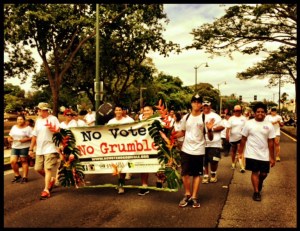
NVNGAs with most things, change in public policy must start at the beginning. People need to understand their obligation to get involved, get informed, and then participate in the workings of the system. The Hawaiian community represents approximately twenty percent of the population of this community and needs to organize to set clear and achievable policy goals, begin the process of civic engagement by first registering to vote, understanding the issues, knowing the candidates, voting, and then holding our public servants accountable for the actions they make on our behalf. It is encouraging to see the need for civic engagement slowly starting to emerge not only in the Hawaiian community, but also in other ethnic groups such as the Micronesian population. The simple slogan, “No Vote, No Grumble,” is beginning to attract attention. All of us need to support voter registration and voter issue awareness and participation. Can we all start with our families and friends? E kū pono kākou! Let us stand for what is right!

Activism begins with you, Democracy begins with you, get out there, get active!! Tag, you’re it!!” Tom Hartman.

Issues of our Island Community

I just had a chance to reflect on the various topics of my blog over these past six months and think about what topics make sense for this new year. I’ve come to the conclusion that the past posts might be an agenda for the coming year, as all of the issues seem to be related to facets of our island community that we need to reflect upon and pay attention to. Let me summarize and preview for you what I hope to write about, but please feel free to leave a comment about topics you would like to discuss.

Early Education:
We need to pay attention to our children as soon as they are born and intentionally work to provide them with opportunities to develop the cognitive, motor, and sensory skills necessary to successfully enter the formal education cycle. To do so, we as parents, grandparents, and caregivers need to be prepared ourselves with an understanding of how best to approach early education in the lives of the children we love. We could probably go on and on just in this area of need, but each of us should at least inventory where we stand in this most important area of preparing our children to take the reins of our communities.

1041010Reconnecting to Cultural Roots:
When I was teaching many years ago at the University of San Carlos in Guatemala, I learned that the Mayan Indians conceptualized the past and the future opposite from the way most of us do. We view the future directionally, as the horizon in front of us and the past as something behind and done, and not necessarily connected to us. Mayan Indians however, view the future as being behind them as it is not yet visible and the past in front of them, something they can see and understand. They embrace the past as the key to understanding their path in the present day. It is from the understanding of the past that they can navigate the future as it unfolds and moves from behind, becoming visible in the present. I believe we need to explore this concept as it relates to the host culture. We need to intentionally embrace the lessons of our Hawaiian kupuna through the chants, stories, personalities, and values they gifted us.

58ed69_54719583a43949a39ab3dbc37ecf53f7Civic Engagement:
Another theme I hope to continue to explore is the urgent need for people to get engaged politically. We have the worst voting numbers in the United States and this is a major source of our inertia and passivity when it comes to the policy making process in our community. A vibrant democracy demands an active, informed, and engaged constituency and we suffer when this is not the case. I am not promoting any specific political agenda other than an agenda that gets our people informed, engaged, and involved in the governing of our community. “No Vote, No Grumble” is a motto that is both a threat and a call to action. Which one will it be for us.

IMG_1424Embracing Displaced Minorities:
I would like to end this short list of topics for the year with the issue of how we treat those who are different from us, in terms of culture or physical capabilities, in our community. Many of us have been blessed to be a part of families clearly committed to embracing those around us who are struggling with poverty, discrimination, or disabilities. Yet we see that there is still a growing intolerance, frustration or disregard in Hawai‘i. We’re often quick to blame the migrant, the poor, the homeless, or those with disabilities for the social ills of our day. We turn our back on the Hawaiian tradition of mālama, kōkua, and aloha when it comes to these populations. How easy it is to blame the newest migrants or homeless for the crime and litter that we see on our streets. We often think that removing the homeless and poor from our sight solves a problem that continues to grow and expand because we fail to address its roots. People with disabilities are also often ignored or treated with minimum effort or interest. Where has the Hawaiian heart of our community gone? What can we do to restore a passionate sense of need to pursue what is pono for our families and our communities? I hope we can explore some of these issues as the year unfolds.

Blessings to all. E hana pono kākou! Me ke aloha piha.

Reflections on Days Gone By

As I reflected on my post about wahi pana (a sense of place) I realized that a big part of our sense of place are the stories. They provide for the younger generation a glimpse into their past and the personalities, histories, victories and defeats that have made our families into unique and special creations. My son asked me to write some reflections on growing up and I decided to share one with you, just as an example of a simple way to convey to the keiki their family’s sense of place and history. You may want to do the same for your ‘ohana.
3
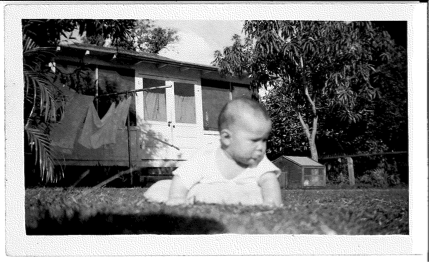
I grew up at 904 Lunalilo St., in a large one-story house built up on six foot posts and surrounded by a large and wide wooden porch. The house was built at the top of a slight rise of yard so you had a pretty good view of the surrounding neighborhood and glimpses of the city below. Fifteen to twenty feet away on the Diamond Head side of the house, sat a cottage where Uncle Alfred, Aunty Beatrice and my cousins Alpha, Melvin, and Michael lived. In front of the cottage was a mango tree (the launching pad for my adventures as Superman with a wash towel tied around my neck) and a sprawling expanse of lawn that ended at a rock wall several feet above the sidewalk. On the Ewa side of the cottage facing the main house were the washing sinks where all of the clothes were cleaned on scrubbing boards and then soaked with bluing to make the whites whiter. Aunty Bea was doing laundry at these sinks when the Japanese attack on Pearl Harbor began on December 7, 1941.

I remember the house as a ramshackle structure, huge with high ceilings, large drafty rooms, and the wooden porch painted a peeling grey. On the porch you could watch the fat, black bumble bees diligently working to mine the wooden posts that held the roof in place. A luxuriant, deep, and very high stand of shell ginger plants lined the Lunalilo St. side of the house, with two sets of eight or ten stone stairs climbing from the yard up to the porch.

Jan In a Mango Tree
Me in the mango tree

The set of stairs at the middle of the house brought you to what was the formal (and basically seldom used) entrance to the “parlor,” a formal room with old oriental rugs that people used to pass through on their way to another part of the house. The other set of stairs to the right, brought you outside the kitchen and had at its foot a very prolific Hawaiian chili pepper bush. It stands out in my memory because it was to this bush that Uncle Al would go for chilis to rub on our lips to discipline us about the words and/or attitudes my cousins and I indulged in from time to time. It’s amazing that I still love the tang of those little red tormentors!

All of my cousins were older than I. Michael was the youngest of my cousins and was five years older. He was for all intents and purposes, my older brother and my model, and I his shadow. Melvin (“Buddy” as he was called) was several more years my senior and Alpha, the oldest, was ten years my senior and the same age as my sister Barbara (I couldn’t say her name so she became and remains, “Tita”…sister). Since sister Barbara had a very active social life at Punahou, Cousin Alpha was often stuck caring for her bratty younger cousin Jan. Life was and is not fair. To this day, however, I have a special place in my heart for Alpha and Michael. The latter was important as one of my first guides to how life works. He had a newspaper route in and around the Lunalilo St. and Thomas Square area, and used me as slave labor to deliver his papers in exchange for a couple of small waxed juice bottles that were the rage in the latter part of the ‘40’s. Michael introduced me to the wonders of the manipulation of people (in good ways) and could get me to run up the longest driveways with the paper for those little wax bottles and the occasional big treat, a strawberry soda. The strawberry sodas were usually won after a particularly hard day (for me, at least) of delivering newspapers and part of the thrill of getting it was plunging my arm into the water and ice to claim my prize at the small corner store. Strawberry soda was my favorite, but it often found competition with Nesbitt’s orange soda in the bumpy bottle. Strange to think how life’s memories are populated by these details. At the time, however, they were important building blocks of my life.

In Front of the Cottage

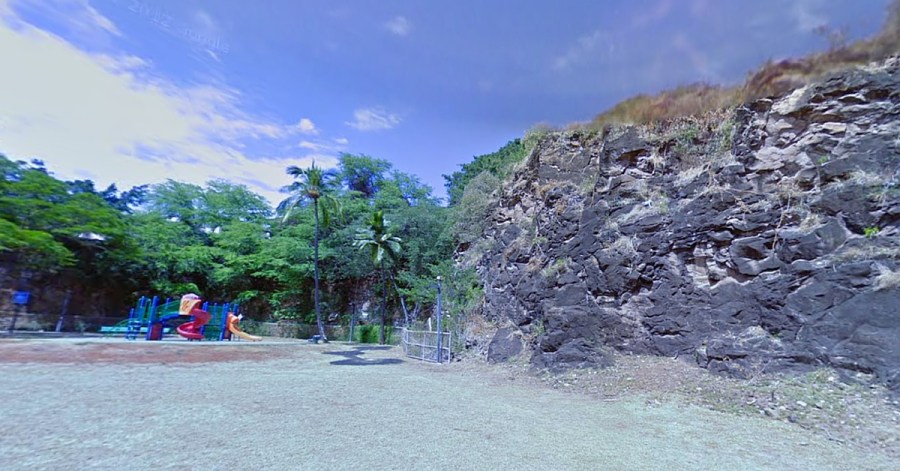
Adults on the whole had their own lives separate and apart from us kids. We spent our childhood exploring around the block and if we could get away, down at Dole Park a couple of blocks down the street past the old Normal School. The park has a cliff that was a magnet to young children and I’m just amazed that I don’t remember losing friends off its face. In the neighborhood, people were always very vocal about reminding you what you should or should not be doing. At dinner time the neighbors reminded you to go home and eat. Mom and Dad didn’t have to chase you down. The Simaos lived in the house just behind us and when dinner was ready, Mrs. Simao would call in a shrill voice for her two children to return. Like clockwork, “Diana June, Earl William, you come home NOW!” would resonate throughout the neighborhood at dinner time. Looking back on it, things like Mrs. Simao’s trumpeting voice provided structure and stability to our lives.

The times when the lives of children and adults crossed were usually around the large round kitchen table we had in our house. The table was the platform for large bowls of stew, poi, fried fish, and rice that often were the substance of our meals. There were always extra people at the table, some I knew and others strangers to most of us except my mother. She was always finding people with needs and those needs often meant they ended up eating with us and sometimes, living in our house for extended periods. Stew was always a good thing to have in the pot, for you could always add more water and more carrots if the need arose! We would have long conversations about the day’s activities over the meal and then, when the dishes were cleared and cleaned, we would hunch near the radio to hear the latest adventures of The Shadow, The FBI in War and Peace, and the hilarious antics of Jack Benny and his radio colleagues. Radio provided vivid images of the outside and unknown world for us as we were growing up. The Lone Ranger and Tonto became people you could almost reach out and touch as you listened to their adventures in the quiet of the kitchen surrounded by those you loved.

Julia Ayers Chock - Jan’s maternal grandmother
Julia Ayers Chock – My maternal grandmother
Ah Fun Chock - Jan’s maternal grandfather
Ah Fun Chock – My maternal grandfather

On a more mundane level, the kitchen table was also the place you put the metal bowl of water under the kitchen light to attract the termites when they swarmed periodically. I’m sure that the two houses at 904 Lunalilo St. were kept standing by the gracious mercy of the termites and their determination to keep holding each other’s hands.When they swarmed, however, the metal bowl was quickly filled with wiggling bodies and wings. A final memory of the kitchen was the twice weekly delivery of ice for the icebox, the refrigerator of my youth. I used to stare in amazement as the bare backed men would jump down off their truck, throw a burlap bag over their shoulder, pull out gigantic metal tongs and grab fifty pounds of ice, sling it over their shoulder, and then dash up the steps to deposit it in our icebox. Their strength and energy remain vividly in my memory, and as a very young boy, it showed me hard work in its rawest form. A great lesson for life!

So many simple, yet profound lessons I was privileged to learn at the corner of Lunalilo and Ward Streets six or seven decades ago.

All of us have those amazing insights to life that were given to us in very mundane and common settings! We should work on reflecting on them and seeing how they have molded and guided us. Then we need to shoulder the responsibility of passing these portals to the past to our younger generation as they work on discovering who they really are.

Hopefully the stories and the sense of wahi pana will help them through the process. My ‘ohana has periodic “Cousins’ Camps” where all of the young cousins gather and we older ones have a chance to share the past as they forge relationships for the future. We have all felt this has been a blessing. Perhaps you might explore the same for your ‘ohana.

Blessings to all this Christmas season and New Year!


In the midst of traumatic changes to the life of the Hawaiian people in the latter part of the 19th century, King Kamehameha IV asked missionary Lorenzo Lyons (Makua Laiana…Father Lyons) to adapt an English hymn ‘I Left It All With Jesus’ (written in the 1840’s by James McGranahan) for the Hawaiian churches.  ‘Hawai‘i Aloha’ is a call to the Hawaiian people to remember their roots and their relationship with Ke Akua.  It is a call to reaffirm who they are in the midst of change.  Today this song is often sung at the closing of meetings or gatherings and remains an important part of local culture and a reminder of the importance of wahi pana.

(If the you have trouble viewing the Hawai‘i Aloha video below, click directly on the video or click here to view it on another page) 

Getting Lost Begins By Not Knowing Where You’re From

Screen Shot 2015-12-01 at 9.39.45 AM

In the frantic pace of the lives we lead, I am often struck by the amazing number of people who seem disconnected from clear values and goals in their lives, consequently falling victim to the constant bombardment of ideas, values, and pseudo-goals that are a part of the electronic jungle in which we have to function. They seem lost. They seem at sea without a clear course or goal. They have been disconnected from (or perhaps never connected to) the cultural/value anchors that bring stability and focus into our lives. It is often most apparent with the younger generations, but is definitely seen frequently in people who are well into their lives and careers.

I have found that there isn’t a lot of attention given today to helping our young children and caregivers learn and apply their family values and histories to their lives. We seem too content to allow outside sources and perspectives fill this void and become the driving forces in our families. I believe we do this to the detriment of our families and our communities. We risk allowing ourselves and our children to become individuals who reflect other world views, other value systems that don’t reflect our heritage.

We risk allowing the next generation to get lost because they were never taught where they came from.

In traditional indigenous cultures, we find a more focused commitment to preparing the next generations by making sure they understand the history, traditions, and values from which they have blossomed. In addition to genealogy and family traditions, many indigenous cultures like the Hawaiian culture, pay close attention to the specific geographical places their families inhabit. They understand the power of an active and vibrant sense of place in the life of its people.

In Hawaiian culture, “wahi pana” is defined as celebrated, noted, and legendary places, or landmarks of special interest and historical significance. Each of these special places have distinguishing landmarks (mountain peaks, streams, wind, rain, etc.) that are given specific names and are connected to the rich history, chants, stories, and songs that are traditionally passed down from one generation to the next. Hawaiian music, for example, is replete with songs that praise places in our islands with the actual place only being revealed by the specific name of the wind or rain that is referred to in the melody. In public gatherings fifty or sixty years ago, it was common for the various songs of the islands or communities to be sung as an invitation for people from those places to stand and be identified with that wahi pana. It kept my grandparents and my uncles aware of the traditions they represented as they faced the challenges of day to day living. Although we still possess many of these names and songs today, we may not know the physical characteristics that led our ancestors to call a wind or rain differently from others. Our understanding of our sense of place is eroding.

Screen Shot 2015-12-01 at 9.38.48 AM

I believe a sense of place is an important tradition that has powerful applications in the lives of our children, families, and political leaders. The unique and special cradle of people, traditions, and physical realities of a place shape who we are. It is a strong framework from which we can make decisions consistent with their historical and cultural anchors, to meet the challenges of contemporary life. I have often characterized our very young as being “baskets” waiting for the values, perspectives, and skillsets they need for their lives. Often we allow the larger world to fill these “baskets” with values and perspectives inconsistent with our cultures and our family traditions. We step back from intentionally teaching our children who they represent and where they find their roots. Let us return to a commitment to teach our children and adults the power of wahi pana. We know our children will often take different paths and break new ground in other places. Hopefully, they will not get lost because they now know where they come from…


In our early education programs at Partners in Development Foundation (PIDF), we have made a commitment to produce video statements of wahi pana for thirty locations throughout Hawai‘i. The purpose is to remind our children and adults of the amazing core each place has in their lives and in the history of Hawai‘i. It has been encouraging to see the positive impact a sense of place has on the thousands of children and adults that have seen the wahi pana of their communities. It is something all cultures can embrace as they prepare their children and help their adults in being good and successful caregivers.

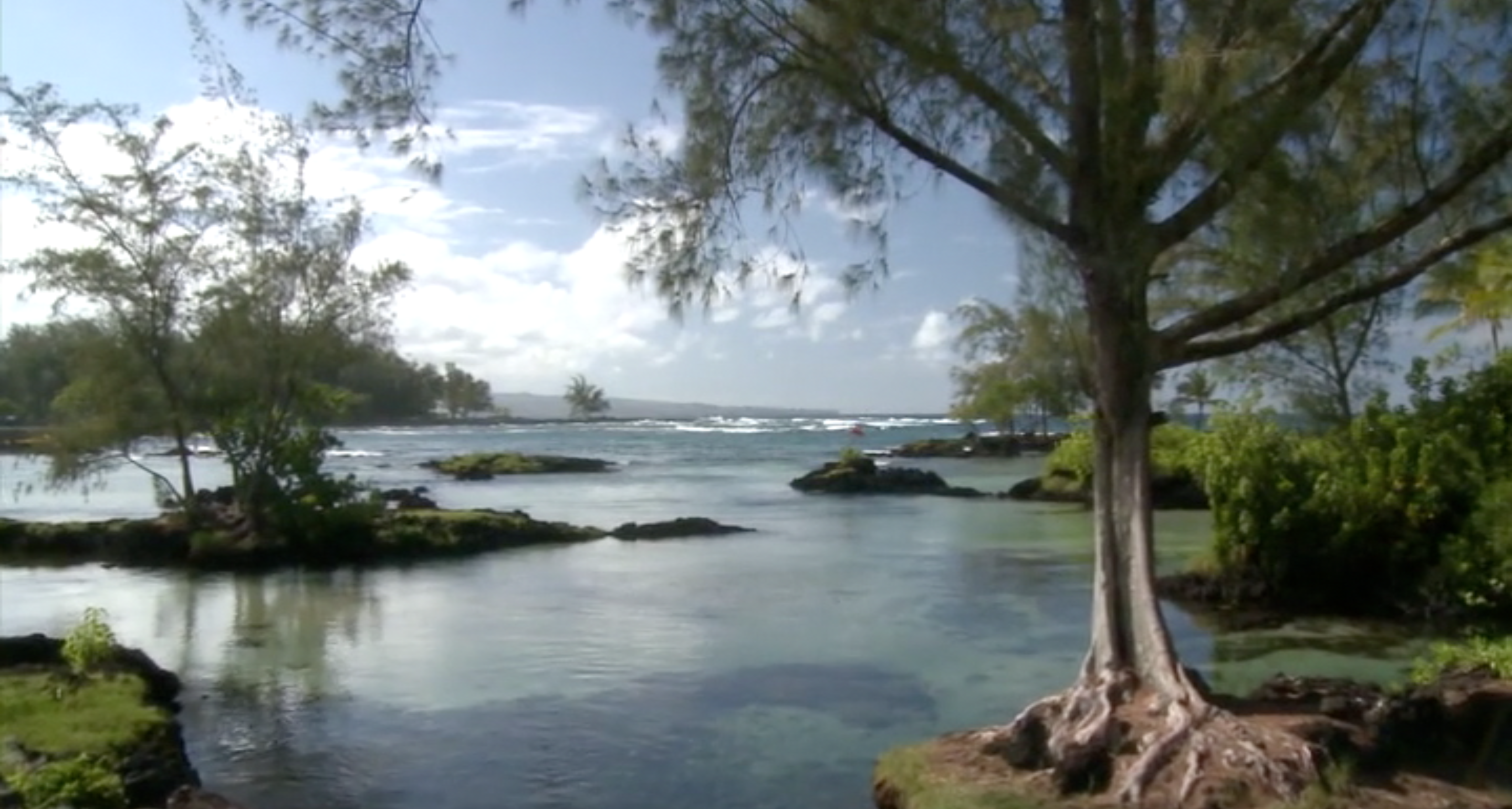
I have often thought that our policy makers also need to refresh their understanding of the communities they represent. For example, only a few minutes of study can bring to life the character, rich history, and traditions of places like Ka‘ū and Hilo. What a resource for leaders as they make decisions impacting the populations they serve!

Please enjoy highlights from these first two wahi pana videos by PIDF on Ka‘ū and Hilo


The 3 “F’s” of Transformational Change

In a recent blog, I wrote about The Three “P’s” of Transformational Change: passion, pono, and perseverance. All three are integral in pursuing sustainable positive change in our communities and in facing the social challenges of poverty, social dysfunction, and institutional inertia. In response to the three P’s, I’ve had a lot of questions about how one practically implements transformational change within these concepts. Passion, pono, and perseverance are recognized elements, but what are the practical steps we need to take in order to turn these concepts into measurable, “kick the tires,” positive results in our community’s changed reality? Allow me to suggest three “F’s” to help us along the transformational change path.

The three disciplines of FOCUS, FOLLOW THROUGH, and FINISH are applicable to all of our activities. They become particularly important, however, as we approach the challenge of implementing significant and substantive change that shakes the status quo. If we intend to introduce transformational change, we need to make sure we clearly understand what the first step of focus means in the process.

-The secret of change is to Focus all of your energy, not on fighting the old, but on building the new.--socrates

To focus on change, we must be sure we understand and precisely outline our goal. When will we know we have reached our goal? We will only know this if we have fully defined and focused our attention on what we propose to change and what the characteristics of this changed reality are. We often cannot control all of the variables of change, but we need to begin the process by defining our objective as much as possible in the process. We need the crucial element of focus. If our initial focus is clear, we can use it along the journey as a benchmark for any changes that need to be added to the goal.

The second element of success in implementing change is the simple, yet often very difficult, phase of follow through. Once we have done the job of defining and understanding the measures of our focus, we are confronted with the challenge of putting into place the actions necessary to move towards our goal.

We are often lulled into thinking that a clear and compelling definition of our focus is sufficient. We often shy away from the nuts and bolts of putting into place the pieces that make transformational change actually happen.

Inertia and the intrusion of other urgencies conspire to blur this phase of engineered change and we are left wondering what happened when our focus is lost. All of this calls us to a heightened awareness of the implementation phase of change, the follow through. We may find that as our plans are implemented and put to the test of reality that our goals may need to be modified. As mentioned above, a clear initial focus can be used as a benchmark when modifying these goals. In other words, although focus and follow through are often separated in our minds, they are in fact very much tied together in practice.

Finish

There is a lot more that can be said of follow through but the third element of change, the finish, should always be kept in the forefront of our implementation activities. We need to press on towards our focal point and make sure we achieve the goals we have set. So often we are tempted to leave the battlefield of transformational change with the change half done or done in such a manner that our original focus is lost or marred. This is the point at which we may need others to help keep us accountable to the goals we have set. They need to press us into completing what we began in the focus phase and implemented (and perhaps modified) in the follow through phase by finishing the process.

Lots of relatively simple concepts to this process, but at heart it is a complex web of activities and attitudes that can have great power in driving change in our relationships and our communities. I’ve also found this three step mantra to be a powerful challenge for the youth of our community or for all of those who are committed to moving the personal, professional, or public agendas of their lives. Try it. You’ll like it and blossom using it.