Family History Can Be Scary

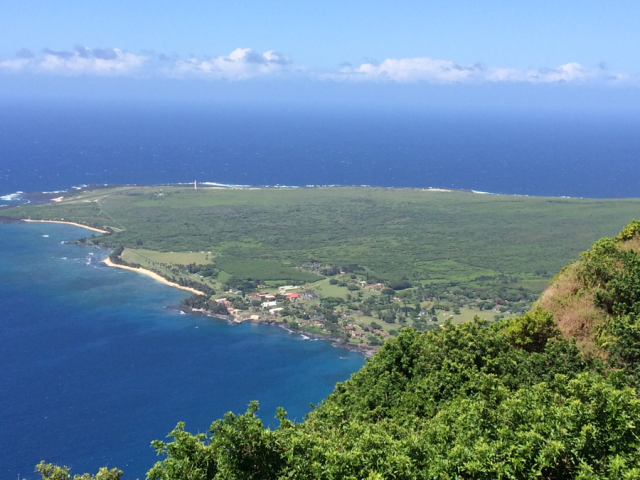
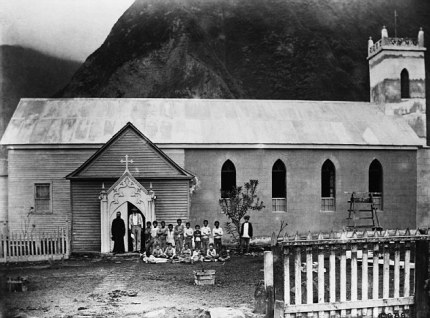
Just recently, we were blessed by a lost cousin’s visit to Hawai‘i.   Alison represents a part of our ‘ohana that suddenly left around the end of the first decade of the twentieth century and moved to Albany, New York. In the recent past her cousin from that line, Barbara, had also visited and worked with us regarding family history. Good people. During my “little kid” days when I was responsible for being seen but not heard, I had listened to bits and pieces of the family drama that had unfolded in Lāhainā, Maui (pictured above) during the end of the nineteenth century and through the twentieth. Like most kids I was clueless when words such as “fraud,” “pono ‘ole,” and “auwe!” were used by the adults in the telling of our family drama. Years passed, I stumbled into adulthood, and became totally focused on finding a path to care for my own growing family. Drama was abundant enough in my nuclear family, so the aches and pains of generations past held little interest.

Lot of this changed as I entered the midsection of my time here. I had found my passion for helping others, our family’s Christian faith had matured, my children were swimming up the rivers of their own lives, and my wife and I had found a slowly lowering level of challenges in family life (actually we realized later that the nature of the various challenges were changing, not their pace). In the midst of this change there was also a growing interest on my part about my Hawaiian roots, the host culture, the language of my elders, the history of our people. Prior to this, these issues held little interest for me as I struggled to find footing in a western culture. Hawaiian things seemed to be decorative like the Kodak Hula Show that played in Kapi‘olani Park for decades, the radio show “Hawai‘i Calls,” or the good fun local music and hula times at the Barefoot Bar at the Queen’s Surf and other venues in Waikiki. In her youth, my mother and her siblings were not allowed to speak Hawaiian at home, so we had been separated from our native language. My father was from Pennsylvania. The expectations my parents had for me were driven by a non-Hawaiian culture and even the high school I attended, though thought to be “Hawaiian,” was in fact a school for Hawaiians to learn the ways of the western world. It was with this background that in my mid-life I found a growing interest in all things Hawaiian.

Looking back on the past couple of decades I can say this growing interest and awareness of Hawaiian reality has been a marvelous, amazing, and painful journey. I would not trade it, but I can understand why many are hesitant to dive into their Hawaiian reality and the history that comes with it! It is this background that brings me back to our recent short visit with cousin Alison.

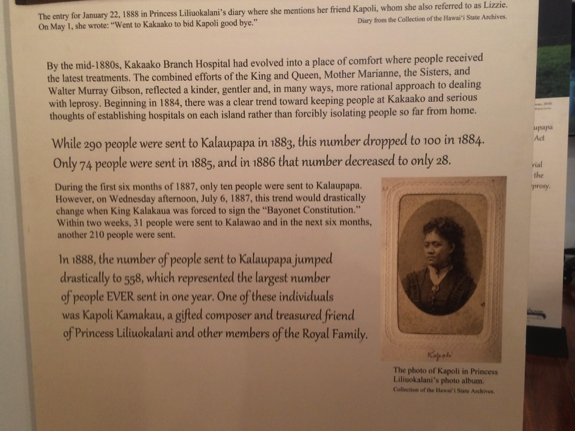
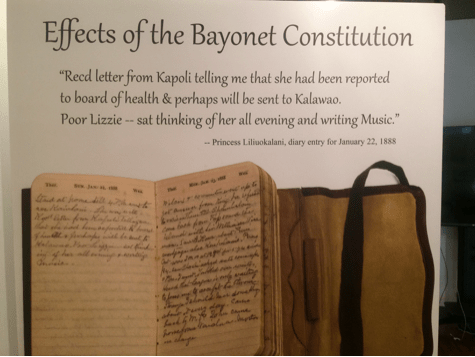
Though our understanding of all the nuances and side trails of our family history are still being studied by some of the ‘ohana, the outlines of the family division at the beginning of the twentieth century probably tracked very similar stories in other Hawaiian families. Our Hawaiian ‘ohana comes from the land division of Kaua‘ula above the town of Lāhainā, Maui. It seems that according to some of the records we have in hand, the various parts of the ‘ohana- the Hinau clan, the Pelio clan, the Manaku clan, the Lindsey clan, and the Ayers clan- were in possession of a significant number of land holdings, several of which also held some of the water sources for the region. A significant part of these holdings came from a man named Joseph Likona Kapakahi, who married into the ‘ohana by taking my great grandfather’s aunt Hana Pelio as his wife. Hana was widowed and then sent to the leper colony Kalaupapa in December 1890, where she struggled to defend her title to the lands of Kapakahi from seizure by Pioneer Mill Sugar Plantation. When I read the correspondence surrounding the legal battles and Hana’s plaintive plea that she could not leave Kalaupapa to defend her rights, I was taken by the fact that the Bayonet Constitution of 1887, which stripped both the Hawaiian people and the Hawaiian King of significant political power, also led in the last six months of that year to a significant increase of Hawaiians sent to Kalaupapa. Plantations were working hard to secure land and water for their commercial investments and it seems they did so at the expense of numerous Hawaiian families, the traditional owners. Was Kalaupapa used in these efforts by the plantations? As the saying goes, “If it looks like a duck, sounds like a duck, and walks like a duck, it is probably a duck.” The connection between land tenure issues and Kalaupapa would be an interesting subject to explore but it is only one piece in the creation of the “culture of shame.”

Back to our family’s history in Lāhainā. Upon Hana’s death in November 1904, it seems her claim to the lands of Kapakahi had been given to her nephew (my great grandfather) Alama Pelio. Alama also passes soon after and his widow, my great grandmother Hattie Namo‘olau Manaku Kaikale Ayers, receives the inheritance.

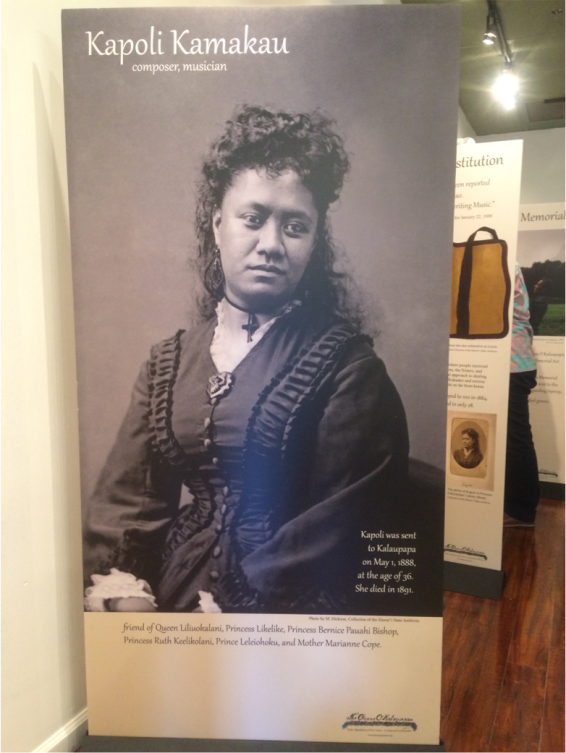
Family tradition says that Namo‘olau was of the ali‘i class, a business woman, and the court interpreter for Queen Lili‘uokalani. She was always favored by the Queen when she visited Lāhainā and the Queen gifted beautiful jewelry to her over the years. The Queen was also a close friend of Hana’s daughter-in-law Kapoli Kamakau, who unfortunately was also sent to Kalaupapa and became part of the family through the marriage of her father Umikukailani to the widowed Hana, while all three lived at Kalaupapa.

kalaupapa exhibit
Kapoli was a part of a very esteemed group of young women that included Lili‘uokalani, Queen Kapi‘olani, Princess Ruth (who possessed the bulk of the Kamehameha lands, later given to Pauahi), and Princess Bernice Pauahi Bishop. Kapoli was one of the few individuals specifically provided for in the wills of Ruth and Pauahi. (Kalaupapa exhibit at the Royal Hawaiian Shopping Center, PC: Stanley Chong)

My great grandmother Namo‘olau had two flights of children. She had either married or was in a common law relationship with a Thomas Eugene Ayers, a Scotsman who fathered several children with Namo‘olau and then disappears from the scene. We think they had two daughters and one son: Mary Alice (marries a Japanese diplomat and dies in Japan), Thomas Ayers (the son who dies before the turn of the century), and Rosina Georgiette K. Ayers. Namo‘olau subsequently either marries or lives with Alama Pelio and they have another four children. These latter children, including my grandmother Julia Maile Ayers, were not allowed to bear the Pelio name but carried the more acceptable western name of their half siblings.

The plot thickens when Namo‘olau’s daughter Rosina (from the Thomas Eugene Ayers children) a beautiful Hawaiian/Caucasian mix, meets and marries a newly arrived medical doctor from New York, Dr. Robert Henry Dinegar. Little did the family know what an impact he would have on their future.

It appears that Dr. Robert Henry Dinegar arrived in Hawai‘i at the end of the 19th century and was originally from Albany, New York. Various stories swirl around the reasons for his coming to the islands, but it has to be said that he and his medical colleagues worked diligently to lower the death rate of plantation workers at this point in history. Dr. Dinegar is also known as the father of radiology in Hawai‘i, served in the public health service, was a regional medical officer for Maui, and according to the family was the first owner of an automobile on the island of Maui! He meets and marries Rosina (my grandmother’s half-sister) and they have a son and a daughter. So far, a great family story. Unfortunately, there’s more to come.

The end of the family tragedy comes quickly. Through all this time, the land dispute has continued with Pioneer Mill and has not come to any final resolution. When Namo‘olau dies at the end of July 1907, Rosina petitions the court to have Dr. Dinegar appointed executor of Namo‘olau’s estate in April 1909. He is made executor, sells the interests in the land and the water rights to Pioneer Mill, and moves that same year with all the family to Albany, NY. He sets up a successful practice and subsequently runs away with his secretary. Rosina remains on the mainland with her son and daughter and sixty years later I get to meet “Lady” Adelaide (Rosina’s daughter) in Boston, Massachusetts. She and her grandchildren along with her brother Henry’s grandchildren have been most gracious. Slowly we are learning good lessons from our family drama.

As I look back on it, one thing stands out from my first moments in Lady’s fine house. I remember being surrounded by furniture, poi pounders, artifacts, quilts, and photos of my family’s past that I had never seen or imagined before. I was gifted with a continuing interest in where I came from, when I was least expecting it. I am grateful that the Dinegar offspring have been generous in sharing the artifacts that went to Albany. Some of the photos are included at the end of this blog thanks to cousin Alison from Plymouth, Massachusetts (cousin Alison is one of Adelaide’s grandchildren, the oldest of four children from Adelaide’s only child, a son).  The spear that the family believes was part of Captain Cook’s final minutes and the jewelry given to Namo‘olau by the Queen are in ‘Iolani Palace. The flag quilt of the Hawaiian kingdom is in the Smithsonian. Good and generous gestures from the ‘ohana.

What does this all mean? I would not dare to make pronouncements for anyone except myself and my children. The process of understanding our family is a process that continues as I write. I have been blessed to be introduced to a branch of our ‘ohana that I never knew existed. I have been blessed that they share the same interest in understanding their past as I do as a means of making sense of our present. I am also impressed by their interest in things Hawaiian! All of this tempers the heat I have experienced when I first learned of the sudden departure of Rosina and Dr. Dinegar. We all struggle to live lives that are “pono” and we all should seek lives defined by what we have given rather than received. The trouble is it is very, very difficult! Our family story is a stark reminder. I’m sure a bit of reflection on your roots will be good for you and yours!

Blessings and aloha to our newly found cousins!!


Dinegar family documents shared by cousin Alison:

Adelaide Dinegar’s geneology

Adelaide Dinegar’s background

Letter from Wm Pogue to Dr Dinegar, 1915

Letter from Alice Ayers to Mrs Dinegar, 1916


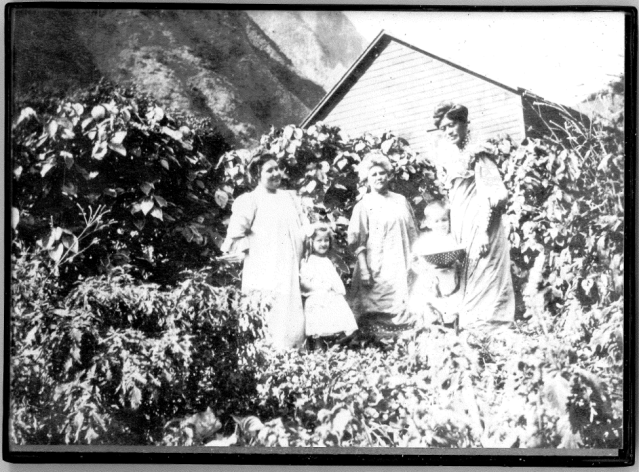
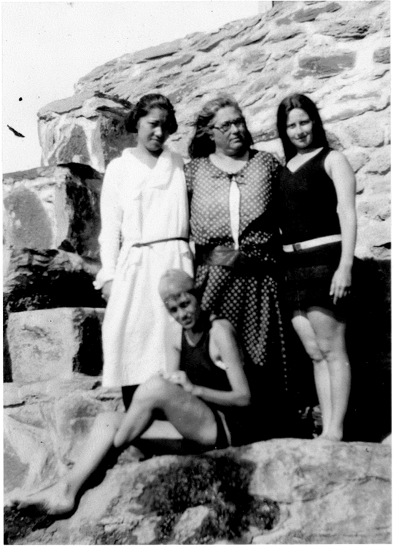
Dinegar family photos (Rosina and Adelaide may be in some of the pictures):

Dinegar family photos4

Dinegar family photos1

Reflections on Sharks and Cursed Clothes

Over the past couple of years, I have written down some of my memories of growing up and listening to the words of my kūpuna. Seventy years ago it was clearly the responsibility of children to be SEEN and not HEARD in gatherings. In the presence of adults we were to keep quiet while they shared thoughts or go and fetch something they had left outside or in the other room. This gave us a lot of time to listen as they shared stories, insights, frustrations and aloha with each other. All these times, woven together with impromptu songs and spontaneous hula, usually ended with Uncle Larry Holt’s tremendous basso voice combined with Aunty Emma’s lyric soprano in the Hawaiian wedding song! Heady stuff for a five or six year old and things cherished still in my old age!

Ayers ohana
A small Ayers family gathering 50 years ago. In the middle wearing a blue shirt and glasses is my Uncle Joe Hinau, the storyteller in our ‘ohana. To the right of him is my mother Hattie, and to the left, an older Ayers cousin.

Lots of history, family lore, strident opinions, and gossip swirled around during those ‘ohana nights at our house. All of the latest tales in the relatively small Hawaiian professional community were shared and amplified with heads shaking and phrases like, “Can you believe….?” as they were exchanged across the room. The spicier bits of gossip were whispered out of the hearing of our young ears and usually accompanied with significant eye movements. The stories that were shared in the presence of the kids are the ones that have remained vivid memories throughout my life. A couple of them I’d like to share with you in this posting.


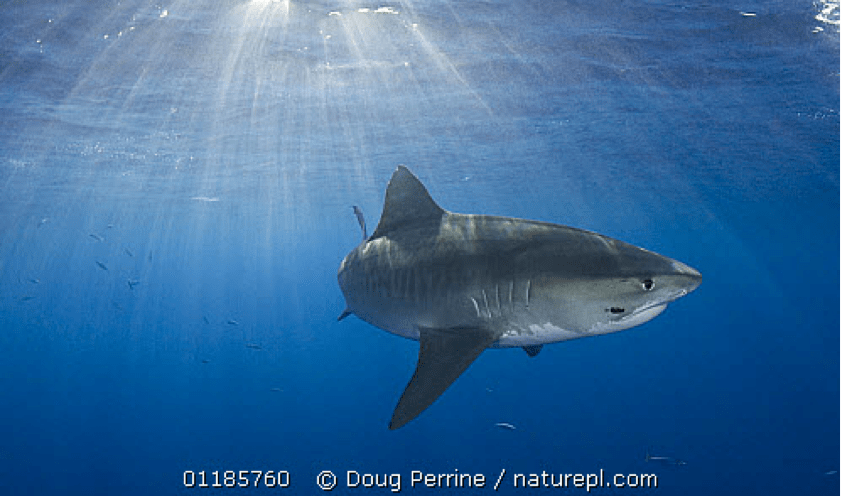
I got to know my mother’s cousin, Joseph Hinau, after college. Uncle Joe was the elder Hawaiian member of our Hawaiian extended family, a bachelor, and a gifted story teller and prankster. Uncle Joe and I hit it off and I was always eager to go get him and bring him to the ‘ohana gatherings. During one of our hours in the car, Uncle Joe shared with me the story of our ‘aumākua (family protector), Manō, the shark. Uncle Joe had been given to his Tūtū when he was an infant and was raised under the guidance of his grandfather. It was through this relationship and the tutoring of his grandfather, that he learned of our family’s connection to the shark and the importance of this animal in our family’s history. Uncle Joe said that as he was growing up, each week his Tūtū would get up early in the morning, dress in a red malo, and fill a large ‘umeke (calabash) with food. Uncle Joe would accompany his grandfather to the beach outside Lāhainā and watch as Tūtū would slap the water, wait until a huge shark swam up to him, and then feed the shark from the ‘umeke! Uncle Joe said that the shark was a part of the ‘ohana and a protector of the family. He said it was huge, but fed peacefully from his grandfather’s hand.

It took me a few weeks to digest the story, but Uncle Joe insisted it was a real part of the family’s legacy. As I thought about the relationship Hawaiians have to their guardian entities, I was reminded that my uncles often spoke of Tūtū wahine’s adventures at the beach picking seaweed and shellfish and how time and time again sharks would appear to hover around her and to steer her away from danger. It was part of our family’s connection to the world and to all the life that surrounded them. I was told that when a family member died, their remains were taken to caves and when all that was left were bones, they were gathered and carried out and committed to the ocean. The assumption was that they became the guardian Manō to protect their relatives. All of this still rolls around in my head from time to time, but it is a comfort when I’m alone swimming in the deep! Just last year my son and my grandson were part of an ‘ohana visit to the graves of our kūpuna in Kalaupapa, the former leper community on Moloka‘i. Both of my boys were swimming off the pier for a few minutes and then climbed back on the pier. When they sat down, they saw that a large shark had been their companion in the ocean! Coincidence? Perhaps.

dlnr shark aumakua
Photo Credit: http://dlnr.hawaii.gov/sharks/

In traditional Hawaiian culture, ‘aumākua are ancestral spirits that may take possession of a living creature or have a resting place on a certain inanimate object (e.g., the stern of a family member’s canoe may be regarded as their ‘aumākua’s “seat”). ‘Aumākua often appear as a particular animal for a particular purpose, such as to offer protection for the living, warn of impending danger, provide comfort in times of stress or sorrow, or to be helpful in other ways. In return, their living descendants show their respect and appreciation by feeding and caring for their ‘aumākua and through the manner in which they live. (For more about sharks as ‘aumākua, see the following articles from the perspectives of Kahu Charles Kauluwehi Maxwell, Sr. and Herb Kawainui Kāne).


The other family curiosity concerns my younger uncle, Alfred K. Chock, the baby of my mother’s siblings. He and my Tūtū wahine were very close and she, a kahuna lā‘au lapa‘au, had an amazing set of gifts for healing and speaking the future. People would come from all over Kohala and the islands in general to get her advice and ask for her healing. Not once would she take money claiming anything she did was thanks to Ke Akua, not her skills. A great attitude for all of us to embrace.

julia2.jpg
My Tūtū wahine, Julia Maile Ayers Chock

My uncle came from Hawi on Hawai‘i Island to study at McKinley High School and subsequently to take a job at the U.S. Postal Service. The family story goes that Uncle Alfred’s roommate came down with an illness no one could cure. Suddenly, grandmother writes Uncle Al to ask if anyone had been using his clothes. When he replied that his roommate had used his shirt, she immediately told him to remember that she had warned him not to allow others outside the family to use his clothes because of the curse he was carrying due to her work of healing. She told him what to do and his friend was healed, but the “curse” was never fully explained and remains a family mystery.

painting by Herb Kane
“The Physician” by Herb Kawainui Kāne

For over a thousand years kahuna lā‘au lapa‘au (healers/medical practitioners) were called upon to heal and protect Hawaiians, including chiefs, often battling a spiritual conflict or evil that resulted in illness. With the arrival of English missionaries (and medicine that could cure the Western diseases that ravaged the Hawaiian community), Westerners often confused kahuna lā‘au lapa‘au with kahuna ‘anā ‘anā (a “black magic sorcerer” who prayed death upon another). Kahuna lāau lapaau were ridiculed and considered heathens, and an eventual ban forced them to practice underground until the Hawaiian revitalization movement in the late 1960s and early 1970s. But by then, many healers were well into their seventies and eighties and their practices were in danger of being forever lost.


All of the above is a small part of the stories shared in the numerous “talk story” sessions we listened to as children and young adults. Some of it is perplexing, but all of it builds the history and “culture” of one’s family and through that, our own personal character and understanding of our responsibilities to each other and to the larger community. We are all part of a complex fabric of relationships and traditions and we all should actively and intentionally seek to understand our connection. We will grow stronger and our family will be blessed. Reflect on who you are and what you have received from those going before you. Blessings this Easter season.

Reflections on Days Gone By: Uncle Al

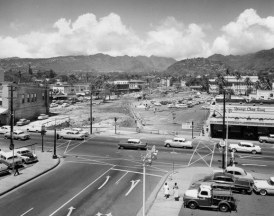
Downtown bishop st 1959_pc jalna.blogspot.com
Downtown (Bishop St.) 1959

A few years ago my children asked me to write about my life growing up in Honolulu. Over time I’ve penned a dozen or more short descriptions of what it was like to be a young Hawaiian in a relatively small town. From writing these pieces I have come to the conclusion that all of us should consider chronicling the events and individuals who have played important roles in the molding of our characters. Some might find it painful, but on the whole it can be a process that can affirm who we are and what we believe in. In the piece below you will meet one of the important influences in my life and read about how island boys actually learn things on the beach! Blessings.

I’ve paused for a bit to reflect on some of the important people who impacted me during my youth. I’ve touched on my mother’s older brother William (Uncle Bill), and his influence. Uncle Bill was the more gregarious, people-oriented, action prone of the two Chock brothers. My second maternal uncle, Alfred, also played a strong role in my growing up. Uncle Alfred was six or seven years younger than my mother and Uncle Bill and was the youngest of the surviving Chock children. A sister named Alice died as an infant and Uncle Bill left the family early to see the world, so Hattie (my mother) with the help of Rosina, the youngest girl in the family, was the sister in charge. Unlike Uncle Bill, Uncle Al remained in Hawai‘i. He went to Honolulu to attend McKinley High School, ended up working for the U.S. Postal Service and rose through the ranks to become Postmaster of the Bethel and then Waikiki stations, ultimately becoming Superintendent of Carriers in Honolulu. Uncle Al had strong opinions, but was not an open book as personalities went. At first glance, he was much more dour and serious than Uncle Bill and it was his duty, when Dad was gone, to discipline the rabble of children at 904 Lunalilo St. You didn’t fool with Uncle Al.

uncle al
Uncle Al in the Navy

It is very unfortunate that as I grew older, I also grew more aware of the huge tensions between Uncle Alfred and his wife, Aunty Beatrice. Aunty Bea was a smart, very active woman from Hawai‘i Island. Her father, Old Man Araki, was the “Taro Baron” of Waipio Valley. He was a hard working entrepreneur who had farmed taro, built the Waipio Lodge, trudged from sugar camp to sugar camp showing Japanese movies, and later in life got the Peace Corps to hire his place in Waipio as the training site for the Pacific. My cousin Michael and I used to visit him at his house at the bottom of the road down into the valley and still in his nineties he would work the two of us into the ground! In any case, Aunty Bea came from strong stock and was a very capable and good looking lady. She came to Honolulu as a teenager to become a nurse and it wasn’t until just before she died that I learned she was Mrs. Massey’s nurse during the infamous Massey incident.

When I returned to Honolulu after spending fifth grade in Spring City, Pennsylvania, I saw how Uncle Alfred and Aunty Bea’s disenchantment with each other hung over the house they shared, which was across the fence from the small cottage we lived in. They literally would be in the same room but refused to speak to one another, essentially living completely separate lives. I watched them and my older cousins without really understanding much more than that there were major issues my aunt and uncle had decided not to address. Looking back on the five of them living in their small two bedroom, one bath cottage near ‘Iolani school, it is amazing that they stayed together for such a long time under those conditions. By then, Aunty Bea was working at Howard’s Jewelry Store on Fort St. and ultimately divorced Uncle Al and married C.Ching, one of the owners of the Howard’s Jewelry establishment. Uncle rarely smiled during those years and it wasn’t until he was remarried to Mable Liu Thompson that he came fully back to life.

In his solitary life, Uncle was immersed in his Lions Club activities, his work at the Post Office, his Federal Government Workers Union, and regular weekends playing trumps on the beach in front of what was the Queens Surf showroom across from Kapiolani Park. It was during these excursions to the beach with Uncle Al in the years after we had returned from the mainland, that I got to know and appreciate him and he got to share with me his perspectives on life. Uncle Alfred had been quite an athlete when he was growing up. He had played all the sports, but he was particularly noted for his handball achievements at the YMCA. He had the sturdy physique of the Hawaiian-Chinese mix and the hours spent on the beach playing cards left him a deep rich brown color. With his long dark hair swept back he was a handsome sight.

Ron Saluson natatorium
Pictured today: Queens Surf Beach, Waikiki Aquarium, War Memorial Natatorium/ pool, Photo Credit: Ron Slauson https://www.flickr.com/photos/natatorium/2383026712

It seemed like almost every Saturday afternoon Uncle Al and I would make our way down to Public Baths, a large city bathhouse on the beach Ewa side of the Aquarium and the Natatorium. “Publics,” as it was known, was a popular local gathering place. It had large locker rooms for men and women, an active food concession, a large open and covered concrete area on the beach side, and a very loud jukebox. It was there that I first heard Bill Haley and the Comets during the early days of Rock and Roll’s birth. From Publics, after we had locked our clothes and valuables away, Uncle and I had to walk Ewa and navigate a narrow concrete ledge around an abandoned pool on the ocean and make our way down concrete steps onto the beach fronting the Queen’s Surf showroom. Each Saturday under the landmark Kiawe tree on the beach, gathered an interesting collection of local males intent on playing cards until the sun went down. Uncle Al was one of the major members of this group that included bus drivers, lawyers, doctors, unemployed Hawaiian laborers and other representatives of the general spectrum of characters that inhabited the local Waikiki scene. One of my favorites was an older “niho‘ole” (toothless) Hawaiian man named Tommy who was the resident fishing expert in the group. From time to time Tommy would throw me a pair of wooden goggles and motion me to be his bag man. He would straighten a wire hanger and off we’d go to the reef. In wonder I would watch him find and spear he‘e (octopus) from what I thought was barren rock. Tommy was a true he‘e master and we consistently returned with enough for most of the group to take home in the evening.

Since I wasn’t invited to join the card games, my hours on Queen’s Surf Beach was filled with endless explorations of the rocks and reef surrounding the beach. It was primarily coral all around the beach with narrow channels out to deeper water and it never ceased to fascinate my young curiosity. It would seem that we had just arrived when Uncle would yell and gesture from the beach that it was time to get a shower, change, and begin the long walk home. We would pack up and work our way back to Publics, shower, and change into our street clothes. One thing I remember to this day about the lockers
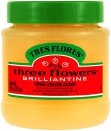
was the strong smell of Three Flowers Brilliantine, the heavily scented hair grooming gel three flowers brilliantinethat all the adult men used to work into their scalps before running their combs through to get just the right wave into place in their hair. It was quite a ritual and there must have been pounds and pounds of the stuff put on each day at Publics! I imagine much of the stuff ended up smeared on pillowcases throughout Honolulu.

kalakaua waikiki 1954 pc Helen Y Lind
Kalakaua Ave. in the heart of Waikiki (1954), Photo Credit: Helen Y Lind

In later life, Uncle Alfred found happiness in his marriage to Aunty Mabel and opened up considerably from the person he was during our days on the beach. Despite his often gloomy persona during those days, he always showed up to take me to the beach. He always provided clear insights when asked a question, and he always urged me to think outside of the box when I questioned him on what path I might take. Both Uncle Alfred and Uncle Bill had different brands of deep and warm aloha for their nephew and I was privileged to have them both as rich points of reference as I began my years of struggling to adulthood. I was truly blessed by their presence.

Another Few Steps on Our ‘Ohana Journey to Kalaupapa

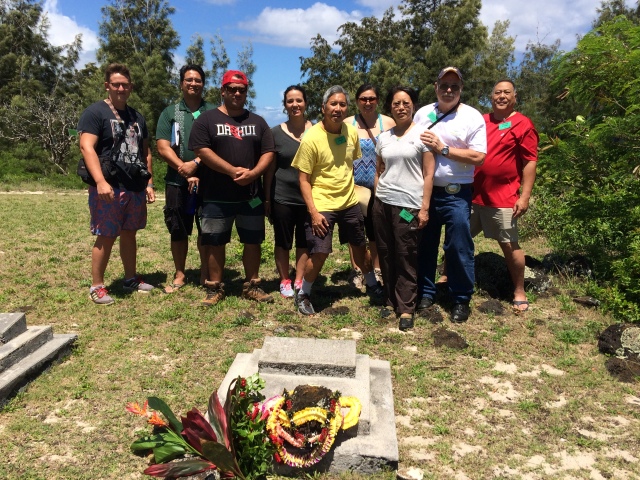
Pictured above is our family team during their visit to Kalaupapa. Top row, left to right: Brian Dillon, his wife and my cousin Millie, her brother Stanley Chong, Stanley’s cousin Reggie Fung, and Reggie’s daughter Jennifer. Bottom row, left to right: my mo‘opuna Hayden Butler, son Matt Dill, daughter Katie Johnson, and nephew Thomas Chock.

At the risk of drawing the story too far out, I return to our family’s unfolding discovery about our kūpuna who were sent to Kalaupapa during the latter years of the 19th century. In previous blogs, I gave short accounts of discovering that our kūpuna were buried in Kalaupapa and that their presence at the site was during a “spike” in admissions, subsequent to the passage of the Bayonet Constitution of 1887 and concurrent with the flurry of land decisions in Hawai‘i supporting the development of the plantation economy at the end of that century. The latter process of land acquisition probably resonates with most Hawaiian families, for they suffered the most loss in this “consolidation” process. The courts were used to acquire land from people who did not understand the slippery slope of western land tenure.

During the two day visit this May, our family team identified the graves of relatives who had previously been unknown to the family. Though we believe we know the location of the grave of Hana Pelio Kapakahi Kukailani (my grandmother’s aunt), we have not been able to verify it due to the ravages of weather and waves. In any case, it has opened up a large window into the lives of our kūpuna, the struggles they faced, and the courage they modeled. It has sparked a long simmering desire to finally document the family’s genealogy and then sort out in detail the amazing adventures our kūpuna took during their lives.

Below are some thoughts and drawings of family team members that emerged from their two day visit to the past. Enjoy and reflect. Blessings.


Katie

The sacred silence of sorrow greeted each of us as we walked among the graves. Graves, a faint remembrance of the suffering, the life of someone’s brother, someone’s mother, someone’s someone. As we tentatively searched and moved around over crumbled headstones, our connection to the land and to the buried, began to come alive. There, in the midst of the dead a story, our story, came alive.

It began months ago as emails flew back and forth filled with ideas, thoughts, plans and the beginning of a story. Thoughtful planning and endless hours of work brought a ragtag group of misfits together on a hot day in May, searching for more of the story of us.

As we walked together through the graveyards of so many forgotten, we began to find what we never knew was lost. The lives of those we never knew were part of the fabric of us all.

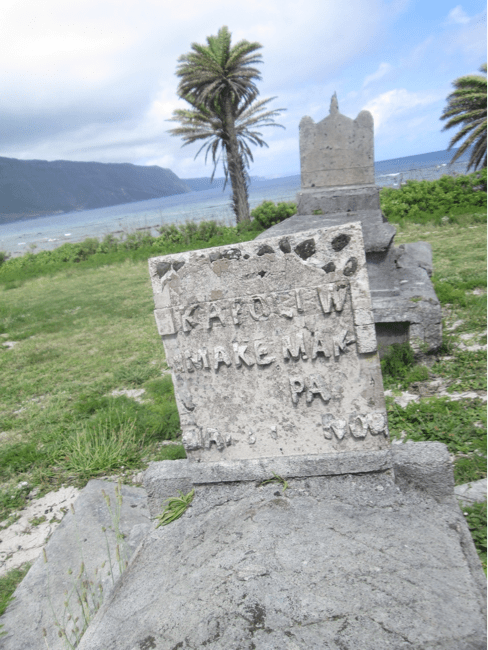
One by one the graves of Umi, Kapoli, and Tommy were found. Hands touched, leis were laid, prayers and thanks were spoken and all were blessed. The silence, sacred and beautiful in its simplicity, carried the words that could not be formed. Unspoken but understood was the primal language of connection. In the past, Kalaupapa may have taken loved ones, but on this day, it gently gave them back.

The profound impact of Kalaupapa is truly beyond words. It can only be found in the story of each life buried on this peninsula of Moloka‘i. We may have found the beginning of our story, but in the depths and crevices of this land lies more. By finding these stories, we, as people of Hawai‘i, discover our connection to the past, our connection to each other, and our way forward together.


Hayden

I thought it was incredible to get insight into the lives and immense pain the people of Kalaupapa faced. Being there to see all the history of the place and see how people coped with their struggle and somehow managed to create a life in bleak circumstances, was really moving.  I was really humbled to have the opportunity to be in the places they lived and learn about such amazing people.

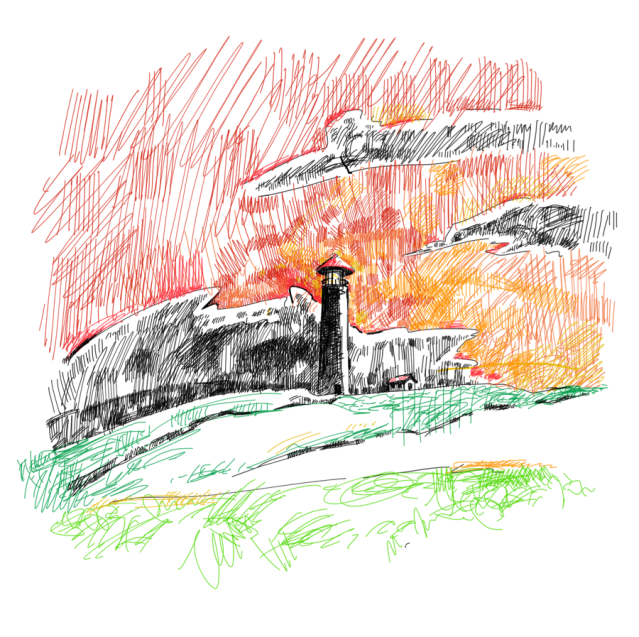
Hayden sketch cropped
Sketch of the lighthouse by Hayden Butler


kalaupapa tc2

Thomas

For much of my life, Kalaupapa was just a story I heard about but never considered to be a part of my story. I had gone as far as I could with my mo‘okū‘auhau (geneology) on both my father’s and mother’s sides of the family and well, I just assumed that I had hit the brick wall. But when I moved back to Hawai‘i after 20 years away and reconnected with ‘ohana (Uncle Jan), it opened up the floodgates of information for me. It was a tremendous surprise to hear from Uncle Jan that I do have ‘ohana ties to Kalaupapa.

How have I never heard this or known this? Finding out I had one ancestor there was a surprise. So you can imagine how it felt to find out as I was preparing to go on a huaka‘i to Kalaupapa (mahalo Uncle Jan for including me), and with help from new friends associated with Ka ‘Ohana O Kalapuapa, that I actually have at least THREE ancestors there: two from my father’s side, one from my mother’s side.

The moment I set my eyes on the peninsula from the plane, I felt something special about what I was seeing. I choose to believe that the land itself, along with the spirits of my ancestors and the mana and aloha that dwells there, was reaching out to me. Maybe not necessarily to welcome me, but certainly to let me know that this wasn’t just another “field trip.” Stepping off the plane and setting my feet on the ground there only magnified the feeling.

For some reason I was given the responsibility/opportunity to both read a pule (ma ka ‘ōlelo Hawai‘i) and lead the group in singing Ho‘onani (the doxology in Hawaiian) at the various graves we visited as well as at the site of the memorial. Humbling. Made me feel my inadequacy in Hawaiian ‘oli and protocols.

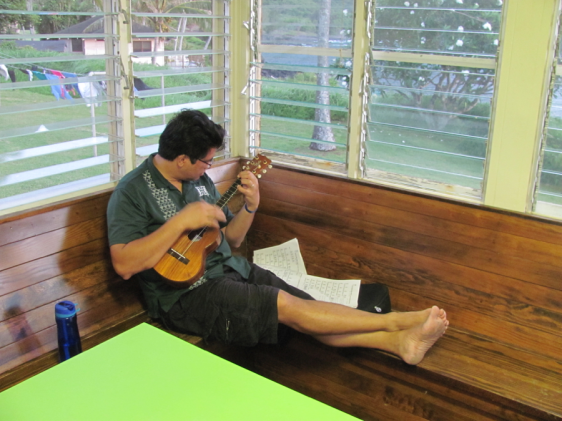
Twice, during our time there, I took the opportunity to walk around Kalaupapa by myself. It’s so quiet there. It’s beautiful. It’s also a place that you just know has so many stories to share. I wish I could have spent more time there and just “talk story” with people. I only got to meet and shake hands with one patient. I should’ve been more courageous and since I brought my ukulele, gone to kanikapila with someone, anyone there.

kalaupapa tc

It’s clear that Kalaupapa is a special place. Will it remain so? There are 10 patients remaining. When the last one passes, what will happen to the peninsula? Will Kalaupapa end up being another battleground like Kaho‘olawe or Mauna Kea have been for the lāhui? I don’t know. I hope we all get the chance to know this place before another piece of Hawai‘i’s history fades and becomes another entry in a history book.

Words really can’t capture what my first experience in Kalaupapa was like nor what it means to me. I’m still processing it now, over a month later. What I can say is that I want to go back. Soon. I want my wife, who is not Hawaiian and did not grow up in Hawai‘i, to experience this place. I want my hapa kids who also didn’t grow up in Hawai‘i to have a chance to spend a night (or more) there to feel of the mana of the place. To reconnect with our ‘ohana, our kūpuna, and gain understanding of who we are and where we come from.


kalaupapa matt1

Matt

The first feeling I had, which hit me hard and heavy and remained with me throughout my stay at Kalaupapa, is that I AM HAWAIIAN.  I AM KANAKA MAOLI.  I am the ocean waves, hitting the coastline relentlessly.  I am the rugged cliffs that stand proudly over Kalaupapa, protecting and always watching over her.  I am the wai of the rivers trickling out of the valleys and crevices, nurturing the land and its people.  I am the bright, hot kala that shines down with life giving energy.  I am the strong and never ceasing makani, which sweeps through the land and sea as it cleanses, strengthens, cools everything it touches.  I am the kalo and the naupaka, feeding, nourishing, and healing anyone in need.  I am the strong ‘opihi, forever clinging to and washing the shoreline of any impurities.  I am ALL of these things, and ALL of these things are me.  I am Hawaiian.  This is my home.  This is my kuleana.  This is my life.  This is my purpose.

In this world and society we live in today, these thoughts rarely, if ever, even brush the outer edges of my consciousness.  Daily life makes us focus on problems, responsibilities, frivolous endeavors and aspirations.  Kalaupapa readjusted my whole spirit and being’s focus and awareness in an instant, like the snapping of Akua’s fingers.

As we spent time exploring, adventuring, and learning during the trip, we heard just a handful of the patients’ life stories and journeys, of before they came to Kalaupapa and after they were established and permanent residents.  One thing that I noticed and became aware of, is how amazing and unique each of the individuals were and are.  With only so many people living in such an isolated place, these patients despite their differences, were forced to live, interact, and get along with one another for the rest of their lives.  In any given day how many people do we have the chance to interact with? Hundreds? Thousands?  We are programmed to pick and choose our interactions.  If someone looks strange, or is dressed in a way that automatically classifies them as someone we probably won’t like or connect with, we avert our gaze, look straight ahead, and walk on by.  That person(s) will likely never be seen again and will not have any impact whatsoever on our lives.  The people in Kalaupapa didn’t have the choice we have, to approve or deny anyone.  They were in it together, for good or for bad.  These patients were actually blessed in that regard.  I guess the lesson I am trying to illustrate is that humans are beautiful.  We all have a spirit.  We all have stories.  And we all have a wealth of unique knowledge.  I read a quote before this trip, I am not sure who said it but it went something like this:  “Every single person you meet, every single day of your life, knows something that you don’t.”  Life is a learning process, every single day.  That’s one of the beautiful blessings in our lives.  We are so quick to shut out, discount, and exclude people from our lives.  Who knows what positive blessings and valuable knowledge we are missing out on by just walking on by?  So think about it…  How well do you know your neighbor?  Aside from a few words of greeting, what have you learned from the people you work with every day?  What are you missing out on?  What do they know or have experienced that could change your life?  I learned not to prejudge anyone, and to keep an open mind.

I am extremely sensitive to the feelings of certain places I explore throughout this world.  Whether it’s a spiritual sixth sense to the history of places, or just an awareness of the overriding energy, I am not sure.  I have explored many remote and historical areas, especially all over Hawai‘i island, where I call home.  Be it the great valley of Waipi‘o, or the long, arduous hike in the Volcanoes National Park for a three day adventure to Halapē, each place has a rich history and distinct feel.  As I have heard said many times by the old timers and historians, our islands are a graveyard and the spirits of our kūpuna and ancestors are everywhere.  Not all of these places have a positive or bright historical tale connected to them.  There are ancient scenes of atrocities, wars, genocides, cannibalism, basically everything bad you can think of, along with all of the triumphs and stories of prosperity.  As good as the human spirit and history can be, it can be also very, very bad.  While on my sojourn to Halapē especially, there were areas I traversed through where the hairs on the back of my neck literally stood on its very ends.  I had an overwhelming feeling of fear, anger, and unexplained discomfort.  With no living being or thing within thirty miles that could possibly cause these feelings of negativity, I knew the energy and spirits residing there were the cause.  I was expecting (but hoping for the contrary) something similar at Kalaupapa.  There are graves EVERYWHERE on that peninsula, many of them unmarked and disturbed after years of weather and tsunami events.  I felt a very powerful spiritual feeling.  The mana was thick in the air, at times almost taking my breath.  To my surprise, as strong as the energy of the spirits were everywhere we went on Kalaupapa, it was an overwhelming feeling of peace, love, and joy- especially when we found the tombstones of our ‘ohana.  The feeling was incredibly uplifting and positive.  The spirit of the patients who were sent there, lived there, and died there, were and are pure and pono. Aloha reigned through all of their bodily illnesses and struggles.  Their spirits were happy and content.

kalaupapa matt2

The last lesson I would like to discuss is that of Aloha ‘Āina.  I have been to many isolated places in my life throughout the island chain, but Kalaupapa is a place that was used to exclude and intentionally cut off and remove a disease from our population.  It is still remote and cut off from the rest of the world.  The workers and residents can fly or hike in and out, but the barge with necessary provisions for the people there comes ONCE a YEAR.  What that creates is a heightened sense of awareness regarding what you really need to live.  Everywhere else, if we are in need of anything, we drive or stroll down the road and find a store to buy it.  We punch some buttons on our computer or phone, hit up Amazon or something similar to get anything our heart desires.  So we don’t worry.  We don’t look around us and see what’s important.  We don’t value our environment.  Throw your rubbish wherever you like, let the weeds grow over land that could be cultivated and harvested.  Build skyscrapers that leach poisons and toxins into the soil and the ocean.  Why worry?  Your food is coming from thousands of miles away.  No problem…  But what if?  O‘ahu, the island of my birth and upbringing, is BLOWN.  I read somewhere that the whole of the island’s population would starve if the barges ceased to arrive for just four days.  What if you had to grow, cultivate, and catch your dinner.  What if your waste and garbage poisoned your Christmas feast?  That would create a different way of looking at things.  That would change your frame of mind.  This land and the oceans surrounding us provided sustenance for all of the people for generations upon generations before us.  That required awareness, good stewardship, hard work, and responsibility on every level.  Nothing was wasted.  That’s what the residents of Kalaupapa had to do and still do to this day.  We live in a society of wastefulness and disregard for our lands.  It’s so sad.  I know that my stewardship and respect for the ‘āina has gone up exponentially after this trip.  For that I am forever grateful, and I will never take my home for granted.  I am the land and the sea.  The land and sea is me.  I am Hawaii.  I am HAWAIIAN.  Mahalo Kalaupapa for your mana‘o and perseverance against all odds.

Aloha Kalaupapa.


A Family’s Journey of Discovery in Kalaupapa

A few months ago, I shared the start of a family journey of discovery involving ancestors who had been sent to Kalaupapa, the leper colony established by the Hawaiian Kingdom in 1866. When our Chinese relatives announced that they were going to revisit the grave of their grandfather Tommy Fung, I was reminded of family stories that claimed my tutu wahine’s great aunt, Hana Pelio Kapakahi, was sent to the leper colony under suspicious circumstances (primarily centered on the fact that she was suing Pioneer Sugar Co. in Lāhainā to reclaim land and, importantly, water rights owned by her deceased husband Joseph Likona Kapakahi). We had never pursued the issue and it seemed the visit to Tommy Fung’s grave might give us a chance to explore the fate of Hana.

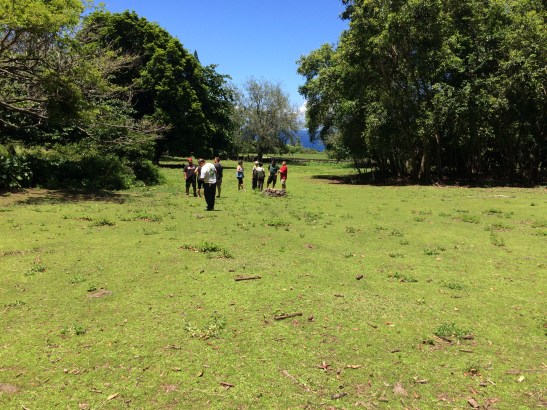
Thanks to the great hospitality and help of Ka ‘Ohana O Kalaupapa, particularly Valerie Monson and the National Parks Ranger stationed at Kalaupapa, Kaohulani McGuire, our group of nine extended family members made their way to Kalaupapa on May 11th and 12th. All were overwhelmed by the beauty and majesty of Kalaupapa and Kalawao. Most of the big buildings have been destroyed, but a number of houses and churches remain.

IMG_0578

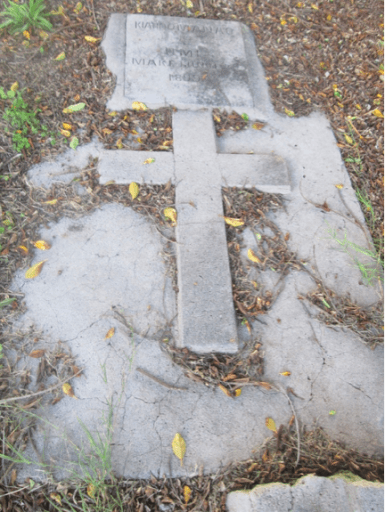
Our Chinese cousins focused on revisiting Tommy Fung’s resting place while my son Matt, my daughter Katie, my mo‘opuna Hayden, and my nephew Thomas were faced with the challenge of finding the graves of Hana Pelio Kapakahi Kukailani, her husband Umi Kukailani (whom she married at Kalaupapa in 1891), and his daughter, Kapoli Kamakau. It’s amazing what you can set your mind to do when you don’t know what you’re doing!
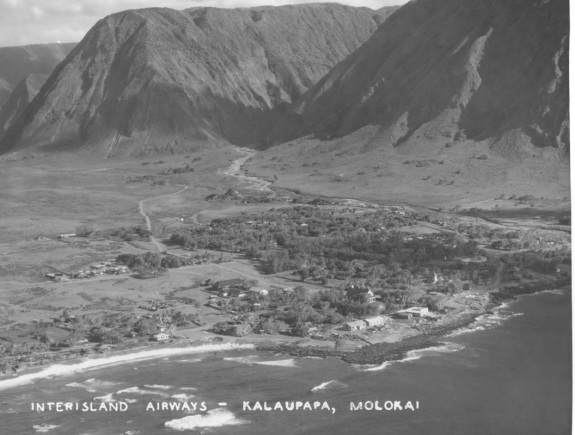
IMG_0605
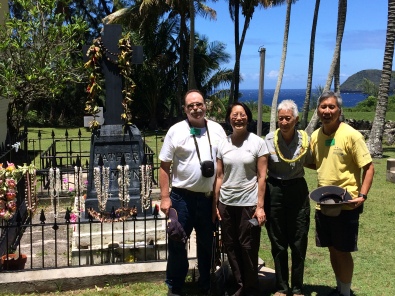
From right to left: My cousin Stanley Chong, Park Ranger Kaohulani, Stanley’s sister Millie Dillon, and her husband Brian

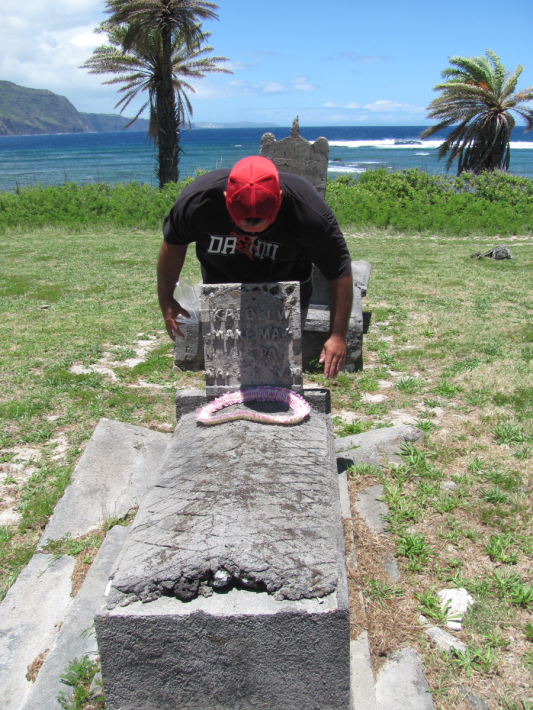
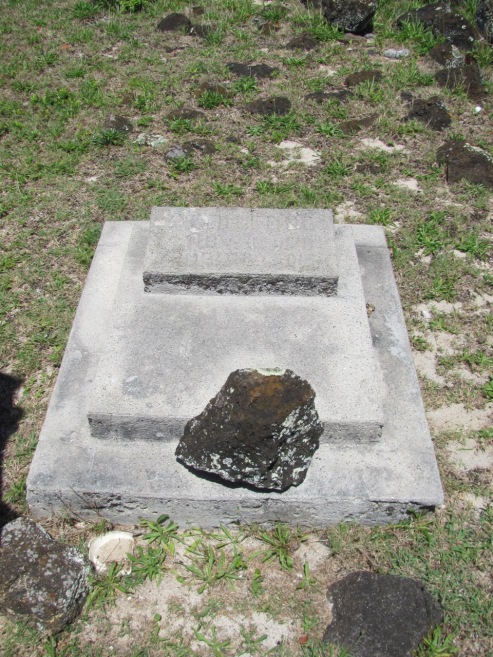
The hospitality and support of Ka ‘Ohana O Kalaupapa and Ranger McGuire allowed our family expedition to achieve most of its goals. Tommy Fung’s grave was cleaned and decorated with the appropriate prayers in English, Hawaiian, and Haka. The graves of Umi and his daughter Kapoli were also cleaned and prayed over. Although the marked grave of Hana was not discovered, a grave next to Umi was assumed to be hers. The toll of tidal waves and neglect have destroyed or damaged most of the graves at Kalaupapa, so we are happy that some of the surviving ones include most of our kūpuna. Over 8,000 people were buried and only a small number of the graves are actually marked. It speaks to the need that Ka ‘Ohana O Kalaupapa is pursuing, to build a Vietnam type memorial with names for all those who lived and died there.

IMG_8264
Grave marker for Tommy Fung (Fung Tung Shu). The inscription is rapidly eroding and only visible at dawn and dusk. Our relatives are talking about placing a new marker plate for the grave, something we’d like to do for our relatives as well.
IMG_0610
Future Kalaupapa memorial site

The outcome of the two days in Kalaupapa has been a deepening understanding and respect regarding the challenges our kūpuna faced during the turbulent days of the last decade of the 19th century. Political, social, economic, and spiritual shifts were overwhelming the Hawaiian Kingdom and Kalaupapa was a dramatic microcosm of that period. With the imposition of the Bayonet Constitution of 1887 by the landed white elite on the Kalākaua administration, the expansion of plantation production kicked into high gear and land/water issues such as the one Hana and Umi were fighting with Pioneer became a part of many Hawaiian family histories. Some claim the leper colony became a solution to opposition from landowners to the march of corporate production, and point to the curious uptick of leprosy patients sent to Kalaupapa after 1887 (a good deal of them diagnosed by plantation doctors). It is hard to tie the causal knot, but it does create interest in actually sorting out the stories of our kūpuna in that place. It is probable that many other Hawaiian families also had members sent to the colony.

Subsequent to the May expedition we are discovering more information about Umi and Kapoli and about other rumored members of the family who were sent to the leper colony. Hana and Umi fought for the land and water rights in Kaua‘ula in Lāhainā but as they pointed out in their filings before the courts, they were at a great disadvantage due to their exile at Kalaupapa. The suit stayed alive until Hana’s death in 1904 when the land and water rights issues were transferred to Hana’s heir, Hattie Namo‘olau Ayers, my great grandmother. Upon Namo‘olau’s death in July 1907, an executor was appointed by the court at the request of Rosina Georgiette K. Dinegar, my tutu wahine’s sister and one of the daughters of Namo‘olau. The executor requested and selected by the court was her husband Dr. Robert H. Dinegar, the plantation doctor. The details of the sale were never made known to the family, but subsequent to the settlement, the doctor and his family left immediately for Albany, New York. They never returned. Life is messy, relentless, and often mysterious!

It is clear that this place has very special meaning to Hawaiians and to Hawai‘i. Through all of this is woven the stories of sacrifice and aloha of Father Damien, Sister Marianne Cope, and many others who ministered to the abandoned.  Unbelievable people of faith! (Historical note:  Sister Marianne Cope predicted that she and her fellow nuns would be protected from leprosy.  None ever got it.  She also sent all the schoolbooks back to Honolulu and demanded that Hawaiian language books be sent for the children.)

The more we scrape and stir, the richer the brew of personalities, human triumphs, tragedies, and unanswered questions!  Stay tuned for reflections on the trip from the Dill/Chock team.

Kalaupapa and its Legacy in Hawaiian Families: How Tragedy Begets Pride

I’d like to continue the saga of our ‘ohana’s upcoming adventure of discovery to Kalaupapa. As I mentioned in my last post, our pake (Chinese) cousins Stanley Chong, et.al., are planning to revisit the grave of his grandfather, Tung Shu Fung (otherwise known as Tommy Fung), the one-armed carpenter of Kohala. Mr. Fung had been sent to Kalaupapa in the 1920’s and died there in 1945. Because I believe we’re related to the Fungs through Amoy Chock Fung (his wife and my caregiver when I was growing up), we’ve joined forces and hope to be with the Fung clan at the former leper colony on May 11th and 12th.

Our side of the family, the Hawaiian side, has for years whispered the story of our relative Hana Pelio Kapakahi being sent to the leper colony because of a land/water dispute with the Pioneer Mill Company of Lāhainā. Thanks to records and other information provided by Ka ‘Ohana O Kalaupapa and Valerie Monson, we were able to confirm that Hana was sent to Kalaupapa in December of 1890 and subsequently died there in March of 1904. This simple fact triggered a growing fascination in understanding this special place and how our relatives got there. The more we learned, the more astonished I’ve been at this piece of Hawaiian and family history. It is a mystery, tragedy, and tale of triumph and deception all rolled into one. It is a journey I believe many Hawaiian families have taken. I say this even though we have only just begun the challenge of understanding and documenting it for ourselves and for the future generations!

Our ‘ohana “team” set for the adventure in May will include our Chinese side relatives: Stanley Chong, his sister Millie Dillon, her husband Brian (a for real professor of archeology), and two other Fung relatives. The Hawaiian gang will include: our daughter Katie Johnson, our son Matthew Dill, our oldest mo‘opuna (grandson) Hayden Butler, and our nephew Thomas Chock. The Fungs want to revisit Tommy Fung’s grave and we want to also find Hana’s grave and honor her memory. We were told that there is no clear record of her gravesite, but the story of Hana’s time at Kalaupapa gives us hope that we can find it.

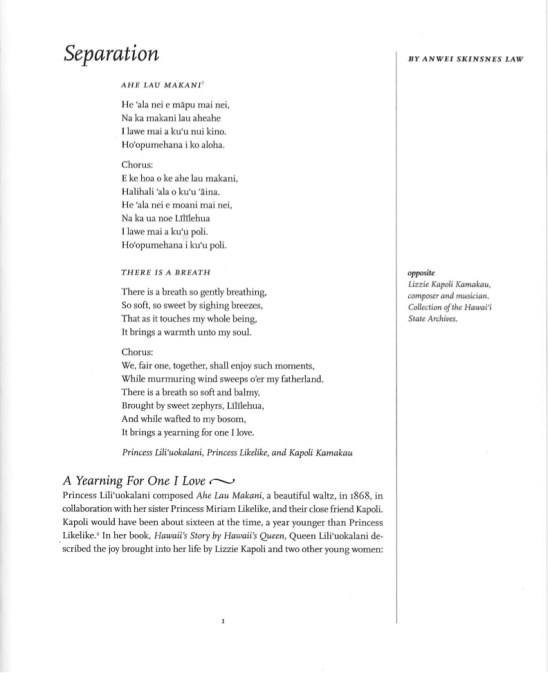
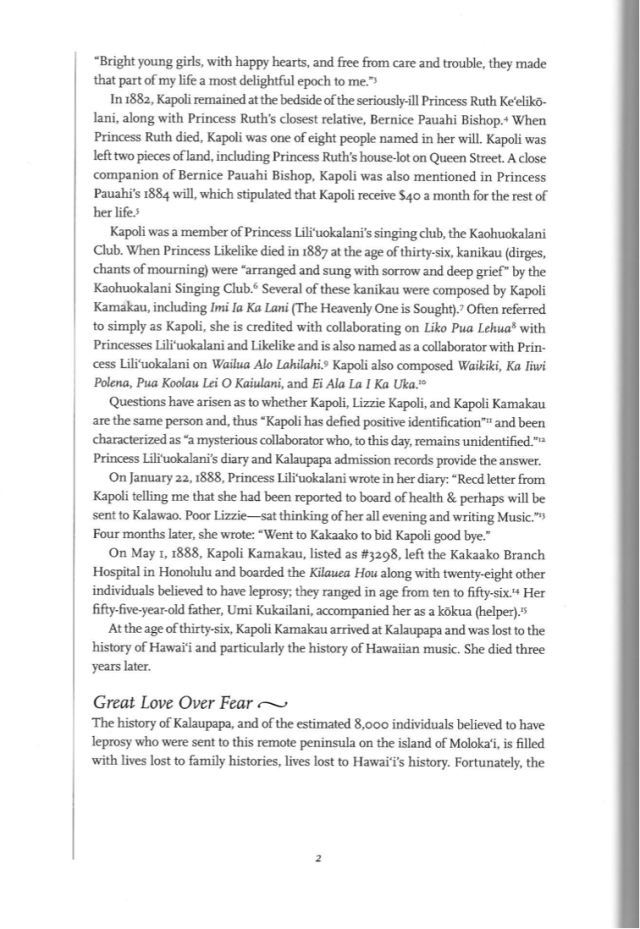
Hana came to Kalaupapa at the end of 1890. On August 8, 1891, Hana married a man named Umi Kuka‘ilani, who was born at Kalaupapa and had returned there as a “kōkua” (caregiver) for a woman named Kapoli Kamakau. Come to find out, Kapoli was a dear friend and companion of Queen Lili‘uokalani and a co-author with her on several songs. Kapoli was also close to Princess Ruth Keʻelikōlani and Bernice Pauahi Bishop, both of whom left property and a stipend for her in their wills.

kapoli book
Mention of Kapoli in excerpts from “Kalaupapa: A Collective Memory” by Anwei Skinsnes Law

kapoli book2

All of this tweaked my interest and reconfirmed the rumblings of my mother and uncle in years gone by, about our family’s relationship with Hawaiian royalty. Since most Hawaiians make this claim I had filed this assertion in the dead letter file of family fantasies. All of a sudden, however, our adventure to Kalaupapa was reviving this mysterious family tale and triggering several interesting questions to address. Who was this man Umi Kuka‘ilani and what was his relationship with Hana and Kapoli before Kalaupapa? Who was Kapoli and what was her relationship to the Kamehameha line? Finally, could we get a handle on the events that led to Hana’s banishment to the leper colony and was it related to the land/water issue that had haunted the family stories of the past?

We are just beginning the adventure, but the first pieces of the puzzle are amazing and encourage us to continue to try to understand this part of our family’s history. First, we have indeed found out that Kapoli Kamakau was a close friend of the Kamehameha family and the Kalākaua royal line. Queen Lili‘uokalani mentions her aloha for Kapoli in addition to writing songs with her. Princess Ruth, owner of the vast lands of Kamehameha that she later bequeathed to her cousin Bernice Pauahi, held Kapoli in high enough esteem to leave her a house and property in Honolulu in her will. Pauahi also considered Kapoli close enough to provide a monthly stipend of $40.00 in her will. It is obvious that Kapoli was esteemed and loved by her friends.

kalaupapa exhibit
The new Kalaupapa exhibit at the Royal Hawaiian Shopping Center, PC: Stanley Chong

kalaupapa exhibit3kalaupapa exhibit2

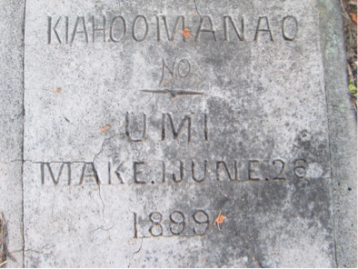
Who then was this man Umi? We were told initially that he was originally sent to Kalaupapa to be a caregiver for Kapoli. His sketchy records only state that he was born at Kalaupapa in 1833 and then returned there as a patient in November of 1893. Lots of these dates are in the process of being sorted out, but Umi emerged as an even more interesting individual when we were told by the Kalaupapa Park Genealogist that Umi was, in fact, the father of Kapoli Kamakau! Other records confirm that he accompanied Kapoli as her caregiver when she was sent to Kalaupapa from Honolulu on May 1, 1888 (along with 28 others believed to have leprosy). It is assumed that he contracted leprosy while living in Kalaupapa to care for Kapoli, became a patient himself in 1893 (2 years after marrying Hana), and subsequently died in June of 1899. It is unknown whether he knew Hana before he returned to Kalaupapa and whether Kapoli was at their wedding, as Kapoli died that same year in 1891. The plot thickens, so to speak, but it augers well for the grave search since we believe Umi’s gravesite is known, and if so, Hana’s grave should be close.

kapoli grave
Kapoli’s grave at Kalaupapa
umi grave
Umi’s grave

umi grave2

The final thread of interest involves the legal suit to recover the land/water rights taken from Hana after her first husband, Joseph Likona Kapakahi, died in 1887. Around the time she sued to reclaim the land, she was declared a leper and sent to Kalaupapa. In the account of the appeal submitted in 1899, Hana and Umi bemoan the fact that they cannot travel to take part in the trial over the land ownership. Unfortunately Umi died only 4 days after they submitted the appeal. It was painful to read the description (which you are welcome to read here: Hana Umi Kukailani vs Pioneer Mill Co. 1899). After Hana (who was my maternal grandmother’s great aunt) died in 1904, my grandmother’s half sister’s husband, the plantation doctor in Lāhainā, was appointed executor of Hana’s estate. The contested land was sold to the Pioneer Mill Company and the good doctor and family moved to Albany, New York.

All of the above point to the astounding richness of one’s family’s history if we take the time to ask the questions and listen to the answers! I hope all of us in our family will get to know the whole story of Hana, Umi, and Kapoli so that we can appreciate the heritage of courage and perseverance we are called to imbed in our lives. I’m sure all of you can come up with your own family tales of hope! It will be worth the effort! Stay tuned for the next chapter of our saga. Me ke aloha pau‘ole.


Our Past Can Bless Our Present And Future

Father Damien's Church
Father Damien with patients outside his church. Image by © CORBIS

Recently I have been fascinated to see members of our larger ‘ohana begin to plan a visit to Kalaupapa on Moloka‘i, the leper colony established in the middle of the 19th century to which some 8,000 people were sent. The purpose of the trip would be to visit the grave of Tung Shu “Tommy” Fung, the husband of a lady who cared for me and lived with our family. Tommy Fung was sent to Kalaupapa in the 1920’s and died there in 1945. His wife, Amoy Chock Fung, raised five children on one acre of land in Kohala. “Chinese Aunty,” as we called her, had come on the same ship from Canton as my grandfather Ah Fung Chock, when she was a very young girl and he was in his twenties. Our families were very intertwined and she and her children lived with us much of the time. Some of my earliest memories are of her caring for me and watching her as she scrubbed our clothes on the washing board on the sink outside, ironed our clothes, or prepared her special Chinese dishes for the family. Grandfather had given strict orders for his children to care for “Aunty” and her children and we would celebrate important occasions as a large extended family. We think there is blood relationship because of Grandfather’s connection, but so far we haven’t documented it. In any case, Hawaiian culture honors and encourages the power of the extended family. All of us loved “Aunty” dearly and she was my de facto “Popo” (grandmother).

Many memories of Chinese Aunty populate my vision of growing up. As I shared in a previous post, one of the most dramatic was my going into the bathroom at three or four years old and seeing her dentures in a glass on the sink! It was very hard for my little mind to get around the scene and perhaps some of my present day behavior is tied to that moment! Her quiet and kind demeanor and her basic pidgin English were positive elements of my growing up. So were her trips to the market and the stained paper packages containing Chinese cracked seed she would pull from her bag as treats for the children.


Chinese Aunty was a strong and determined woman. When she was left with five children and an acre of land in Kohala she did all she could do to make sure her children had educational opportunities and were prepared to succeed in a tough world. I don’t know if she ever was in touch with her husband at Kalaupapa, but she was very present and hardworking in supporting her children and extended family. She remains for me a wonderful example of perseverance in the midst of seeming disaster.

Back to the Kalaupapa expedition. Her grandchildren will be revisiting the grave of her husband Tommy Fung at Kalaupapa. They had located it some ten or twelve years ago. Our family is probably blood related, so we will join them in that visit. What we have found out, however, is that our Hawaiian ‘ohana also has a relative resting at Kalaupapa, Hannah Pelio Kapakahi, my maternal grandmother’s great aunt. She was sent to Kalaupapa in 1888 under questionable circumstances and died there in 1904. We have never visited or identified her grave and so that is our family challenge for this year! Mystery has surrounded her being sent to Kalaupapa as a leper because she and her husband, Joseph Likona Kapakahi, held the royal patent of land in Kaua‘ula in Lāhainā that contained important water resources. After her death, Pioneer Mill acquired the estate and the water resources. Throughout the years, several members of the family have investigated the acquisition, but significant questions remain unanswered. Life is always interesting.

kalaupapa

I am hoping that my son, one of my daughters, and our oldest mo‘opuna (grandchild) will join the Kalaupapa adventure. Why? Because it will help a couple of generations to understand their roots and the human soil they spring from. They will be able to see the scene of their ancestors’ struggle and appreciate that their family toiled in the same human garden that Father Damien and Sister Marianne Cope loved and gave their lives for. The thought takes my breath away and I trust that if the visit takes place, it will be a family treasure passed down from generation to generation.

Take a moment and explore your family treasures with your ‘ohana. Get intentional about embedding them in the hearts of those you love. Make sure the memories and their lessons touch and bless those that are to come. Me ke aloha piha.

Uncle Bill, Part II: Adventures with Uncle

unclebill2I imagine I spent several summers with Uncle Bill, Aunty Blanche, and Kathryn in San Francisco. I remember them as being exciting days being Uncle Bill’s sidekick and watching him paint houses and work at his other profession: professional gambling. Uncle Bill would take me out to Petaluma to visit his friends who ran a cockfighting arena outside of town (and where he ran a blackjack concession that did very well), a place that was the center of activity on the weekends, particularly for the Filipino farm workers. He also would take me from time to time to pool rooms in Chinatown and ask me to sit in a chair downstairs while he “went to the bathroom” for a couple of hours. Invariably he would come down from the “bathroom” and say, “Ok boy, let’s go get Aunty Blanche and Kathryn and go eat pake food.” It was obvious that the trips to the bathroom were profitable.

Several times, Uncle Bill took me on his gambling adventures to Reno. Back in the 50’s, he had a simple rule: he would take five hundred dollars and when they were done, he’d go home. Often it was the other way around and he came back with significant winnings. I have never seen a man play blackjack with such success as Uncle Bill had. Over the years he won enough money to buy a large three or four story house on Jackson Street that he and Aunty Blanche turned into a boarding house for a number of residents. Each day Aunty and Kathryn would walk five blocks past the large city park on the hill and up to the boarding house to clean and do laundry for the tenants, several of whom I got to know over time. Uncle Bill’s career in gambling lasted until a few years before his death, when the Sherriff of Daly City changed and Uncle could no longer run his game with impunity.

In addition to gambling, Uncle Bill was a very proficient fisherman… primarily shore fishing along the coasts in and around San Francisco. His specialty was catching striped bass; he would allow me to bring them in, and from the shore we would go directly home and then to his favorite Chinese restaurant for steamed striped bass. It was heady stuff for a young kid to be included in these adventures!

Along with memories of Uncle Bill are memories of Aunty Blanche. One thing that pops into mind is the breakfasts Aunty Blanche would prepare for Uncle and me as we would get ready to go to work or to venture out on one of our fishing trips. She was a great cook. Eggs any style, thick slabs of bacon, and then, her special treat, thick pieces of bread fried in the bacon grease would start our day. Nothing the heart doctor would recommend, but certainly very ono! Aunty Blanche was also a consummate shopper and preserve maker and I remember the time spent with her at the farmers markets, the butcher shops, and bakeries around the little Fillmore neighborhood. The area was in transition from being a primarily Jewish neighborhood to becoming a mixed Japanese/black part of town. I believe it has again changed and has become a yuppie part of the city. She had her favorite

butchers who would provide the cuts she wanted along with the chicken heads for her cats and heart meat for her dog. When vegetables or fruits were in season and cheap, she’d buy large quantities of them and take them home to be canned in the dozens of glass jars that, when filled, would line the many shelves in their basement and find use during the long winter. It was an amazing process to be a part of.

The last, most vivid experiences with Uncle were our trips to Roseville, California outside of Sacramento to visit Bill and Lilly Kendrick. Bill was Momma’s first husband and a simple man who had worked at the bus company in Honolulu and was from around Roseville. He and Lilly, his second wife and a sweet, simple Hawaiian lady from Kona, lived on an acre of land with a very impressive garden. Lilly loved to cook local foods and Uncle Bill would always plan his trips to stay the night at Bill and Lilly’s place. I remember gigging frogs in the stream outback with a flashlight and then watch in amazement as Lilly turned the frogs into delicious fried frog legs we would have as a midnight snack. Bill and Lilly loved Uncle Bill and the love was returned in kind. They also became people who blessed me through the years.

I guess since Uncle Bill and Blanche never had children together, I was sort of a surrogate son. My cousin, Alpha, also become a favorite and a surrogate daughter to them and we all remained close as our lives moved on. Uncle Bill came to my wedding in 1968 and then passed away the following year from cancer. From that point on, our contact with Blanche and Kathryn was infrequent. I know that in his later years, Uncle Bill worked hard with youth in the Boy Scouts program in the Japanese community around his neighborhood. To this day we have many of the plaques that honored him for his work with young people. Uncle Bill was always one to extend a hand to those in need and it was a lesson I have always held close to my heart.

This week begins the holiday season for most of us.  It can be depressing, but it also can be an opportunity to celebrate all of the GOOD things we have been given through the years!  Let’s help each other celebrate the good things that have populated our lives.  The great people, the great events, even the tough things that have given us strength and encouragement on our life journeys.  Seek the opportunities we have over the coming holidays to reaffirm one another.  Holiday blessings to you and yours.

Uncle Bill, Part I: Memories

As I have put down some of the memories I have of the early years of my life, I am reminded that those years were filled with strong individuals who Ke Akua used to mold my view of the world and fill out the person I have become over these many years. Before going forward with the chronological account of my early years, I’d like to pause to highlight a few of the personalities and adventures that stand out in my journey to adulthood.

In addition to my mother and father, I would say my two maternal uncles, Uncle Bill and Uncle Alfred Chock, were particularly important in my early years. For much of my life up to my teenage years, my father was often stationed overseas either in Alaska or Korea, and these two men often filled in the gap. Uncle Bill Chock (or Chuck as he often spelled it), was Mom’s older brother and lived in San Francisco. He had left Hawai‘i in his youth to join the Merchant Marines, served on various merchant ships, and then settled in the Bay area in the Fillmore District at 2517 and 1/2 Sacramento Street (funny that I still remember the address after all these years). He was married to a lively and very kind Englishwoman, Blanche, who had an adult daughter, Kathryn, who suffered from epilepsy and depression. Uncle Bill was half Hawaiian, half Pake, and knew enough Chinese to get around Chinatown and Chinese restaurants (more on these adventures later). He was also a very gifted house painter who was highly sought after for his painting skills. I used to watch him cut edges in rooms perfectly and with great speed. Uncle kept an impressive array of painting and general hardware supplies in perfect order and prided himself on being good at his painting profession, something he said he got from Grandpa Ah Fung Chock, the plantation painter in Kohala.

I remember Uncle Bill and I had a shared addiction to watermelon. As we were about town, we’d often find a truck filled with watermelon for sale and immediately Uncle would be pounding on various green spheres to finally come up with a couple to take home. As soon as we had finished dinner, it was a mano a mano contest between Uncle and me over who could devour the most red flesh from the green spheres. Plenty fun and great bonding.

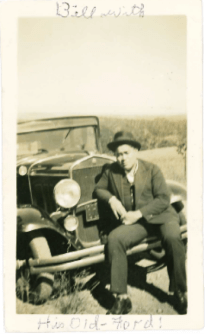
Uncle Bill with his cars and the pose that defined him

Many images of Uncle Bill fill my mind. He was square and solid in built. He wore khaki pants and shirts when not dressed in his white painter overalls, and was rarely seen without a cigar in his mouth. To this day, the smell of a cigar triggers positive memories of Uncle Bill and his generous spirit. He loved to drive and would not blink at going several hundred miles out of his way to take a soldier he picked up hitchhiking to his home in another state. I remember one time when Dad was sent to Korea, Uncle Bill drove his 1954 Oldsmobile all the way to Pennsylvania so that he could drive Mom and me across the country. The fishing in trout farms in Colorado, the stopping in Tombstone to visit all of the abandoned buildings, and the frequent stops at fruit stands to refresh our car stash were some of the exclamation marks during the crossing of the country with Uncle Bill. The trip was filled with his persistent questions about the names of state capitals, history, and the geography of the continent. He was a man who engaged those about him with humor and good will and he made sure his nephew (me) was a constant focus of interaction.

Hawaiian Childhood Reflections

From time to time, in moments of quiet, I enjoy reflecting on some of the images that remain with me from my youth. Born in Honolulu, Territory of Hawai‘i in the middle of World War II, my first memories are of this small town which had become a big focal point during and after the war effort. Back then, everybody walked or took the bus to where they were going. Both walks and rides on the bus would be accompanied by a constant stream of greeting others and exchanging pleasantries with people you knew. It seemed everyone was related to everyone. We lived at the mauka/Diamond Head corner of Ward and Lunalilo streets where many people walked by or got off at the bus stop in front of our house, and it seemed like my Mother, Dad, Uncle, or Aunt knew every person who passed by. There was a physical “connectedness” to life in Honolulu in the l940’s. People engaged one another and your life was populated by people who knew you, your family, and most of your neighbors. Quite different a landscape than today’s email and texting foundation for relationships.

Small events stand out in my early memories as a child under five years old. I remember clearly the days my cousins and I would all go down the street to Thomas Square and search underneath the wili wili tree for the bright red beans Mom would sew into denim bags, which we used to throw at each other in a game of bean bag tag. Since I was the youngest, it seemed like I always lost the battles. Another sharp picture in my mind is waiting on our rock wall above the bus stop for Chinese Aunty to return from shopping in Chinatown. It was always assumed that Chinese Aunty was a relative who came over as a very young child on the same ship my grandfather Ah Fung Chock came on from China.

ah-fung-chock
My maternal grandfather,    Ah Fung Chock

She was sort of a child bride and ultimately married a man in Kohala who contracted leprosy and was remanded to a leper colony at Kalaupapa. Aunty raised all five of her children on one acre of rice land and made sure all of them received an education. All his life, my grandpa cared for Aunty and her family and, in turn, as she entered old age she became my caregiver and lived much of her later life in our home as my “Popo” (Chinese Grandmother). She was a wonderful, loving person who would visit her sons and daughters, but often had trouble getting along with her daughters-in-law and would regularly end up back at our home. Aunty did the cooking and all of the ironing in addition to keeping track of me when I was younger. The big event, however, was her periodic return from shopping in Chinatown, for inevitably, deep down in the recesses of her brown paper shopping bags there would emerge small packets of stained wrapped paper containing the most delicious Chinese cracked seed and preserved fruits. To this day my mouth waters when I think of those oft repeated scenes of Aunty’s return home from the market.

3-power-women
The Power Women in my life: Popo (Chinese Aunty), Wife Judy, and Mother Hattie

Another memory involving Chinese Aunty was the day I discovered her teeth in a glass in the bathroom of our Lunalilo Home. It was truly a revelation for a three or four year old to come upon such an amazing sight! I can remember clearly how the glass and the water magnified her dentures and can almost feel how startled I was in coming to grips with this reality!

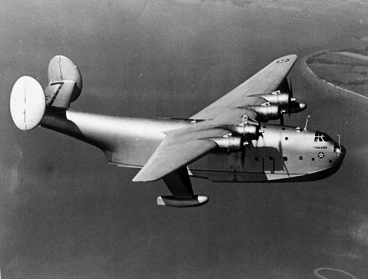
An important weekly event for me, my cousins, and the other neighborhood kids was to sit on our front lawn which stood a little above the city, and watch the Navy’s Mars amphibious monster plane wing over the city after taking off from the sea plane runway in Ke‘ehi lagoon. It was the largest plane in service and demanded your attention as it curved over the city and headed to California. Every performance provided young children in 1947 an abundance of thrills and lots and lots of material for discussions and dreams.

navy-mars-plane
Navy’s Mars plane, photo by U.S. Navy National Museum of Naval Aviation, photo No. 2011.003.142.017, Public Doman https://commons.wikimedia.org/w/index.php?curid=18257366

I trust all of us can conjure up thoughts of our youth that encourage us and keep us grounded and anchored in good places! Blessings.


January 3, 2011.