E Ola Nā Iwi!

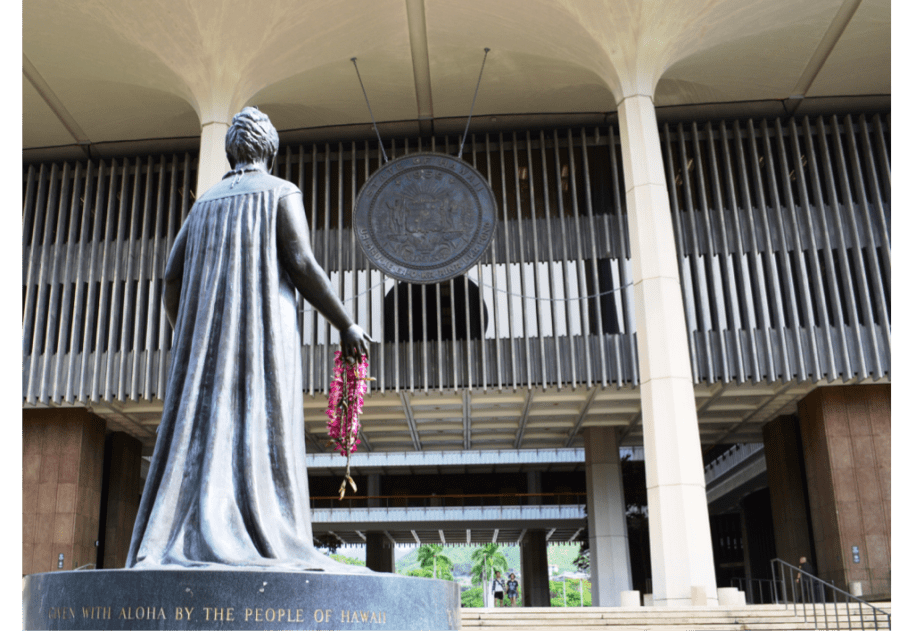
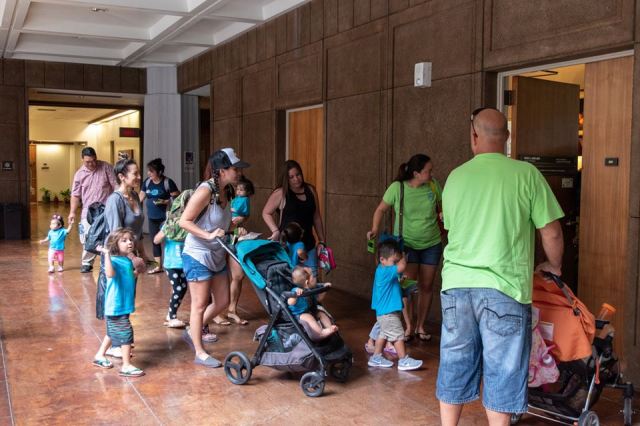
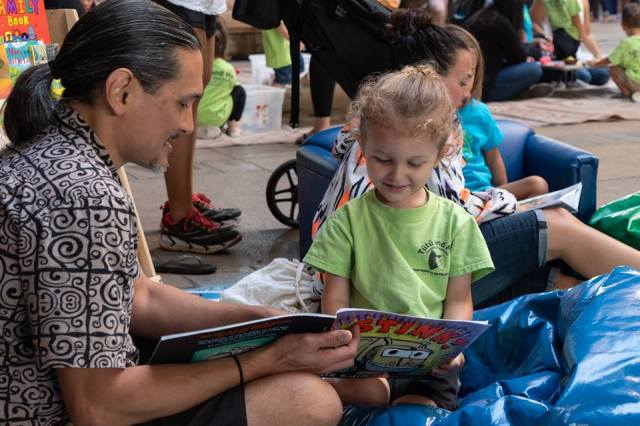
A few weeks ago I had the opportunity to gather with several hundred children, parents, and friends at the State Capitol to rally for early education funding. It was encouraging to see the organizations comprising ‘Eleu, the Hawaiian early education association, gathering to petition our policy makers to make the preparation of young children and families a significant priority of our government.


The theme we are using more frequently is an adaptation of a greeting the Maasai people from northern, central, and southern Kenya and northern Tanzania use when they meet each other. The powerful phrase, “And how are the children?” proclaims the community’s priorities and reminds the speakers of their responsibility. In Hawaiian, the phrase is “Maikaʻi anei nā keiki?” (Are the children well?) and it is a question we should be continually asking ourselves in our private and public lives. We must challenge ourselves and our leaders to take seriously the need for public and personal attention to, as well as investment in, the formation and care of our children.

What is the reality of our community’s concern for early education? Do we understand that if we don’t make it a priority we are faced with the grim reality that our children will not be prepared with the needed skill sets, Hawaiian values and aspirations when it is their turn to define our dear Hawaiʻi? Experts tell us that the vast majority of cognitive, executive, and motor skills of children are in place by the end of their third year. What are we doing with these irreplaceable thousand days in the formation of our children? Are we investing significant resources to ensure that they have the very best opportunity to develop these needed skills to their maximum potential? Have we put in place the support to families to assist them in preparing their children for success? Let’s take a look at the reality of our current answer to “Maikaʻi anei nā keiki?”

The State of Hawaiʻi is currently one of the “bottom feeder” states when it comes to public investment in early childhood and family education. Approximately half of the children entering kindergarten have not had quality preschool preparation. According to the Executive Office on Early Learning, “Today, more than 40 percent of Hawaiʻi’s children start kindergarten without having participated in an early learning program and many of them are 18-24 months behind their peers who have attended a program.” Numerous national studies have shown that children without preschool preparation have been shown to lag behind their peers and often fail to catch up during their formal education experience. The social costs are chilling in terms of employment opportunities, stress on the formal education system, future criminal behavior, substance abuse, and the hidden costs of depression and mental illness. This is part of the reason that the Federal Reserve Bank of Minneapolis conducted a study a number of years ago that projected that investment IN early education provides an avoided social cost return of $7-17 for every dollar spent. We should be clamoring for this kind of ROI (Return On Investment) in our investment of public resources.

eleu 2019 7I was encouraged that there is a very small but growing realization of the importance of early education and family and child interactive learning. Much of the activity in Hawaiʻi is in the private, non-profit sector where family education, prenatal and 0-3 year-old focused programs have found innovative ways to reach out to the isolated and poor with early education services. Several of these programs have gotten local, national, and international recognition. In the public sector, there is growing talk about universal preschool for four year olds funded through public schools, and the state government has established an Executive Office on Early Learning that seeks to coordinate private/public partnerships in early education. Lots of seemingly good action. Drilling down, however, we find little substantive investment that will bring about the needed transformational change. Universal preschool through the public system is faced with several barriers. The first is the fact that the system is struggling with achieving success in its core K-12 mission. Integrating universal preschool presents a whole new set of issues with no clear path for overworked administrators and staff. Attached to this is the fact that the current plan is to use existing teachers for the preschool adventure. Trained early education professionals are in short supply and there is no clear indication how that need is to be addressed. Finally, I read in the morning paper that our community is planning to spend over $500 million for a new prison (not including an additional $40 million to expand the women’s prison) and is struggling to keep the cost of an as yet uncompleted and questionably efficient choo choo train (heavy rail) under nine billion (yes, billion) dollars, while widely proclaiming an astounding commitment to invest in twenty new preschool classrooms with only $14 million in infrastructure costs and $2 million in staff costs. I’ve never been real sharp in math, but the figures shame me and should shame all of us. A heart of a community is seen in the distribution of its investment of its resources. It is clear we embrace self-deception if we ask “Maikaʻi anei nā keiki?” and expect a positive response. It is clear by our public investments that our children are undervalued and we are paying to correct our past failures and not recognizing our need to invest in a path of success for our children.

blog visual

I know the issues are complicated, the resources limited, the public courage often lacking, but let me suggest we consider a few points to share with those in authority over us. One, investment in early education is a needed and proven path for success for our children and families and it needs to be if not at the top, close to the top of priorities for our public policy makers. Two, as a community we need to imbed a stream of funding that is totally dedicated to funding a significant investment in early education for our people. There are a number of examples of communities that have committed a long-term tax especially focused on making sure their children and families all have access to quality early education. We need to ask our political leaders to explore alternatives and then put in place a mechanism that provides the resources without undue ongoing political interference. Three, the public programs of early education need to work closely with the private, non-profit organizations committed to quality early education for children and families. There is a wide and untapped area of mutual interest and potential partnerships that need to be explored and used for the benefit of our children. The Office of Early Learning is a good starting point.
eleu 2019 3

A final point in these musings about our children, our community, and our conscience brings us to the anchor question of how all this relates to the host Hawaiian culture. The question, “Maikaʻi anei nā keiki?” is an important cultural question. What should our answer be from a cultural perspective? What is the right response within the traditions and history of this unique place? After discussing this question with language and cultural experts the positive and affirmative response in Hawaiian that we need to strive for as a community is “E Ola Nā Iwi!!” or “the bones live!!” When the question and response is put in a cultural framework, it becomes clear that “ka mea huna,” or the secret wisdom of the phrase, is that the bones of our ancestors, the lives of our ancestors, the aspirations of our ancestors for us, are ALIVE in the health and success of our children and we commit to make it a priority for our lives. Blessings.
eleu 2019 5


As a bonus, I’ve attached an electronic link to the 2018 annual report of our foundation. Ke Akua pū.

Current Frustrations and Connections to the Past

It is interesting to watch the current local, state, and national political reality unfold.  It is obvious that we’re in the midst of a “redefinition” of political life in our country.  The days of consensus and compromise have been replaced by strident partisanship and an amazing narrowing of the definition of public interests.  This has happened on both sides of the political spectrum and the “public” has not been blessed by the effects of this redefinition.

In a sense, all of this is in part the product of our personal isolation driven by the technological revolution which gave us all the benefits and problems of social media.  We can, indeed, reach out to the most remote place on the globe instantly, but we struggle with understanding and communicating with our neighbors and coworkers.  For the most part, our children spend more time in the electronic universe than in face to face engagement with capable mentors.  Life’s issues around relationships get defined by “apps” rather than personal interaction.  In the political realm, it makes it easier to vilify and marginalize those who disagree with you.


All of this tends to leave me frustrated and quick to join the blame game rituals we see on our television screen every evening.  What has helped my frustrations a lot lately was my wife’s gift of a DNA analysis of my ancestry.  Though it sat on my desk for a long time, I finally got up the courage to do the sample and send it in.  The background to my anxiety rests in the fact that most of us in Hawai‘i are very mixed racially.  We tend to pick and choose the strain we want to identify with and build our lives around it. The problem emerges, as it has with a few of my friends, when the DNA profile tells you that you’ve been rooting for the wrong tribe or you are a part of an ethnicity never revealed to you previously!  On the other hand, the analysis can reaffirm your identity and connection to a culture or group.  My wife had always thought she was part Jewish because her feet tapped involuntarily when Hava Nagila was played at Jewish weddings!  Her analysis confirmed that, indeed, 15% of her is Jewish!!

I had always been told and believed that my maternal grandfather was Chinese, my maternal grandmother was Hawaiian, my paternal grandmother was an orphan but believed to have been Scottish, and my paternal grandfather of mixed “Pennsylvania Dutch” blood.   There also swirled around me stories of my Hawaiian grandmother having Spanish blood, but nothing substantial to back it up.  All of this has led me through my life to identify with my Hawaiian heritage.  As I sent my sample in for DNA testing there was no lack of anxiety about what my true pedigree might be!

ancestry1

When the results came, it took me a couple of days before I finally opened them.   My dominant ethnicity (27%) is Polynesian (I presume Hawaiian)!!  The next is Celtic from Scotland, Ireland and Wales, followed by Indochinese, British, and a small dash of Scandinavian.   I knew I was mongrelized, but when I found out I was the mongrel I always thought I was, I was relieved and happy.

What does this have to do with the first two paragraphs of this adventure?  For me, it has a lot to do with our frustrations with how we communicate and how we develop public policy.  From my little perch I have come to believe that a clear and honest view of self and where and who you have come from is a major building block for positive engagement with others.  Hawaiians have a very strong sense of place and genealogy that when understood and applied, can have a strong influence on how we view ourselves and how we interact with others.  This has given me hope that as we teach and mentor our young drawing from our own connection to our past, we have an opportunity to prepare the next generation on how to positively connect with the needs and thoughts of those around them.

uncle aaron
PIDF Cultural Specialist Aaron Mahi passing on Hawaiian traditions, culture, and knowledge to 6th grade students at an imu workshop

Our traditions and culture teach us that true community does not rest on intellectual concepts or catchy political phrases but rather true connection comes from a shared commitment to each other’s welfare and resiliency.  I say this because I can point to the lessons of my culture and the history of my extended family.  These put the frustrations of the nightly news into perspective and should daily challenge me to be a connection to the lessons of the past for the new generation. My tie to the rich pool of family and cultural history helps me sort out what is important personally, corporately, and politically.  Perhaps such a perspective will help you lower the level of angst we face in our world of instant “connection”!

To remind me of the lessons my elders have shared, I have put together a small collection of reflections that you might find helpful as you stir your personal history and ponder how they might provide clear direction in the midst of contemporary challenges.

Our System Works Only When We Work

As we are swept into this year’s political campaigns, it might be a good thing for us to pause and refocus our understanding of what our privileges and responsibilities are in the craziness of selecting our local, state, and national representatives and policy makers.  I am fully committed to the slogan, “No Vote, No Grumble,” as our initial step into the political process.  If we don’t work it, our representative system doesn’t work.  It is as simple as that!  I think we’ve seen some of the consequences of non-participation and it is not a pretty or encouraging sight for our communities.  Sitting on our hands in the voting process will lead to public policies and practices we will find hard to live with.

nvng mom and keiki

Assuming we will be a part of the process, what are the initial steps we need to take to get informed and engaged? I have found it extremely helpful to put myself through a simple self- analysis regarding the three or four issues that light my public passion:

  • Can I articulate each one of them in such a way as to show how it is connected to public policy?
  • Do I understand present public policy and the areas that need attention?
  • Can I align my perspectives of the issues with what seem to be the positions taken by politicians who represent me and then make informed judgements about whether their representation furthers the causes I find important?

It sounds complicated, but in reality it is a straightforward process of analysis that should be made possible with the resources available to the interested citizen.  It is the effort on our part that is the missing element.

In our Foundation’s work in the shelters, we have found that even the most disadvantaged in our midst are interested in understanding how our system of government works.  We have found that those who are “homeless” want to know how to access resources in the political process and are willing to use them when taught how to do it.  It is clear that they understand the two or three issues of prime importance to them and their families, and they are anxious to understand how to influence public policy in those areas.  Housing, health, food and employment stand out as clear interests in this demographic and though they may struggle to organize everyone together, they are slowing understanding the connection between the political process and change in their universe.

Prosperity often dulls our interest in change or our outrage at unfair policies.  It is precisely this reality that should encourage us to seek to understand the issues and concern that can motivate us into action.  Over the last twenty years, I have increasingly been motivated by a desire to see all our children have access to quality early education that prepares them for success in formal schooling.

This is particularly important to me as I view our community that has half of our 0-5 year olds from families who can’t afford or access preschool, and these keiki therefore enter kindergarten without preparation and are condemned to struggle to catch up with their peers.  Many don’t catch up and meanwhile, our public school system is strained.  It is my responsibility to translate this concern for early education into a guide for my political behavior.  My vote needs to reflect my commitment to this important community issue.

It is obvious that issues often get blurred and intertwined with each other.  Often we are faced with candidates who attract and repel us at the same time. The system continues, so we need to press for those who best (though imperfectly) reflect our vision of our community.

Finally, it is important that we follow up with those for whom we have cast our vote.  Accountability is what gives our system of representation its teeth.  “Grumble” is the right of those who have voted! Press for the goals you hold dear for our public policies and the system will begin to work!  The political season has started and it is our privilege to put it to the test! Aloha!

Thriving in the Midst of a Culture of Shame: Part III

By the last third of the 20th century, there were significant strides taken politically and economically to begin a process of change in the culture of shame in Hawai‘i. There was growing recognition of the injustices of the system suffered by the Hawaiian community and a real movement to try to find a sustainable path of transformation in the face of the significant challenges that community continued to face.

The State of Hawai‘i assumed the management of the Hawaiian Homes Commission, a federal agency overseeing the 200,000 acres of lands set aside by the Hawaiian Homes Commission Act of 1920 for Hawaiian agriculture and home ownership.

Designated Hawaiian Homelands across the state_Nelson Minar Data from HI office of planning
Photo credit: Nelson Minar/Data from Hawaii Office of Planning, hawaiipublicradio.org

The 1978 Hawai‘i State Constitutional Convention created the Office of Hawaiian Affairs (OHA), a semi-autonomous agency to manage the ceded lands the federal government had received from the government of Hawai‘i for the benefit of the Hawaiian community. The trustees of the organization were to be elected by ethnically Hawaiian voters. In the area of education, health, and social services, the Hawaiian delegation in Washington led by Senator Daniel K. Inouye and Senator Daniel K. Akaka pressed for significant resources for the Hawaiian community. Leaders such as Myron Thompson also helped to funnel tens of millions of dollars into educational, health, and social projects aimed at improving the state of Hawaiians.

Innovations such as Hawaiian language immersion schools emerged to revitalize interest and use of the Hawaiian language. Hula, Hawaiian music, and traditional crafts found growing interest in the community while a renaissance of traditional celestial navigation and long distant voyaging focused on the iconic vessel Hōkūle‘a.

hokulea_circa_1975_PVS
Hōkūle‘a circa 1976. PC: Polynesian Voyaging Society, Kamehameha School Archives

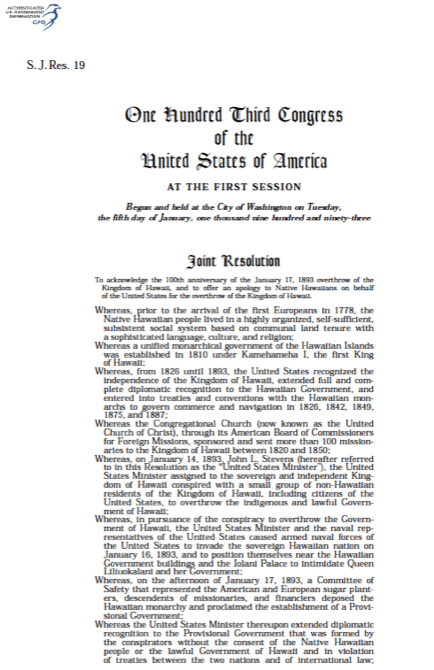
All these activities brought Hawaiian issues into day to day discussions and pride to the community. Significant federal funds were used by the Bishop Estate/Kamehameha Schools system (a creation of the last Princess of Hawai‘i, Bernice Pauahi Bishop, using the significant land resources she bequeathed) to develop innovative extension programs to address the significant educational deficit Hawaiian children had in their schooling. Myron Thompson also joined with other Hawaiian leaders to create the Hawaiian Health System, a series of clinics that focused on the needs of struggling Hawaiian families. All of this was brought to a crescendo by the amazing Congressional Apology Resolution U.S. Public Law 103-150 of the 103rd Congress enacted on November 23, 1993 admitting to the injustice of the seizure of the Kingdom of Hawai‘i on January 17, 1893 and the collusion of the United States government in that illegal act.

apology
Click here to view the full Resolution

It seemed that the culture of shame was on life support. Unfortunately, life has a tendency to be much more complex than we are usually expecting.

Despite all of the above positive changes and investment in social issues, the plight of the poor Hawaiian family remained in place. The waves of alcohol and various drug addictions brought devastation to many. The traditional family structure of the Hawaiian people continued to fragment under the unrelenting pressure to conform to “western values and western perspectives” on life and community. For many families, the roles of kūpuna and the moral authority of the church were slowly abandoned and the commitment to ‘ohana (extended family) became strained. Hawaiian ethnicity was less and less tied to a clear set of Hawaiian cultural and values.   Young Hawaiians were increasingly able to go away for higher education, but they were also less liable to return with their skills to build the lāhui, and their skills were often lost to benefit communities on the mainland. A friend and student of the Hawaiian language and people, Dwayne Steele, once noted that “as Hawaiians experienced prosperity, they became less Hawaiian.” They escaped the culture of shame by leaving their culture.

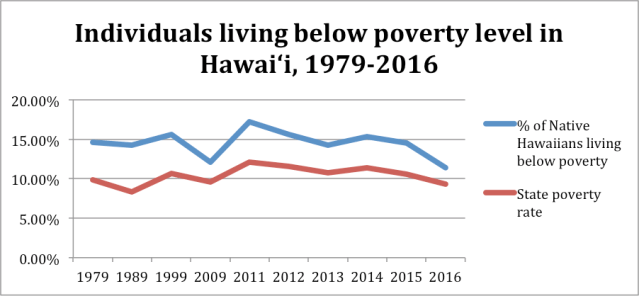
The stats for the past several decades attest to the persistence of dysfunction in Hawaiian communities despite hundreds of millions of dollars of social investment. Not a pretty sight.

poverty
Data source: US Census Bureau Decennial Census (1980, 1990, 2000, 2010 ACS) and 2011-2016 ACS 1-year estimates

Data source: State of Hawai‘i Department of Human Services, “A Statistical Report on Child Abuse and Neglect in Hawaii” 2000-2015 reports

teen birth rate
Data source: Hawai‘i State Department of Health, Hawai‘i Health Data Warehouse http://hhdw.org
education
Source: http://www.hawaiihealthmatters.org
health rev
Data source: Hawai‘i State Department of Health, Hawai‘i Health Survey http://health.hawaii.gov/hhs/ (1998-2012); Hawai‘i State Department of Health, Hawai‘i Health Data Warehouse http://hhdw.org (2013-2015)
substance abuse
Data source: Hawai‘i State Department of Health and UH Center on the Family “Alcohol and Drug Treatment Services: Hawaii, 5-Year Trends (2010-2014)” http://uhfamily.hawaii.edu/publications/brochures/094f2_COF_ADAD_Treatment_5yr_Report_2015.pdf


Source: Prison Policy Initiative, http://www.prisonpolicy.org

These questions emerge, “What have we not recognized in this struggle to defeat the culture of shame? How do we move forward towards true transformation and the creation of a healthy and resilient lāhui as we seek to sever the tap root of this plague on the Hawaiian community?”

I don’t pretend to have anything other than some suggestions for areas we can focus on to bring transformation to the community and weaken the culture of shame in our midst:

…We can define what we believe is our “nation,” our lāhui. This means producing and refining documents that capture the heart of who we are. The ‘Aha convened by the Office of Hawaiian Affairs passed the Native Hawaiian Constitution on February 26, 2016, which provides a foundational document for the Hawaiian nation. It provides a legal step in the building of the community into a nation. The implementation of its provisions remains to be done.

constitution
Click here to view the full constitution


…A corollary to the constitution is the clear articulation of the values that will drive our community and the development of the means to help people understand how these values impact their lives and perspectives on contemporary issues. How does “being a part of the Hawaiian nation” set us apart from our non-Hawaiian colleagues and friends? How do the values of our lāhui change our political, social, economic, and community behaviors?

…Let us inventory the resources Hawaiians have and then select foundational areas for cooperative, calculated, and measured investment in transformational change. Areas that rest on the top of my list are early education programs integrated with family education to prepare our young for success and our families for the successful stewardship of our keiki (children). I can think of no other areas of social investment that would result in such transformational building blocks for our community. Achieved measured outcomes in such an investment in our children and families really put in place a sustainable foundation for lāhui.

…Cultural investment is another area of initial importance to our community and to the eradication of the culture of shame. Language and the understanding of our heritage have provided us with windows to self-esteem and positive identification. Understanding the chemistry of the culture of shame will help us as a people to avoid the stereotypes and attitudes that have kept us crippled by this shame in the past, as we step into the future.

It is obvious that these steps are only part of the road to burying the culture of shame. Each of us individually needs to catalogue what bits and pieces remain in our lives and intentionally work on changing or eliminating them. Our children should be challenged to be servant leaders as they move into adulthood and become clear and positive Hawaiian responses to the challenges of contemporary life. We all need to ask ourselves how we are modeling the Hawaiian culture of success to our families, friends and work colleagues. A worthy thought as we enter a new year!

Blessings and aloha to all for this holiday season and for the New Year!

“Mai makau oukou, e ka ohana uuku: no ka mea, o ka makemake o ko oukou Makua e haawi i ke aupuni iā oukou!” Luke 12:32


Thriving in the Midst of a Culture of Shame: Part II

Despite the power of the culture of shame that started in the late 1800s, it is interesting to note that during the 1930s through the 1960s, Hawaiians were very present in several professional groups. Many Hawaiian teachers in public schools, like my mother, formed the backbone of K-12 public education. The courts and the public bureaucracy also had a very visible Hawaiian presence. Even the legislature and city council had strong Hawaiian individuals at the levers of power. How could that be? On a certain level, I think it was the classic “Stockholm syndrome” in which the hostages develop a psychological/ social/ economic alliance relationship with their captors as a strategy for survival. Our kūpuna wanted their Hawaiian children to prosper in the new and very different western Hawai‘i and they did! A bit dramatic, but the picture of the prisoners becoming the guards jumps to mind. Hawaiians had succeeded in becoming something the culture of shame demanded!

On another level, there was a growing awareness during these years that the host culture was in serious decline. The language was less and less evident in daily life, even in Hawaiian families, and cultural practices were more and more oriented towards creating a platform for the tourist industry in the state. It seemed that the more successful a Hawaiian became in the western culture, the less Hawaiian he/she became in his/her identity with the host culture. Hawaiian perspectives were not welcomed enthusiastically in the schools, corporations, and social gatherings of Hawai‘i. One could be Hawaiian by ethnicity, but not Hawaiian by traditional values and practices. The system worked hard to maintain the distinction.

Part of my memories of my youth in the 1940s and 50s are the headlines of the daily newspapers in Honolulu. One consistent theme that a young person saw was that crime, in general, was committed by “LPMs,” or “Large Polynesian Males.” It formed some of the white noise of life in the islands that reinforced the culture of shame and the need to distance oneself from the host culture. Some would say that you had to view it all in the context of the community at that time and not assign it importance, but for a young Hawaiian growing up and struggling to find his or her identity, it was subtle but powerful input. The socio-economic lines in the community during that time were also strong and enforced. Though Caucasians and Hawaiians could surf, paddle, play sports, and have a convivial time together, interracial dating created a completely different tone. The power of the culture of shame created an understood barrier between relationships beyond certain levels between haoles and Hawaiians. If one didn’t get the hint, the “barrier” often became loudly vocal and sometimes openly physical in nature. There were rules with the culture of shame, and not mixing beyond a certain level was one of them.

big 5
The “Big 5” that dominated Hawaii business from the late 1800s to the mid-1900s, PC: starbulletin.com

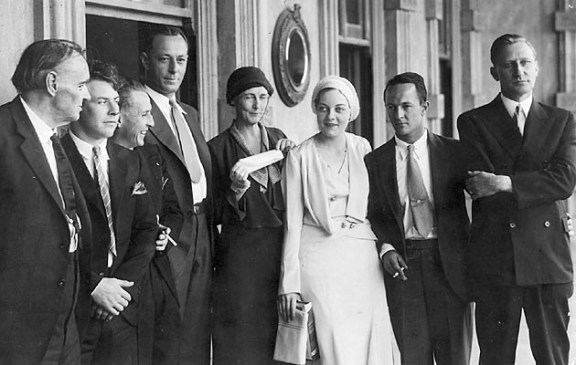
Throughout the period before World War II, the partnership of the traditional agriculturally-based corporations (founded for the most part by missionary descendants and referred to as the “Big Five”) and the political military hierarchy of the U.S. Navy and Army, functioned to keep the divisions of the culture of shame in place. Perhaps the most dramatic example of this diligent enforcement of shame was the Thalia Massie case in 1932. It served to bring racism in the mainland’s south as a lens to view the status of Hawaiians during this period. Hawaiian Joseph Kahahawai was wrongly accused of the rape of Navy wife Mrs. Thalia Massie, was acquitted, and then murdered by moneyed white upper class east coast relatives of Mrs. Massie. The four individuals who committed the crime (including Mrs. Massie’s mother) were convicted and sentenced to ten years of hard labor, which was magically commuted to a sentence of one hour with Territorial Governor Lawrence M. Judd (a descendent of missionary grandparents). The culture of shame protected its own.


massie case_honolulu advertiser
The four defendants and their supporters shortly after being sentenced (May 4, 1932). From left: Clarence Darrow, chief defense counsel; defendants E.J. Lord and A.O. Jones; Maj. Gordon Ross, high sheriff; Grace Fortescue, mother of Thalia Massie; Thalia and Lt. Thomas Massie; and George Leisure, defense counsel. PC: Honoluluadvertiser.com


What one also doesn’t hear about during this period, is the practice the Navy and Army used to intimidate the local population. When fights between locals and service personnel/sailors were deemed too frequent, soldiers from Schofield Barracks were called out to march through the streets as a reminder of who was in charge and the reality of the force protecting the privileged. The Territorial political system dominated by the Republican party and the commercial and military interests of Hawai‘i were clear in their commitment to keeping locals, particularly Hawaiians, in their place. With the U.S. Armed Forces (and particularly the Navy) holding complete sway over everything that took place in Hawai‘i, this period has been characterized as the time that Hawai‘i was “golf course of the U.S. Navy.” If that were true, Hawaiians could only hope to be favored caddies.

Uncle sam cartoon_School_Begins_(Puck_Magazine_1-25-1899)
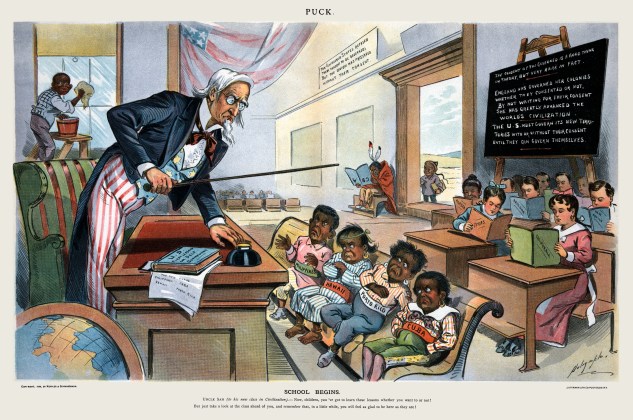
Cartoon depiction of the US, its territories, and US controlled regions as a classroom with belligerent Philippines, Hawaii, Puerto Rico, and Cuba

World War II brought significant changes to the islands and a significant influx of talented people with very western ideas. Local Japanese veterans of the 100th Battalion and the 442nd Regimental Combat Team returned and used the GI Bill to pay for college and law school, and soon began to consolidate their control of the Territory’s administration and the Democratic party emerged as a political power in the local scene. Plantation workers, through difficult strikes and constant organizing, became the voice for the thousands of Japanese and Filipino workers in the plantation camps. Caucasians who settled in the state after the war didn’t bring with them the decades old negative view of the Hawaiian community, and so they married Hawaiians and for the most part were flexible in their view of the culture (like my Dad who married my hapa pake Mom). The winds of change were swirling.

442nd regiment
442nd Regimental Combat Team, PC: Hawaii Reporter

The impact of all of this was a significant relaxing of the traditional barriers to Hawaiians and an easing of social practices that allowed the beginnings of the Hawaiian “Renaissance” in the late 40s, 50s, and its blossoming forth in the 1960s. Traditional hula, both ancient and modern, began to flourish and be taught throughout the state. This interest sparked a renewed interest in the Hawaiian language and in traditional cultural practices that were natural pieces of the revival of dance. Hawaiians today owe the flourishing of the culture to the many kumu hula who patiently taught generations to love the dance and the culture and seek to understand the language that had been taken away from them for decades. Anthropologist and linguists like Mary Kawena Pukui and Samuel Elbert collected the words and the “mo‘olelo” (stories) that began the rediscovery of the Hawaiian language and the preservation of the cultural underpinnings of our people. It was the beginning of the return of the host culture to the host people and the beginning of a process of recognizing and addressing the culture of shame.

hulapreservation
Hula Päipu by Beamer keiki hula students, 1950’s, PC: Hula Preservation Society

Increased activism in Hawai‘i raised the plight of the Hawaiian to a higher level than ever before. The 1960s, 70s, 80s, and 90s saw the emergence of Hawaiian leaders in a wide spectrum of cultural and political areas, who all worked to erode the harshest elements of the culture of shame and begin a process of healing and recovery of self-worth for the community. Some of these leaders include:

Rev. Abraham Akaka: a strong Hawaiian voice for “pono” in our community.  He served as one of the important “Kahu” (guardian) for Hawaiians during this turbulent period.

Myron “Pinky” Thompson: a leader in politics and funding for Hawaiian social issues, founder of Alu Like and a driving force of Hokule‘a and the recovery of Hawaiian celestial navigation

George Helm: the spiritual presence for the Kaho‘olawe ‘Ohana particularly after his disappearance at sea

Harry Kūnihi Mitchell: Co-founder of Protect Kaho’olawe ‘Ohana

Edith Kanaka’ole: a leader in the Hula renaissance

‘Iokepa Maka’ai: Co-founder of Pūnana Leo o Honolulu

Sunday Mānoa: a leader in the Hawaiian music renaissance

Gladys Brandt: a leader in the resurgence of Hawaiians at UH Mānoa

Msgr. Charles A. Kekumano: founder of Kūlana ‘Oiwi in Kalama’ula, Moloka’i (a one-stop-shop for organizations serving Hawaiians), trustee of the Queen Liliuokalani Trust, and active in many community organizations such as the Association of Hawaiian Civic Clubs, University of Hawai‘i Board of Regents, the Honolulu Police Commission, Hawai‘i Commission on Children and Youth.

Voices of leaders like these and many more became conscience keepers for the Hawaiian revival and began the process of understanding what was involved in the resurrection of Ka Lāhui (nation).

Slowly, Hawaiian children found paths to success in the new and more flexible society of Hawai‘i during the last decades of the 20th century. Many went away to college on the mainland and some returned with ideas that tested the traditional lines of the culture of shame. Many, however, decided to stay away from the islands and seek their future in other cultures they found they could navigate and be successful in. They never returned to engage in a transformation of the host community.

In the 70s and 80s a wide range of issues relating to the Hawaiian reality were addressed. The naval bombardment of Kaho‘olawe became a symbolic image of the exploitation of the host culture. The injustices of the land tenure theft of Hawaiian family lands received attention after decades of denial and judicial opposition. The political power of Senators Daniel K. Inouye and Senator Daniel K. Akaka worked to provide significant federal resources for social issues in Hawaiian communities. And the land condemnation process of Bishop Estate lands led to significant resources flowing into the Estate and the educational programs of the Kamehameha Schools. It seemed that things were finally moving to dismantle the culture of shame and replace it with a culture of success for the Hawaiian people. Unfortunately, the declaration of victory was premature.

In the midst of all the changes and all the “progress” in our community, the needle was not moving positively for the bulk of the host culture and the socio-economic challenges of the Hawaiian communities of the state persisted and then deepened with the challenge of drugs, unemployment, and the subsequent social dysfunctions of the Hawaiian families in crisis. All of it reinforced the culture of shame assumptions that Hawaiians were lazy, they were not that bright, they couldn’t be trusted, and they were a drag on society as a whole. Little did we realize how hard change would be.

To be continued…

Thriving in the Midst of a Culture of Shame: Part I

I have reflected repeatedly about elements impacting the Hawaiian community throughout my lifetime and during the times of our elders. It is clear that we have struggled to find traction as an ethnic/cultural group in the midst of the tremendous changes beginning in the early 19th century. Other ethnicities have prospered in the inclusive embrace of the host culture, but Hawaiians to this day continue to suffer from generational poverty and all of the social and physical consequences associated with it. It seems that the Chinese, Japanese, Filipino, even other Pacific Islanders such as the Samoan, Tongan, and other immigrant groups, have moved forward while Hawaiians continue to dominate the lower realms of the socio-economic-educational statistics. What drives this reality? How does true transformation take place if we can’t identify the factors that litter its path for the Hawaiian community?

It is very hard, if not impossible, to simply state the factors that lead to socio-economic structures that endure over time. Cultural/ language/ economic/ social/ religious/ military and global power alignments all play roles in the rolling definition of social structures in a cultural clash of this proportion. Despite this complexity, I will venture into a path of trying to block out what the consequences of this clash were during the past two hundred years of interaction between western and Hawaiian societies.

The introduction of western culture to the traditional Hawaiian nation in the latter eighteenth century resulted in huge economic and political changes that transformed the traditional Hawaiian reality. Western imperial interests in the Pacific drew Hawai‘i into the global political and commercial world. The traditional Hawaiian leadership was quickly overwhelmed by ideas and perspectives antithetical to the values and mores of life under the chiefs, kings, and kāhuna. Economic factors overwhelmed cultural values and Hawaiian families were faced with a perplexing decision: how do we ensure the success of our children in a world on wheels going to places we don’t understand? The use of the spoken Hawaiian language was being eroded even as it became a widely used written language. The traditional family, political, and leadership roles were being put into written documents the common people did not understand. Hawaiian agriculture was being replaced by a commercial plantation model and the traditional bond of the Hawaiian people between the land and their rulers was substituted with western land tenure codes and “representational government.”

From this toxic clash of cultures a number of important responses emerged, changing traditional Hawaiian social, economic, political relationships. The dominant economic interest of the Caucasian businessmen pressed them to mold the political system into one that would protect their investments in Hawai‘i and foster their growing interest in entering the global market through the plantation agricultural model. These goals hinged on changing both the traditional structure of ruler/subject relationships (which was basically a social compact between the chiefs and the governed with clear responsibilities to care for each other), as well as the traditional land tenure model that was predicated on the assumption of a strong personal relationship between the land and its user. In this latter relationship, the farmer assumed a “relationship of kinship” with the land and personal land tenure was superseded by the needs of the larger community, led by the chiefs. In the later part of the 19th century, both of these traditional models were replaced with a western model that gave economic interests and monetary wealth a large say in public policy and as a result, the Hawaiian community was faced with a foreign constitutional form of government and an increasingly intrusive private land tenure system. Traditionally, the land was essentially a relative to Hawaiians; you cared for it, made it prosper, and did not exploit it. However with the change to a western perspective, the land became just another component and input to the economic health of the community. The Hawaiian community did not function well in a plantation setting, so the importation of workers from China, Japan, and later the Philippines, fueled Hawai‘i’s commercial agriculture boom. With plantations taking over, Hawaiians could no longer produce enough food to sustain themselves and the traditional small farming reality faded but managed barely to survive, just like the language, thanks to isolation and poverty.

pineapple fields lanai 1979_Iraphne R. Childes
Pineapple plantation in Lāna‘i, https://digitalcollections.qut.edu.au/216/

english onlyThe traditional Hawaiian language was a threat to this startling shift in the Hawaiian reality, so it was essentially banned and removed as the teaching language in the public schools in 1896. This trickled down to Hawaiian families concerned about the future success of their children and soon the language began to disappear in the home setting. A major foundation of identity and strength for the Hawaiian community was replaced and given a negative connotation in the lives of the people of Hawai‘i. Relationships and responsibilities that the language presupposed were radically “westernized” into a system that the bulk of the native population did not understand.

KS 1893
Kamehameha Schools (KS) was established to help Hawaiian children to succeed. Unfortunately, as an essentially English immersion school that was at the time run by annexationists, KS was one of the first schools to abolish the use of the Hawaiian language. The first class of students selected for KS staged a total walk out when told they were not to use Hawaiian on campus. Photo Credit: Kamehameha Schools, https://apps.ksbe.edu/kaiwakiloumoku/makalii/feature-stories/suppression_of_hawaiian_culture

On top of everything, the population of the Hawaiian community continued its downward spiral from a high of 500,000 or 600,000 at contact to less than 50,000 at the turn of the 20th century. Diseases introduced from the west ravaged the host population while radical political, economic, land tenure, and cultural changes caused a similar destruction in the culture, stability, and more importantly self-sustainability of the Hawaiian people. All of these combined left a community in search of an identity. The ruling elite of missionary offspring and imported westerners were happy to strengthen the negative portrait of the Hawaiian. Writers like racist Rev. Sereno Bishop (1827-1909), son of a missionary with ties to Lorrin Thurston (a leader in the overthrow of the Hawaiian Kingdom in 1893), wrote “definitive” histories of Hawai‘i depicting the Hawaiian as lazy, slow, and incapable of caring for themselves. As editor of the influential Christian newspaper “The Friend” from 1887-1902, he held an effective platform in pushing for the annexation of Hawai‘i to the US and furthering racial issues against Hawaiians. As they say, to the victor belong the spoils, and this was astoundingly true when it came to the public perception regarding Hawaiians and their place in their own land. The culture of shame was planted and it quickly became reality.


“He mai nui ka hilahila”

Shame is a great disease.  Shame and Humiliation can make one sick to the heart.

– ‘Ōlelo No‘eau #783


clara bow hula 1927
Hollywood film Hula, 1927

Throughout the 20th century the culture of shame strengthened. The Hawaiian language slowly disappeared from everyday use on the streets and in most homes, Hawaiian cultural practices like healing and Hawaiian martial arts faded into practice outside of the public view, while hula became westernized and a part of the Hollywood picture of Hawai‘i and its tradition. At the school for Hawaiians, the Kamehameha Schools, standing hula was prohibited as being too provocative. Hawaiians had lost a sense of their unique roots and cultural traditions except in those areas where contact with the western economy was limited: rural, isolated communities that had limited contact with the economic/political reality of Hawai‘i between 1890 and 1960 (places like Na‘alehu, Kalapana, Miloli‘i, Moloka‘i in general and particularly the east end, Halawa valley, etc.).  These areas were subsistence economies and generally ignored by the ruling elite and therefore were able to preserve the language and some of the traditional cultural practices. In other words, the Hawaiian culture and language were being saved by those deemed in poverty and isolation. When the Hawaiian language revival began in the late fifties, the sixties, and the seventies of the last century, these rural communities were major resources for the movement.


(To be continued…)

Ka Lā Ho‘iho‘i Ea: Is Talk of Lāhui For Real?

Today, July 31st is Lā Ho‘iho‘i Ea (Restoration Day), the 174th anniversary of the return of sovereignty to King Kamehameha III in 1843 by the British government represented by Admiral Richard Thomas. It was on this day that King Kamehameha III proclaimed to the Hawaiian people on the steps of Kawaiaha’o church what is now Hawai‘i’s motto: “Ua mau ke ea o ka ‘āina i ka pono” or “The sovereignty of the land is preserved through justice.” It is a time Hawaiians should use to reflect on just what is the Hawaiian “nation”? The monarchy is long gone, the trappings of sovereignty no longer have sway, and we are citizens of a powerful nation state, no matter how uncomfortable it might be for some. So what about this talk of Lāhui, nationhood, sovereignty?

As I reflect on the concept I am immediately struck by the loud voices and shaking fists surrounding the issue of sovereignty for Hawaiians. On the whole I have tended to stand to the side of the debate over the years, as I have seen how the core issues have a hard time emerging through emotions, strong language, and personal attacks from advocates on the many sides. There is much to be upset by as you delve into the complicated relationship of the United States and the Kingdom of Hawai‘i. Legal and conceptual arguments about the nature and path to a renewed Hawaiian government can get very vocal and very personal, very quickly. I have watched arguments slide very soon into ad hominem assaults on the characters of the people engaged in the discussions, dividing families, ending friendships, galvanizing our youth, and dismaying many others in the Hawaiian community. After all is said and done, however, there seems to be no clear definition of the Hawaiian nation and no universally accepted path to its final construction. The ‘Aha movement created a first step in the process, but most would agree the future is at best unfocused.

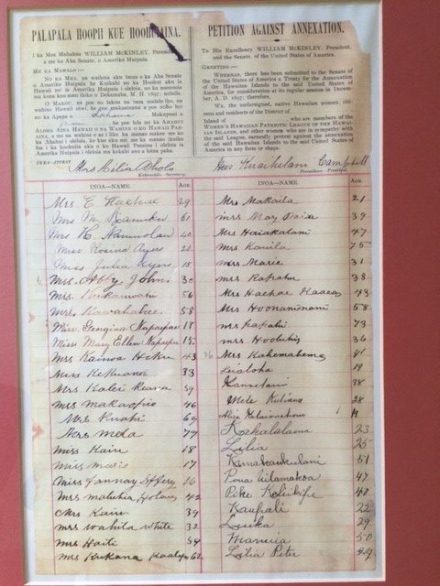
A number of years ago I discovered my great grandmother’s, my grandmother’s, and my grand aunt’s signatures on the anti-annexation petition signed in 1897. Twenty or thirty thousand Hawaiians signed the petition, but to no avail, as the following year the U.S. annexed Hawai‘i in what many consider to be an unconstitutional congressional resolution. I mention the petition because it is an important framework I have used to challenge my five children and my thirteen grandchildren on what to remember as they are called to make important decisions in their lives. Our kūpuna (elders) were not afraid of the consequences of signing the petition, for they believed it to be “pono” (right, correct) for them and their community. Unfortunately, the large economic-military and political powers at that time decided on a reality that absorbed the Hawaiian nation into the United States.

Signatures

One hundred and twenty years later with the ongoing sovereignty debate, the tradition of the petition in our family continues to represent a commitment to do what is correct and right in the face of opposition and the threat of negative consequences. In the midst of all of the “paths” to sovereignty before us, what is one that is “pono”? My personal preference is for an entity that can control significant resources for the benefit of the Hawaiian community. Whether that be a “nation within a nation” or some other political structure is not a burning issue for me. What is important, is the challenge before the Hawaiian people to build a community/nation. It strikes me that pursuing international groups to declare the Hawaiian people a nation is sort of like putting the cart before the horse. These efforts have raised the issue and kept it public, but they were not combined with efforts that actually addressed the fundamental needs of the Hawaiian nation. You may have something that looks good on the outside, but something that lacks a viable foundation. What we really need to do is define the umbrella that covers our intended Lāhui so we can truly begin the process of creating a nation. What are our fundamental values? What shape does our communal commitment to children, kūpuna, the poor, and the sick look like? How does our culture guide us in the relationships between the rich and powerful and the poor and cast aside? Where is our discipline in speaking the “language” of our Lāhui and refusing to use the language and values of other groups? When you start to look at nationhood from this perspective we begin to realize that we’ve been building a house from the roof down… lots of views and pizzazz, a lot of sparks and noise, but little or no foundation.

We must first be a community and agree on the values that define our community and set it apart. The resources that are available to us should be wisely managed and focused on the following. We need to educate and care for our young and cherish and protect our elders. We need to provide education and opportunities for our people as they enter the economic system. We must reaffirm and enrich our cultural and linguistic heritage that makes the Hawaiian people unique. As a community, we must insist on servant leaders to move us forward. As we work to achieve these goals, our Hawaiian nation or community will become a reality and not be dependent on the opinions and labels of others.

The issue of sovereignty has been a divisive one for our community. We need to step back from the rhetoric and the passion that has marked this discussion and refocus on the hard challenges of caring for our children and families. The community that we seek to build and its values need to be something much, much larger than our individual focal planes. As we develop one mind about these values that will define us, we can then use them as a filter to avoid the distractions of conflicts unrelated to the true task of nation building.


Ellen PrendergastKaulana Nā Pua (Famous Are The Flowers), is a mele of opposition to the annexation of Hawaiʻi to the United States, written by Ellen Kehoʻohiwaokalani Wright Prendergast in 1893. In 2013 Project KULEANA and Kamehameha Publishing produced a collaboration of the mele you can view here. Lyrics and translation below are from huapala.org.

mele.png


Clearing the Fog

I’ve found that my grumbling and mumbling about the shortcomings of our policy makers and implementers helps to clear my vision in the midst of the competing noises and posturing of our political leaders… just what are the important issues? Local, state, and national politics are stunning, even for a person like me who thought he had seen it all. Often, however, we exhaust ourselves on the external issues that stir us, the policy issues (or the lack of policy issues) as they relate to aspects of life I believe are important for us as a community. How come we don’t have a sustainable agricultural production plan for our precious lands? Where is the renewable energy strategy we were promised and what are we doing in its seeming absence? How do we know we will have sufficient water resources for our children and grandchildren? Where is our comprehensive early education plan to insure our children and families are healthy and resilient?

It goes on and on and I tend to get stuck in the weeds with the details of the issues. Venting is helpful however, in that it gets all of the negative weight off my brain and helps me clear a path to the underlying and fundamental aspects of our system that need our attention. Once I’ve gotten all of the negative energy out of my system by grumbling, arguing loudly, or burning in silence over the stupidity of people who don’t agree with me on issues, I can finally consider and explore what it would actually take to bring health and resilience to our community through our political process. The real need is to change the system and culture that drive these issues.

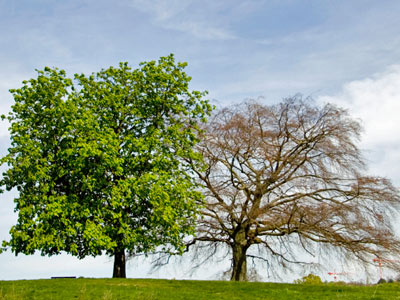
Forty years ago I listened to a taped speech by a pastor’s wife, Jill Briscoe. She was commenting on the reaction of traditional churches to the revival that was taking place in England. As more and more young people came to faith and showed up at the church’s doors, the traditionalists struggled with what to do with all of the “Jesus Freaks” the revival had produced. Their dress, language, behavior, hair, and attitudes were outside of the box of traditional church culture. Many of the traditionalists worked diligently and struggled mightily to change their dress, change their language, and mold them into good traditional British Anglicans! Jill Briscoe likened the process to trying to get all of the dead leaves off the tree in the early winter. You can labor to climb each limb and pick each remaining vestige of a dead system, or you could wait until the spring breaks forth and allows the tree to replace the dead with the vibrant signs of new life! The more I thought about it, the more I realized that I was probably climbing limbs to remove dead issues from our political process rather than paying attention to the system that produced it!

full tree dead tree

So, one asks, how do you grapple with an organizational system that behaves like an octopus? Its various arms keep moving us around and it keeps changing colors and appearance to a point of confusion. What is the key to making the system responsive to creating a healthy and resilient community rather than one that feeds the egos of the leaders? I think the answer takes us back to the picture of a dead tree and the need to bring life back to the trunk if the leaves of the issues are going to be healthy and vibrant. By recruiting and training men and women to be servant leaders, we can begin a truly transformational change in our local, state, and national governments. History has taught us that one or two committed servant leaders can bring substantive change to a system.

How do we do it, you ask? It begins, I believe, at various levels in our lives. It is hard to expect our children and grandchildren to embrace servant leadership if they aren’t given models consistently in their lives! How do we convey to our ‘ohana the responsibility to care for those in need, to strive for and seek excellence and honesty in all that we do, and to work to bring people together rather than use them as springboards for our own egos and personal plans? A few moments spent reflecting on how we can model the principles of servant leadership for those we love, can be a powerful beginning to a significant process of change.

As we commit to model servant leadership, we also have to ask those around us to do the same. As we come together with like-minded men and women, we begin to develop a shared vision of health and success for our families and our communities. We begin to recognize and define the values and the behaviors that should characterize our families, neighborhoods, and towns. In essence, we begin to “speak” a language and model behaviors that strengthen servant leadership in our lives and the lives of those around us. It hopefully begins a process of widening acceptance of servant leadership in families, neighborhoods, workplaces, and ultimately in public policy formulation.

I think it is important to emphasize the need to identify, recruit, and train men and women who seek to apply servant leadership in the public policy arena. There is a growing interest in this concept both locally and nationally. Most of us are tired of individual egos speaking the language of self-promotion as the only alternative for political leadership in our local, state, and national governments. To change this, intentional action has to emerge. If we can begin a process of identifying men and women with hearts of service and if we can prepare them for the huge challenges they will face in running for office and serving as our political leaders, we can begin the process of public policy formulation based on deep rooted servant leadership. We can begin to strengthen our communities in their commitment to transformational change and care for the needy.

We are exploring a program called Pono Policy Training…”pono” being the Hawaiian word for righteousness and right relationships…in which individuals will be invited to learn how the political system works and to explore how servant leadership can bring substantive change.

nvng no background


On the national level similar programs are beginning and despite the tremendous challenges they face, they are beginning to gather traction. People are tired of climbing the dead political trees to pull down policies and practices they oppose. They want to be part of bringing our political systems back to life and relevance by resetting the goals of governance within a framework of responsible servanthood.


Enough said for the present. Let’s see if we can start by gathering together in small groups to commit to servant leadership, modeling it in our homes, neighborhoods, and workplaces as a means of bringing our communities back to health and resilience!

Harnessing Homelessness

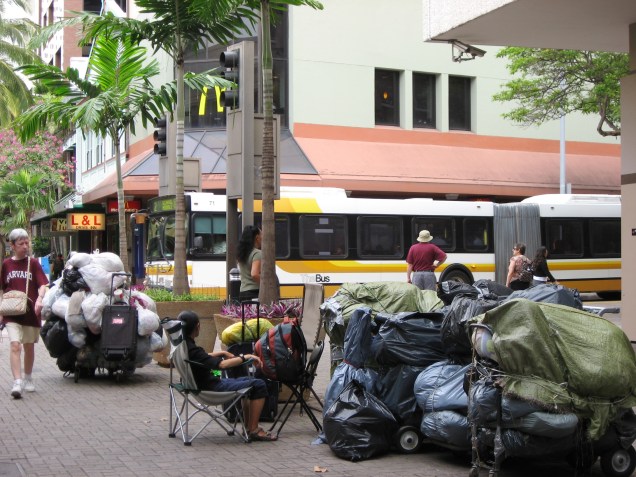
Homeless downtown

We are all confronted by the escalating rate of homelessness in our community. The number of people living on sidewalks has grown to the point that they become homeless communities in our midst. Our canals are lined with tents and shelters of the dispossessed. Federal officials declare they have never seen such a state repeatedly use the word “crisis” to describe it. How has our dear Hawai‘i descended to this point where homelessness, once never seen in our culture, becomes the new normal? How do we take steps to bring healing to this open sore in Paradise? How do we deal with our frustrations and angers?

There are obviously no simple one step answers. What has been going through my mind is to view homelessness as an amazing opportunity for our community to reaffirm our core culture and character.

We need to embrace the homeless, particularly the homeless families and children, as a gift to practice our aloha and mālama in ways that strengthen our communal commitment to what is pono!

I have seen glimpses of this approach through the efforts of many churches to feed and shelter the needy. I have been encouraged by the positive responses of our community in the recruitment, training, and placement of those seeking jobs and a path of sustainability. I am challenged by organizations that stand ready to help build houses for families and rehab units in low income housing facilities if given the chance. Without being Pollyanna about it, I believe the “crisis” of homelessness can bring a community awakening to the heart of aloha that is in our DNA.

Unfortunately, at least 31 cities nationwide have passed laws that restrict or prohibit food-sharing in public places, meaning those who continue to feed the homeless without following various restrictions such as obtaining permits (often for a fee), could be fined or go to jail. Fortunately for us, Hawai‘i has not yet passed such a law. Those who passed these laws believe the myth that feeding the homeless enables them to remain homeless (as opposed to the real reasons, such as lack of affordable housing, lack of job opportunity, mental health or physical disability).

amy table picWe need our policy makers to help fuel a rethinking of homelessness, but it should not wait for them to do it for all of us. We can organize early education programs for homeless young children, we can provide places where homeless adults can get training and preparation for employment, we can coordinate health services beyond its present state, and we can give hope to the hopeless and meaning and focus to our frustrations with the present situation. The thought that homelessness is an opportunity is something that needs to be planted and cultivated in our minds and actions. It would be a return to our core community values.

Are we ready to risk it?

Reflections: The Choo Choo Train to Nowhere

082015_0231

As a father, grandfather, and leader of a nonprofit organization, I am passionately committed to early education for our children. Unfortunately, over half of our children in Hawai‘i are not attending preschool and entering kindergarten without being able to count to five or differentiate colors. They quickly become those left behind and those that become a tremendous drag on our educational system and, later in life, our community in general. One proven avenue of dealing with this educational reality is a robust investment in early education of 0-5 year old children and their caregivers. The Federal Reserve System points to a minimum of seven dollars of avoided social costs for every dollar invested in early education. The Annie E. Casey Foundation has recently published an exhaustive study that says early education and preparing children to read at grade level by the end of third grade is crucial to success for the students, and makes a sobering statement:

92% of those not reading at grade level by the end of third grade will not graduate from high school.

Each of those represent a $2.4 million dollar cost to the community over his/her lifetime. In Hawai‘i, 70% of fourth graders are not proficient in reading (2015 KIDS COUNT Data Book). We are not alone; another community, Charlotte, North Carolina, has only forty percent of their third grade students reading at third grade level. The gap in reading proficiency between low-income and higher-income children has grown in the past decade, and Hawai‘i was found to have one of the largest increases in the nation with 83% of lower income students scoring below proficient reading level, compared to 57% of higher income students. This gap often starts early.

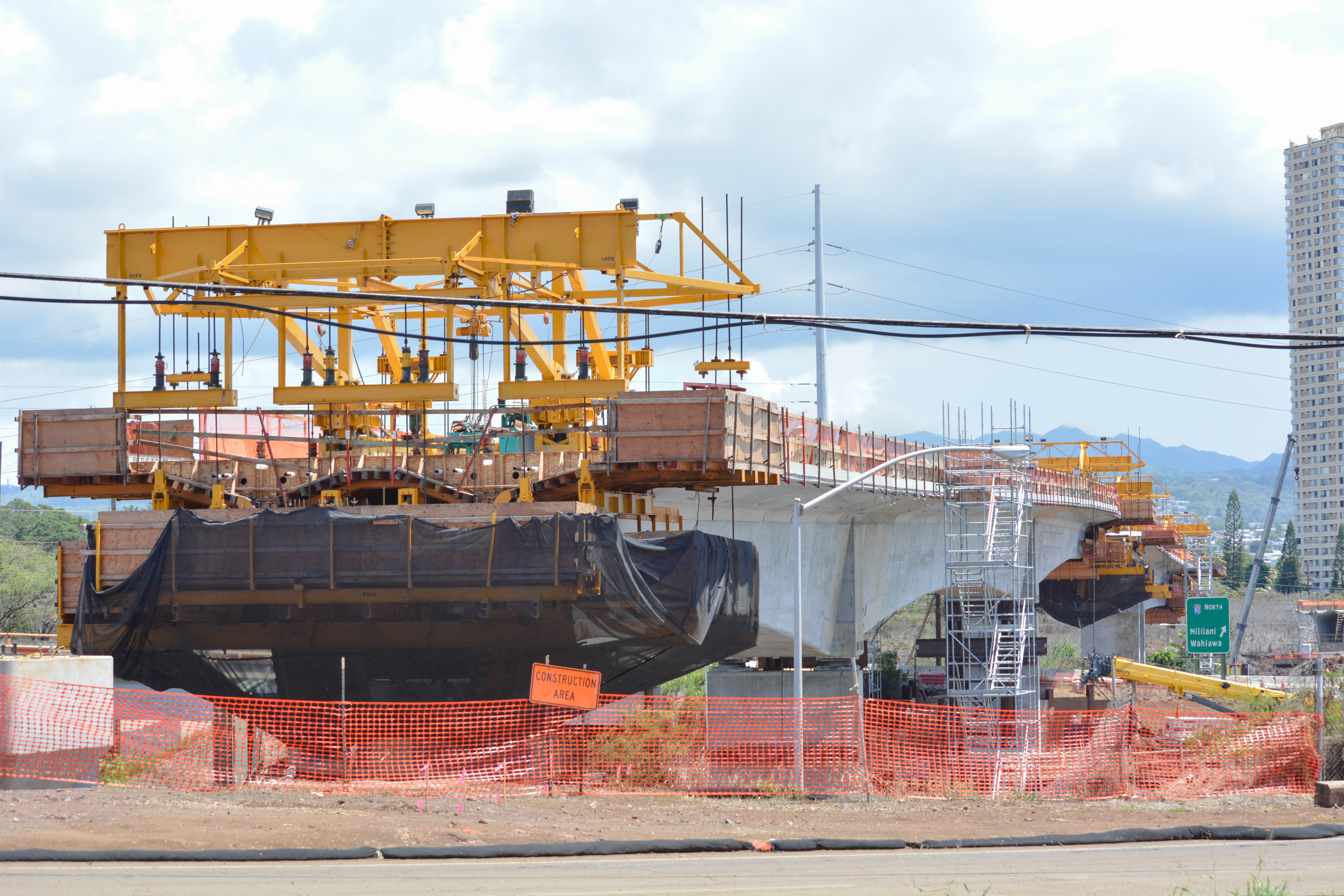
What does this have to do with the Choo Choo Train? Let me share with you what is happening in Honolulu. We have embarked on a very controversial $7-8 billion investment in rail transit (the final cost keeps inflating and the advantages keep getting increasingly unfocused). However, there is a total lack of comprehensive early education investment in the State.

Hawai‘i is one of 15 states with small or no state-funded preschool program.

The lower income and middle income families are the ones who suffer because of this, as they are not able to afford preschool. Studies have shown that the foundation for school and life success begins early and the impact of early investments is strongest for children facing adversity. Quality, affordable early childhood education not only benefits the child for the rest of his/her life, but has shown to return much more benefits to the community than its cost (reductions in remedial education and crime costs, increase in taxes paid; a cost-benefit analysis of the Perry Preschool study found those who attended preschool pay $38,000-$75,000 more in taxes over his or her lifespan than a child who did not attend).

082015_0286

For a very small fraction of the Choo Choo Train’s cost you would have a social return on investment (ROI) of significant proportions! You do the numbers. If you were an investor, which investment would you select? As it stands, we will have a very expensive, dubiously efficient, and probably little used transportation system that will be trying to move an increasingly dysfunctional community. A community beset with issues rooted to a lack of investment early on in the lives of our children and their families. What do you think? I think, shame on us!