As the political dust settles from the Presidential election of 2016, I have started to think about what all of the intense charges and counter-charges of the election mean as we go forward as a nation into 2017 and the presidential term of Donald Trump. Many of us had visions of dire consequences if the “other side” won the election. Now that we know who did, we are faced with processing what this all means for our personal and professional lives for the next few years!
Whether you are pro or con his administration and policies, all of us should consider following a few important concepts in the days to come. First and foremost, the election should have taught us the power of the democratic process with all of its warts and shortcomings. The adage, “No Vote No Grumble” should be expanded to also include the exhortation, “No Work, No Hope”! If you are committed to an issue, cause, or candidate, you need to express that commitment through engagement and effort for it to be successful. That’s the magic of democracy and it is a magic we often disregard. Democracy takes hard work and if we’re not willing to engage in it for the issues we value, we are condemned to disappointment and frustration.
A second thought as we look to the future after a bruising election process is the need for all of us to reexamine what we are doing in the larger community and make sure that the focus of our work is to bring health and resiliency to those lives we touch, whether it be through for-profit or not-for-profit work. We need to always be mindful of the impact our work has on others and continually strive to make sure the impact is positive. Concern and care for those in need should not be a political dividing line, but rather a rallying point for all who seek a healthy and resilient community.
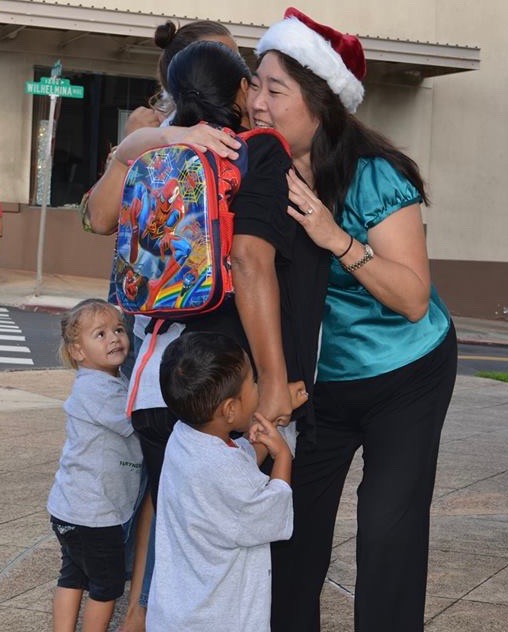
Ka Pa’alana families arriving at a Christmas luncheon at 3660 on the Rise hosted by The Harry and Jeanette Weinberg Foundation
I trust these coming months will see me and my colleagues more and more focused on being better providers for our families, our neighborhoods, our community, our state, and our nation. For most of us, our kuleana (responsibilities) does not extend beyond our immediate family, neighbors, and work, and so we have the opportunity during the coming months to strengthen these ties and deepen our concern and work for those around us. I trust we can avoid worry and complaint about “large horizon issues” and national/local political personalities from distracting us from our service and kuleana to others.
Rich blessings to all as we step into 2017! E ho‘olawelawe pū kākou me ke aloha! (Let us seek to serve together in harmony!)
The other day I was reflecting on how difficult it is today to sit down and “talk story” with people over any period of time. Our electronic connection has made substantive face to face communication difficult, at best, and it stands in stark contrast to my memories of how people interacted sixty or seventy years ago. When in a group of adults, children were expected to be quiet and attentive, not texting their pals or listening to various forms of electronic entertainment. There was a sense of the “present” when people got together. In family gatherings there was a subtle process of indirectly teaching the young about life, their heritage, and how to grapple with the tough issues that awaited them. For example, simple concepts were often repeated by Mama when she spoke of how to treat other people. A rule of life that was important for her and was repeated time and time again for our benefit was, “It doesn’t cost a penny to be nice to people.” This concept combined with the numerous times I saw her act this principle of life out, remains a powerful guide for my life. It was communication and teaching at its very best and is a guide we should remember with our children and friends.
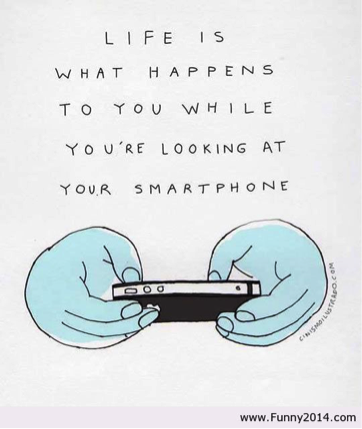
I am not comfortable with the gigabytes of data that we exchange each day with people in the next room or ten thousand miles away that we often think of as meaningful communication and “getting to know” others. Modern technology should enhance, not replace, the traditional method of “contact sport” interaction and communication. This costs time and focused effort; both commodities we tend to be reluctant to use in place of electronic clicks. As we survey those relationships that we hold dear, we should be especially sure that our investment in those relationships not be measured in computer time or numbers of text messages. Take the time to interact with those we cherish. Learn the great discipline of listening and pondering. Celebrate and cultivate creative silence with friends and families and break it only with the desire to draw closer in your relationship, be more effective in your nurturing or teaching, or deepen your understanding of the other person.
Life is a contact sport. We need to be engaged with each other while following the rules of God’s unconditional grace if we are to play it successfully! People form the sinews of our lives and we need to keep our relationships with them real and healthy. Don’t be tempted to replace this principle with electronic substitutes! I guess I am desperate for all of us to seek balance in this fast paced and often confusing life we lead. Melding modern technology with the nuts and bolts of real personal engagement and empathy is perhaps my ideal. We can embrace technological innovation and the importance of data if we also embrace the challenge of using it with wisdom and being sensitive to needing to know the paths others are taking in their life journeys. How about working on our own “screen abstinence” program? Commit to a significant period of time where screens are taboo and engagement with “the good, the bad, the ugly, and the amazing” of other people takes priority. I know we will find ourselves blessed in the midst of the challenge of living in demanding times. Me ke aloha.
Though almost fifty years have passed, my Sunday afternoons in Guatemala with Captain Albert Warren have stayed with me and impacted my life substantially. Captain Warren was a retired United Fruit ship captain that lived in Guatemala City in retirement with his wife. Most of his life had been spent working on United Fruit ships carrying bananas from Central America to the east coast of the U.S. and returning with goods and ice for sale in the tropics. Captain Warren was a slow speaking, serious thinking, and earnest soul enjoying retirement when Judy and I met him and his wife at the Union Church in Guatemala City. The Warrens were kind and concerned and took us and our daughters under their wings with warm affection. When I accepted Christ into my life, Captain Warren was very supportive. He shared with me his story of struggling with the gospel in his life as a sailor and how when he had made a commitment to follow Jesus, his life as a ship’s captain allowed him many hours to dedicate to the study of the Bible. It was this gift that he asked to share with me and when I agreed, we began an amazing year of studying God’s Word on the floor of our living room (as you know, I’m more comfortable stretched out!). Hours of reading and discussions forged for me a strong and lasting affection for this man and for the scriptures he shared with me along with his life and struggles. It was bonding through real sharing and honest transparency that made my relationship with Captain Warren an unforgettable experience, one that would give me a love for God’s Word and a desire to use His Word as an anchor point for relationships with others.
Although we both moved away from Guatemala, we managed to keep connected through cards and letters. They had promised to pray for us daily and we know that they had done so, for when their daughter informed us of their passing, we had had a feeling that something had been amiss. An important pillar of prayer support for the Dill family was gone. What was not gone, however, was the legacy of scripture and personal engagement that Captain Warren had taught me. They remain with me today and I would strongly suggest you revive these types of engaged interactions in your lives if they are missing or weakened!
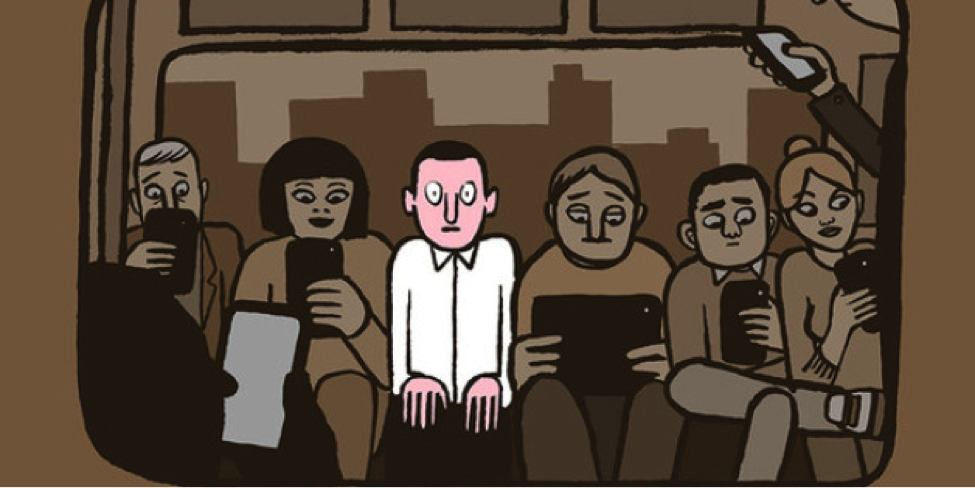
We’ve all experienced the feeling. In the midst of a group of people we find most of them with heads bent and fingers flying, “communicating” or reviewing information on their personal phone or tablet. The net of information or relationships they pursue discount the people around them and instead connects them with people and concepts that are safe, electronic, and can be controlled by the viewer. The electronic entities don’t need deodorant, can be quickly dismissed if they challenge the user’s perspectives, and simply can be used for entertainment and bolstering self-assurance with little or no effort. We have created the ultimate Tower of Babel where the contact nature of life becomes digital signals and pixels. We are lost in a sea of information with no compass and no significant connection to each other. “Communication” becomes data dumps with increasingly absent thought or wisdom behind it. Relationships become strokes on the keyboard and emotions cute abbreviations.
Photo credit: Wayne Dahlberg
Take a moment and think about how this impacts our personal relationships and our public policy formulation and governance. Without understanding the impact of electronic disconnection, our decisions tend to be influenced by the largest number of data points or “views” and become subtly detached from traditional values, perspectives, and concepts such as servant leadership, the pursuit of what is “pono” (right or righteous), and the general welfare of the community. Policy decisions descend into sorting out polling numbers, not true visionary leadership. We become increasingly disconnected from reality as the information we are fed narrows our focal plane and suffocates our understanding.
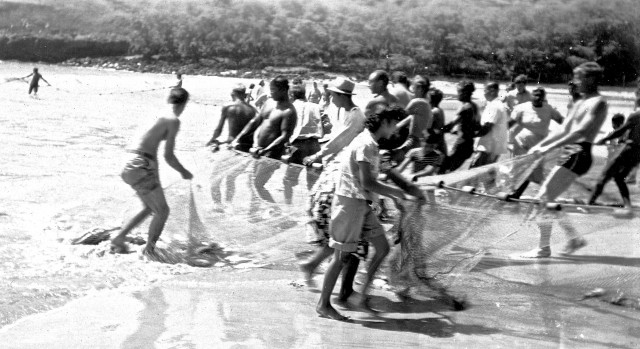
This is not a happy picture, but is also not new; cultures have struggled with disconnection throughout history. Our traditional Hawaiian culture in particular was focused on the negative impact of disconnection within the community. Island people need to be particularly engaged and aware of their relationships both with their human counterparts and also with the natural resources they steward. Island people understand that life is a “contact” sport with risks and negative outcomes that demand their attention. The structure of our Hawaiian language reflects this concern for clear communication and attention to details as it relates to relationships.
Photo credit: Kauaʻi Historical Society
A particularly pejorative description of a person in the Hawaiian culture was the phrase, “He kanaka pī!”…he is a stingy person! As I thought about this condemnation, I was more and more drawn to the insight that the culture was not necessarily solely condemning a person’s selfish behavior, but rather was judging the fact that this person was disconnected from the core values and culture that worked to sustain their community. The person’s focus on self and his/her possessions presented a real threat to the survival of the communal whole.
With the impact of electronic disconnection in today’s world, we can see the same negative impacts to our community’s long-term health and to the survival and strengthening of our cultural core as Hawaiian people. Hawaiian culture is about engagement and real time relationships in the midst of life’s struggles. When we bond with each other in facing the challenges of life, we reaffirm the values and perspectives that have been modeled to us by our kūpuna and our extended ‘ohana. It serves to validate these values and relationships so that we can become stewards of them and pass them on through engaged relationships with our children and colleagues. The hours I spent watching my father and uncles fishing and relating to people left me with life lessons that I hope I have passed on and that I hope will enrich our community’s life. I probably could have learned all the data through Wikipedia, but I would have missed life and the richness of relationships in the process.
Take some time apart with children, friends, and/or relatives. Turn off the electronic disconnectors. Bask in real (and often uncomfortable) interactions with those around you, those you have made commitments to and have aloha for, even those people who put your teeth on edge. Fight electronic disconnection with passion!! Trust me, it will be a blessing… HTH. SCNR. BFF. Jan.
Children and families learning about the ancient Heʻeia Fish Pond.
For a number of years, I have been appreciating the amazing talent and technology of the traditional Hawaiian culture. One example is the loko i‘a, the Hawaiian fishpond, which I was involved in the rebuilding and restoration of for several years. The loko i‘a was unique to the Hawaiian Islands and represents a very sophisticated environmental management technology that allowed Hawaiians to use various forces of nature to create a system that bred and stocked marine animals. At the same time, it provided a catalyst for abundance on the adjacent reefs. The advanced engineering that went into the placement and the construction of the walls and gates continue to be a testimony to the tremendous insight and talent of traditional Hawaiian marine engineers and hydrologists. When one adds the beneficial environmental impact of these structures, we begin to appreciate the depth of knowledge our ancestors had about the physical world they inhabited. They had the ability to understand and use natural phenomena such as the wind, tides, currents, fresh water and salt water, mixing them in ways that wouldmaximize benefits for the population and for the environment. In the loko i‘a, the community maintained a unique “icebox” to collect food reserves and breed and grow marine animals, and as a result, people and the reefs prospered by the presence of these fishponds.
There are numerous other examples of traditional technology and the sophistication it displayed regarding the management of human activities, the long term sustainability of important natural resources (such as the marine reefs, fresh water, land use, waste management), and other critical factors that allowed the culture to prosper and sustain itself. I have been fascinated as of late with the lowly wooden calabash, called ‘umeke in the Hawaiian language. I must make adisclaimer and say that I am not a woodworker. The “C” I got for my shoebox in Papa Wright Bowman’s crafts class in seventh grade cut short my promising career! But over the years I have been astounded by the work of those who make our traditional calabashes and have read some of the history and lore surrounding this sophisticated craft.
Photo credit: honolulu0919
The making of wooden and gourd calabashes was an art that was passed down in secret from master to student and was jealously guarded by the craftsmen and their families. The production of a calabash would often take a considerable amount of time and effort and the product would become a prized possession of its owners. Types of wood and shapes of the container would be specific and often ‘umeke of various types would be used by families over many generations.
What, you might ask, does this have to do with today’s world of Tupperware and Ziploc containers? Please bear with me. In the making of ‘umeke, there often would appear cracks and imperfections that could potentially make the bowl useless. Because of the cost of production and the importance of these calabashes in the day to day culture of our kūpuna, the wood working masters developed a way to repair cracked ‘umeke and restore them to their original state… even making the cracked bowl stronger. They did this by using an innovative fishtail joint, the pewa, to seal the crack and save this important part of day to day life in traditional culture. The ‘umeke was restored to its function and its important role, and the family was able to continue to use this important implement for its benefit.
As I thought of this small, yet important example of the traditional technology of the Hawaiian culture, I was stirred by the picture of many people in our communities who quietly and often without recognition work as human “pewa” to heal and restore broken pieces of our families, neighborhoods, and communities. They bring people together, they restore dignity and usefulness to those we have abandoned, and they do it without need for publicity and promotion, just like the pewa that healed the traditional ‘umeke. How blessed we are to have these individuals who join together the cracked seams of our lives and allow us to grow and prosper as individuals and communities.
Sweets Wright and Bob Agres were the recipients of the 2016 Pewa Awards on May 05, 2016.
I hope you will take a moment and think through the “pewa” who work to bless us and encourage us in the midst of the challenges we all face. Take a moment to recognize their work and celebrate with others the gift they all give to us and our ‘ohana. May our most fervent prayer be that we would be a “pewa” in the lives of those around us. Blessings and aloha!
Opening day in the Hawaiʻi legislature, photo courtesy House GOP
As we begin a presidential election year and also a session of the State legislature, it may be a good time to reflect on our privileges and responsibilities as citizens of the various communities we inhabit. Whether Republican or Democrat, pro- or anti- Hawaiian Sovereignty, for or against the rail/unions/Jones Act, etc., it might be worthwhile to take a deep breath and re-visit the roles we have in policy making in our communities. It seems that a whole lot frustration and a great sense of separation from our political process often leads us to political paranoia and, ultimately, political paralysis.
We become intentional spectators in what is NOT a spectator sport: democratic governance.
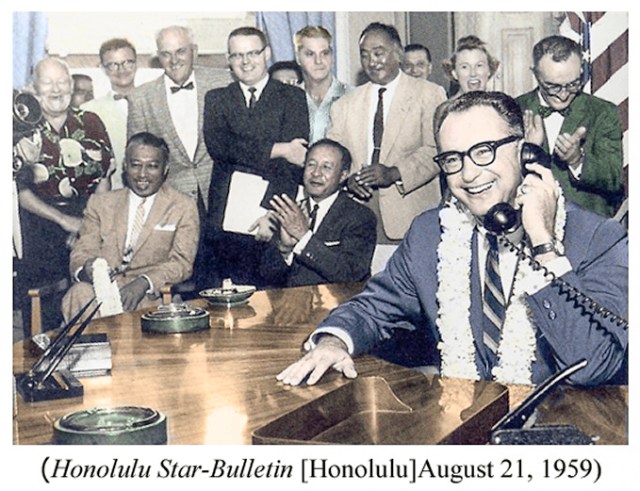
William F. Quinn and Kealoha being sworn in as Hawaii’s first elected Governor and Lieutenant Governor.
After becoming a state in 1959, Hawai‘i had one of the highest percentages of registered voters participating in elections with more than 90% voter turnout. Since then, voter turnout has declined and for years, Hawai‘i has had the lowest percentage of population registered to vote and one of the lowest voter turnout rates in the nation (only 38.6% of people in Hawai‘i voted in the last election). We’re winning the wrong races. As is the growing reality in many communities nationwide, political apathy seems to be a strong element in our Hawaiian politics. We can look at this phenomenon from a number of different perspectives, but I’d like to take a look at the Hawaiian community and what is or is not happening when it comes to civic participation.
Though there was a definite high point of Hawaiian participation in politics during several of the early decades of the past century (primarily in the Republican Party), there has been very little resurgence of this activity in the past fifty years. This is juxtaposed to the emergence of various immigrant groups who, over the years, have become the dominant political players in charting the political, social, and economic future of Hawai‘i. The Caucasian presence has always been powerful since the coming of the missionaries, but the alliance of new arrivals from the mainland along with the Japanese political flowering after World War II through the Democratic Party has remained the dominant political reality of the state. We currently live in a one party system where there is significant inertia protecting the political status quo. This makes it difficult for new groups to form and to push through changes that might destabilize the system.
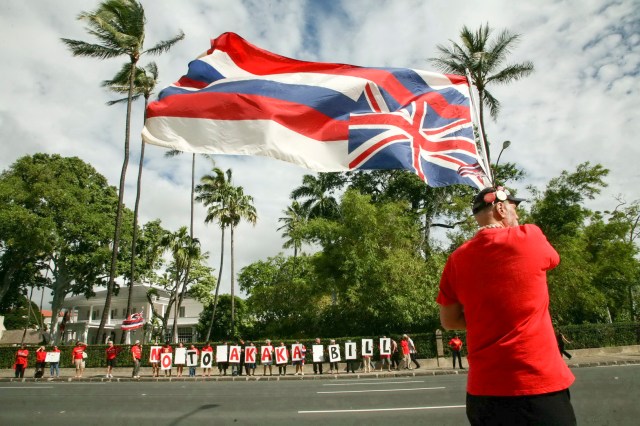
Groups protesting against sale of ceded lands in 2008, photo courtesy of David Ma
Case in point of the above is the Hawaiian Sovereignty movement. Since the 1960’s there has been a growing self-awareness in the Hawaiian community regarding the culture, history, language and rights of the host culture. For many years the history of the overthrow and the record of the Hawaiian Kings were the domain of apologist writers like Sereno Bishop and Lorrin Thurston, missionary descendants that had little good to say about the Hawaiians. Bishop and his friends were concerned about justifying the overthrow of the Hawaiian monarchy and solidified what I call the “Culture of Shame” that led to the near destruction of the Hawaiian language, the denigrating of Hawaiian cultural and management practices, the suffocation of the art of hula and traditional dance, and the creation of a myth that Hawaiians were incapable of governing themselves. The result was what I believe to be the creation of a shame culture that led several generations of Hawaiians to turn their backs on who they were. The tragedy in this whole process was the fact that we began to embrace this image of Hawaiians. Though changes to this culture began during the renaissance of Hawaiian language, arts, dance and culture, the impact of the shame culture on public engagement in the Hawaiian community continues to move slowly and is usually evidenced in outbursts of political protest activities that lead to no lasting and substantive policy changes.
A lesson all ethnicities can take from this short summary of the impact of shame culture in Hawaiian civic engagement is the sobering lesson that the challenge of getting people to participate in public policy formulation involves working to change a very powerful status quo. The existing political system is not interested in transformational change that does things like working to end homelessness, social injustice, income disparity, poverty, etc. It is as if the system has a powerful socio-economic-political internal gyroscope that is dedicated to maintaining the existing set of power relationships in our community. It does not embrace significant change and is constantly working to stabilize the status quo.
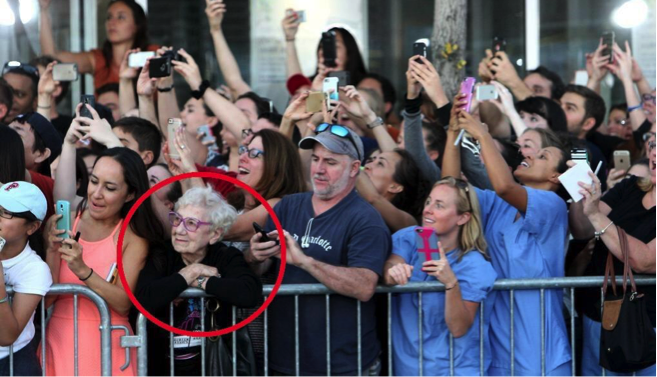
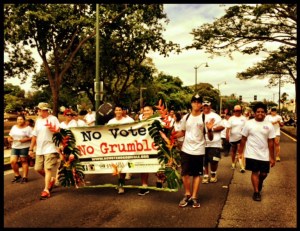
As with most things, change in public policy must start at the beginning. People need to understand their obligation to get involved, get informed, and then participate in the workings of the system. The Hawaiian community represents approximately twenty percent of the population of this community and needs to organize to set clear and achievable policy goals, begin the process of civic engagement by first registering to vote, understanding the issues, knowing the candidates, voting, and then holding our public servants accountable for the actions they make on our behalf. It is encouraging to see the need for civic engagement slowly starting to emerge not only in the Hawaiian community, but also in other ethnic groups such as the Micronesian population. The simple slogan, “No Vote, No Grumble,” is beginning to attract attention. All of us need to support voter registration and voter issue awareness and participation. Can we all start with our families and friends? E kū pono kākou! Let us stand for what is right!
“Activism begins with you, Democracy begins with you, get out there, get active!! Tag, you’reit!!” Tom Hartman.
I just had a chance to reflect on the various topics of my blog over these past six months and think about what topics make sense for this new year. I’ve come to the conclusion that the past posts might be an agenda for the coming year, as all of the issues seem to be related to facets of our island community that we need to reflect upon and pay attention to. Let me summarize and preview for you what I hope to write about, but please feel free to leave a comment about topics you would like to discuss.
Early Education:
We need to pay attention to our children as soon as they are born and intentionally work to provide them with opportunities to develop the cognitive, motor, and sensory skills necessary to successfully enter the formal education cycle. To do so, we as parents, grandparents, and caregivers need to be prepared ourselves with an understanding of how best to approach early education in the lives of the children we love. We could probably go on and on just in this area of need, but each of us should at least inventory where we stand in this most important area of preparing our children to take the reins of our communities.
Reconnecting to Cultural Roots:
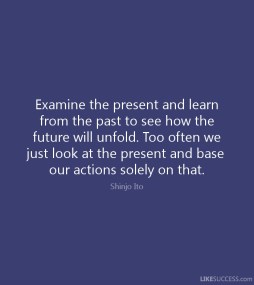
When I was teaching many years ago at the University of San Carlos in Guatemala, I learned that the Mayan Indians conceptualized the past and the future opposite from the way most of us do. We view the future directionally, as the horizon in front of us and the past as something behind and done, and not necessarily connected to us. Mayan Indians however, view the future as being behind them as it is not yet visible and the past in front of them, something they can see and understand. They embrace the past as the key to understanding their path in the present day. It is from the understanding of the past that they can navigate the future as it unfolds and moves from behind, becoming visible in the present. I believe we need to explore this concept as it relates to the host culture. We need to intentionally embrace the lessons of our Hawaiian kupuna through the chants, stories, personalities, and values they gifted us.
Civic Engagement:
Another theme I hope to continue to explore is the urgent need for people to get engaged politically. We have the worst voting numbers in the United States and this is a major source of our inertia and passivity when it comes to the policy making process in our community. A vibrant democracy demands an active, informed, and engaged constituency and we suffer when this is not the case. I am not promoting any specific political agenda other than an agenda that gets our people informed, engaged, and involved in the governing of our community. “No Vote, No Grumble” is a motto that is both a threat and a call to action. Which one will it be for us.
Embracing Displaced Minorities:
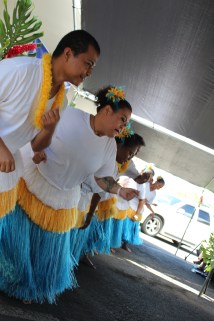
I would like to end this short list of topics for the year with the issue of how we treat those who are different from us, in terms of culture or physical capabilities, in our community. Many of us have been blessed to be a part of families clearly committed to embracing those around us who are struggling with poverty, discrimination, or disabilities. Yet we see that there is still a growing intolerance, frustration or disregard in Hawai‘i. We’re often quick to blame the migrant, the poor, the homeless, or those with disabilities for the social ills of our day. We turn our back on the Hawaiian tradition of mālama, kōkua, and aloha when it comes to these populations. How easy it is to blame the newest migrants or homeless for the crime and litter that we see on our streets. We often think that removing the homeless and poor from our sight solves a problem that continues to grow and expand because we fail to address its roots. People with disabilities are also often ignored or treated with minimum effort or interest. Where has the Hawaiian heart of our community gone? What can we do to restore a passionate sense of need to pursue what is pono for our families and our communities? I hope we can explore some of these issues as the year unfolds.
Blessings to all. E hana pono kākou! Me ke aloha piha.



 se relationships that we hold dear, we should be especially sure that our investment in those relationships not be measured in computer time or numbers of text messages. Take the time to interact with those we cherish. Learn the great discipline of listening and pondering. Celebrate and cultivate creative silence with friends and families and break it only with the desire to draw closer in your relationship, be more effective in your nurturing or teaching, or deepen your understanding of the other person.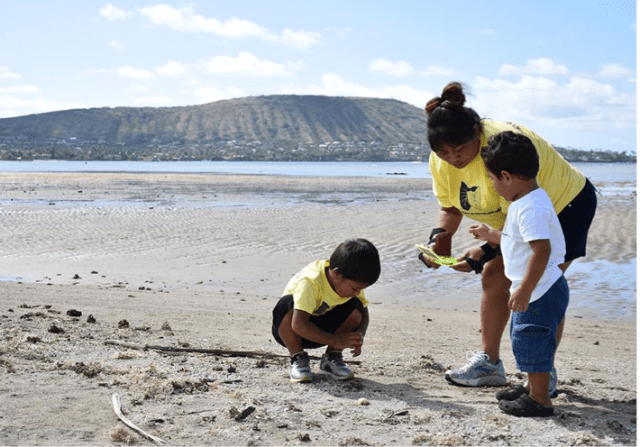



 As with most things, change in public policy must start at the beginning. People need to understand their obligation to get involved, get informed, and then participate in the workings of the system. The Hawaiian community represents approximately twenty percent of the population of this community and needs to organize to set clear and achievable policy goals, begin the process of civic engagement by first registering to vote, understanding the issues, knowing the candidates, voting, and then holding our public servants accountable for the actions they make on our behalf. It is encouraging to see the need for civic engagement slowly starting to emerge not only in the Hawaiian community, but also in other ethnic groups such as the Micronesian population. The simple slogan,
 Reconnecting to Cultural Roots:
 Civic Engagement:
 Embracing Displaced Minorities:
 At Low Tide